






A full polishing range.
From cutting and one-step correction to final finishing.
Specialist chemistry. Expert application.
 QUARTZ99 / CERAMIC BASE COAT
The foundation of your coating system.
A layerable quartz base coat designed for mechanical protection. Pair it with a suitable top coat to create the final finish.
For application by NANOLAB certified installers only.
Four formulas. Extended working time. Find the coating for your finish.
Explore the BEAST family of ceramic coatings.
Find the coating for each exterior surface.
 PPF & VINYLGLOSSProtection for glossy films and wraps.Discover
 MATTE & SATINMATTEProtection that respects the finish.Discover
 GLASSWINDOWSExplore dedicated glass protection.Discover
 WHEEL PROTECTIONWHEELSA dedicated coating for your wheels.Discover
 TRIM PROTECTIONPLASTICProtection for plastic surfaces.Discover
Dedicated care for the surfaces inside.
 LEATHER SURFACESLEATHERDiscover NANOLAB leather protection.Discover PLASTIC SURFACESPLASTICProtection for interior plastic surfaces.Discover TEXTILE SURFACESFABRICExplore the latest fabric formulation.Discover
Spray protection, maintenance and upcoming wash products.
 MAINTENANCEBEAST 365Explore the BEAST maintenance range.Discover
Next in washing, cleaning & care.
Ceramic protection for boats and yachts.
An easy-to-apply ceramic coating with an established track record on boats and yachts around the world.
Results vary with surface preparation, exposure and maintenance.
Read 50 MARINE guides →Explore MARINEProtection for the surfaces you live with.
A look at what we’re developing.
From cutting and one-step correction to final finishing.
A wider range for professional vehicle care.
Taking shape alongside BEAST & MATRIX.
Practical guidance for your next coating project.
Explore all guides →
Control vibration and unintended shocks when comparing water shedding, particularly when droplets appear to release only after a panel is touched.
Updated · NANOLAB Knowledge
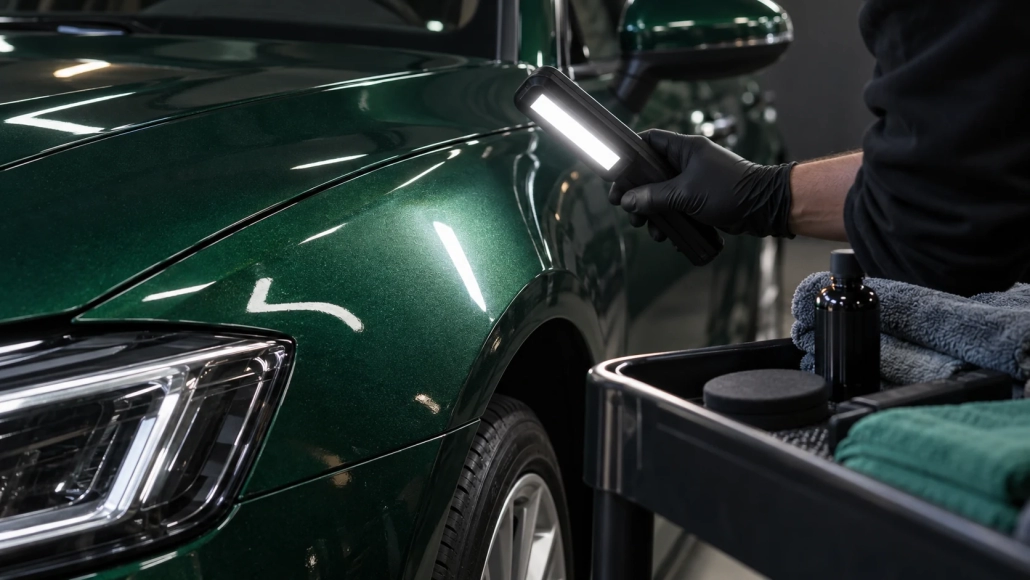
A drop that moves after the table is tapped has responded to a different test from a drop that moves under gravity alone. Workshop vibrations, handling and camera supports can create small disturbances that are easy to overlook in a water-shedding video.
Check the test support, nearby machinery, foot traffic and the way the panel is tilted. Keep the camera on a separate stable support where appropriate. Do not hold the specimen in one hand while adjusting equipment with the other and then describe the result as a controlled release angle.
Run the agreed test with the support undisturbed, documenting drop volume and panel motion. If external vibration is part of the intended service question, introduce it as a separately described condition rather than an unnoticed addition.
| Condition | Interpretation |
|---|---|
| Undisturbed controlled tilt | Shedding under the defined tilt method |
| Defined mechanical disturbance | Response to that additional input |
| Unrecorded tap or shake | Comparison cannot be reconstructed reliably |
If several drops release at the exact moment an operator touches the bench, review the full video. Repeat without the disturbance and compare fresh drops. Do not edit out the contact and retain only the movement.
Real vehicles experience movement, but an uncontrolled table tap does not reproduce a defined driving condition. It may be a useful demonstration of sensitivity, not a direct prediction of road performance.
The practical improvement is simple: stabilise the support, separate handling from observation, and record any deliberate disturbance. That makes the water behaviour easier to interpret and the demonstration easier for another operator to reproduce.
Ask NANOLAB about your surface and intended use. For application and care, use the current instructions for the exact product.
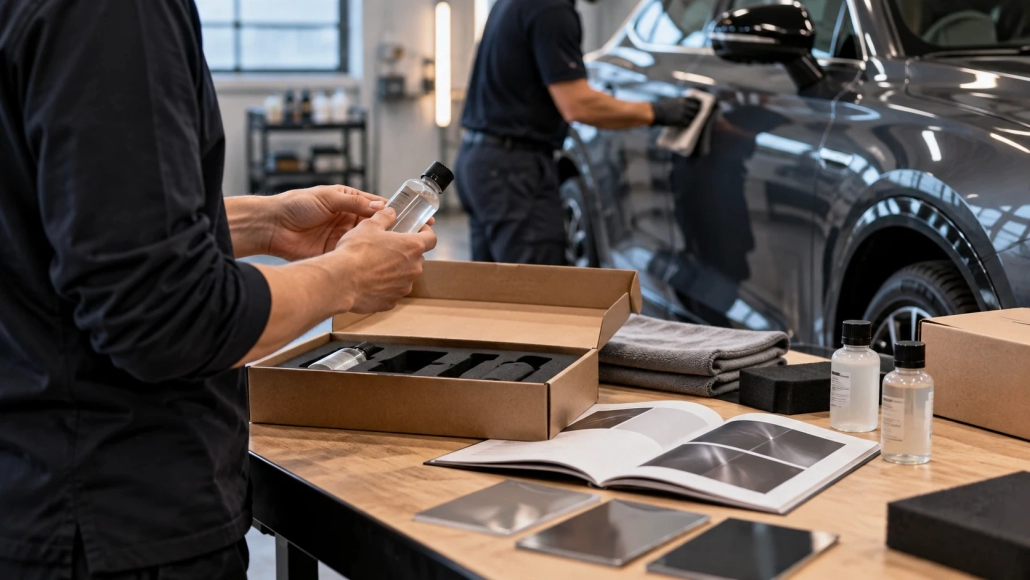
Design a coating field trial with recorded vehicles, use patterns, care routines and inspection points that produce interpretable feedback.

A clean bench can become contaminated as soon as a dirty bottle is placed on it.

Keep dry storage and active exposure separate in a coating durability record when a trial pauses for transport, weather or equipment downtime.
 Coating Durability after Interrupted Exposure: Account for Dry Storage