






A full polishing range.
From cutting and one-step correction to final finishing.
Specialist chemistry. Expert application.
 QUARTZ99 / CERAMIC BASE COAT
The foundation of your coating system.
A layerable quartz base coat designed for mechanical protection. Pair it with a suitable top coat to create the final finish.
For application by NANOLAB certified installers only.
Four formulas. Extended working time. Find the coating for your finish.
Explore the BEAST family of ceramic coatings.
Find the coating for each exterior surface.
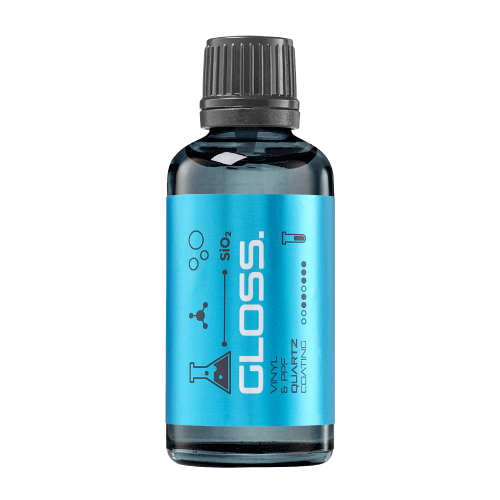
 PPF & VINYLGLOSSProtection for glossy films and wraps.Discover
 MATTE & SATINMATTEProtection that respects the finish.Discover
 GLASSWINDOWSExplore dedicated glass protection.Discover
 WHEEL PROTECTIONWHEELSA dedicated coating for your wheels.Discover
 TRIM PROTECTIONPLASTICProtection for plastic surfaces.Discover
Dedicated care for the surfaces inside.
 LEATHER SURFACESLEATHERDiscover NANOLAB leather protection.Discover PLASTIC SURFACESPLASTICProtection for interior plastic surfaces.Discover TEXTILE SURFACESFABRICExplore the latest fabric formulation.Discover
Spray protection, maintenance and upcoming wash products.
 MAINTENANCEBEAST 365Explore the BEAST maintenance range.Discover
Next in washing, cleaning & care.
Ceramic protection for boats and yachts.
An easy-to-apply ceramic coating with an established track record on boats and yachts around the world.
Results vary with surface preparation, exposure and maintenance.
Read 50 MARINE guides →Explore MARINEProtection for the surfaces you live with.
A look at what we’re developing.
From cutting and one-step correction to final finishing.
A wider range for professional vehicle care.
Taking shape alongside BEAST & MATRIX.
Practical guidance for your next coating project.
Explore all guides →
Practical guides for vehicle care, boats, living spaces, shower glass, stainless steel and private-label coating projects.
Explore 3219 guides, covering surface preparation, product selection, application and everyday maintenance.
Galvanized is sometimes used loosely for different zinc-containing finishes. Identify the actual process and supplied surface before requesting a compatible preparation or nano-coating method.

The most frequent issue is not necessarily the issue with the greatest total cost or consequence. Keep frequency, effort and impact distinguishable when prioritizing coating-process improvements.
A high percentile estimated from a small set of coating jobs can be unstable and method-dependent. State the sample count and calculation convention before using it as a customer scheduling promise.
A colour reference describes an appearance target, not the full chemistry of the finish. Two components with the same nominal colour can require different care and coating compatibility checks.
Before combining supplier metrics, define how each is converted to a score. A weighted total can change when normalization changes, even if the underlying supplier observations remain the same.
A directional finish needs an orientation reference that survives fabrication and installation. A coating sample without that reference can be difficult to compare fairly with the finished assembly.
A percentage saving is easier to assess when the original and final times are also shown. The same percentage can represent very different practical benefits across cleaning tasks.
Sampling every fixed number of units can align with a repeating production pattern. Review that possibility before assuming the selected units represent the whole filling run.
Measuring all samples of one coating before all samples of another can align product identity with time-related instrument change. The measurement sequence should address that risk within the approved study design.
Before comparing particle-size reports for coating development, identify the measurement technique. A laser-diffraction distribution and a dynamic-light-scattering result should not be treated as interchangeable descriptions simply because both use nanometres.
A particle-size chart is more useful when the assumptions used to calculate it are retained. For a laser-diffraction study, ask the laboratory to identify the optical model and relevant material inputs.
A room number can change during a building project. Keep the glass asset's identity linked to both the old and new location references so treatment and care records remain usable.