






A full polishing range.
From cutting and one-step correction to final finishing.
Specialist chemistry. Expert application.
 QUARTZ99 / CERAMIC BASE COAT
The foundation of your coating system.
A layerable quartz base coat designed for mechanical protection. Pair it with a suitable top coat to create the final finish.
For application by NANOLAB certified installers only.
Four formulas. Extended working time. Find the coating for your finish.
Explore the BEAST family of ceramic coatings.
Find the coating for each exterior surface.
 PPF & VINYLGLOSSProtection for glossy films and wraps.Discover
 MATTE & SATINMATTEProtection that respects the finish.Discover
 GLASSWINDOWSExplore dedicated glass protection.Discover
 WHEEL PROTECTIONWHEELSA dedicated coating for your wheels.Discover
 TRIM PROTECTIONPLASTICProtection for plastic surfaces.Discover
Dedicated care for the surfaces inside.
 LEATHER SURFACESLEATHERDiscover NANOLAB leather protection.Discover PLASTIC SURFACESPLASTICProtection for interior plastic surfaces.Discover TEXTILE SURFACESFABRICExplore the latest fabric formulation.Discover
Spray protection, maintenance and upcoming wash products.
 MAINTENANCEBEAST 365Explore the BEAST maintenance range.Discover
Next in washing, cleaning & care.
Ceramic protection for boats and yachts.
An easy-to-apply ceramic coating with an established track record on boats and yachts around the world.
Results vary with surface preparation, exposure and maintenance.
Read 50 MARINE guides →Explore MARINEProtection for the surfaces you live with.
A look at what we’re developing.
From cutting and one-step correction to final finishing.
A wider range for professional vehicle care.
Taking shape alongside BEAST & MATRIX.
Practical guidance for your next coating project.
Explore all guides →
Inspect, wash, decontaminate and prepare the finish before a ceramic coating installation.

Overnight indoor storage does not guarantee a dry, ready surface. Changes in air and surface conditions can still require inspection.
A running engine near a prepared vehicle introduces an avoidable environmental complication. Workshop layout and ventilation should prevent the coating area becoming an exhaust path.
Temporary transport protection can leave a different inspection task from ordinary road dirt. Identify the film and removal instructions first.
Residue remaining from film installation should be resolved before coating. The cleaning method must suit the film and its installation state.
A colour-changing iron remover can show that a reaction is occurring, but the colour alone does not certify that every contaminant has been removed or that the surface is ready for a coating. Follow the exact product's complete process.
A preparation problem is easier to solve when the remaining material is described before another cleaner is chosen. Oily film, mineral deposits, loose particles and an altered finish can look similar under some lighting but call for different decisions.
A surface-wetting screening result can help organize preparation checks, but it cannot guarantee that a particular coating will adhere in service. The proposed coating system still needs its own compatibility and performance assessment.
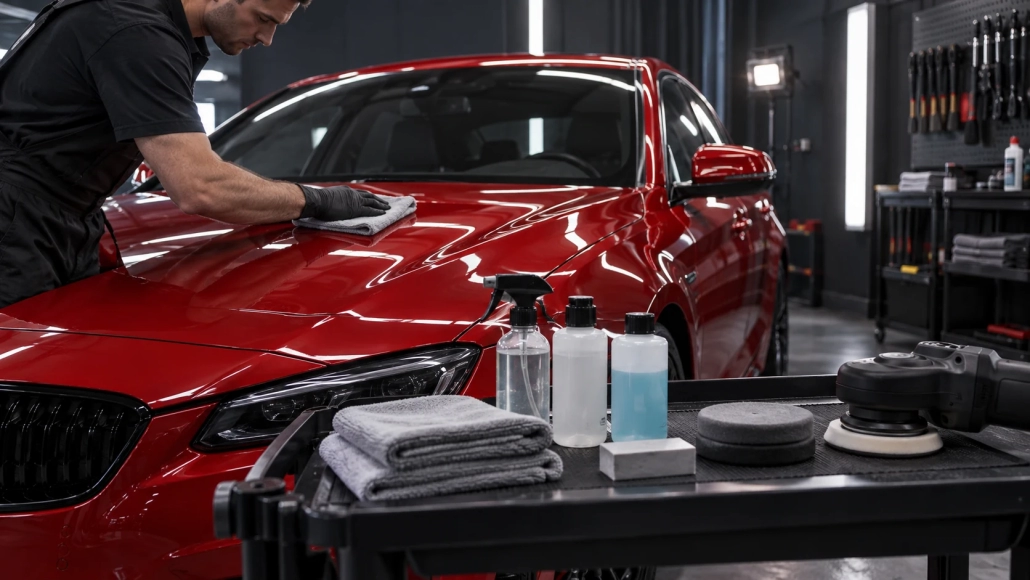
Follow an inspection-led preparation process that addresses contamination, correction and final cleaning before ceramic coating is applied.
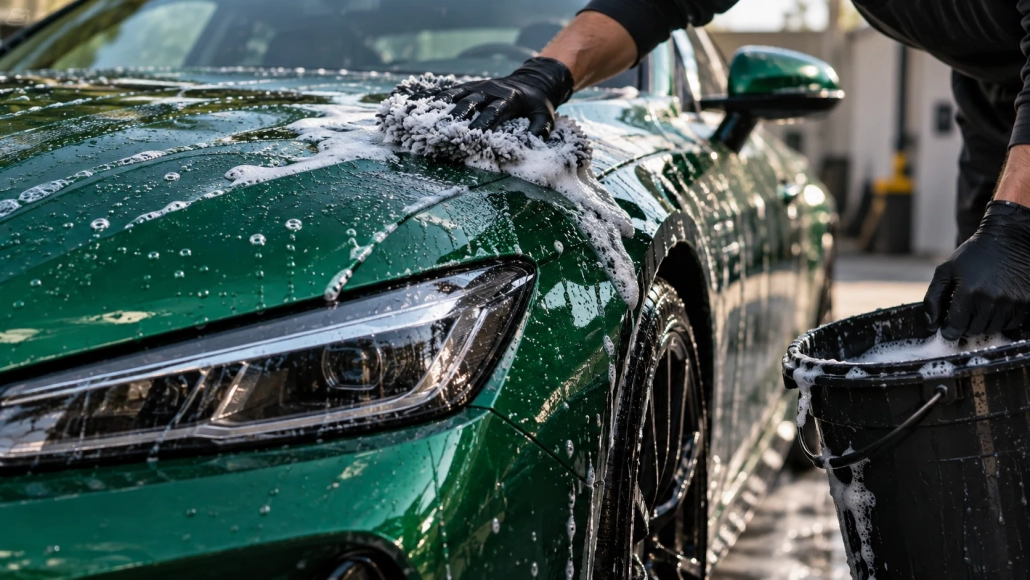
Learn how a preparation wash reveals surface condition and why extra gloss additives and unnecessary cleaning steps can complicate coating work.
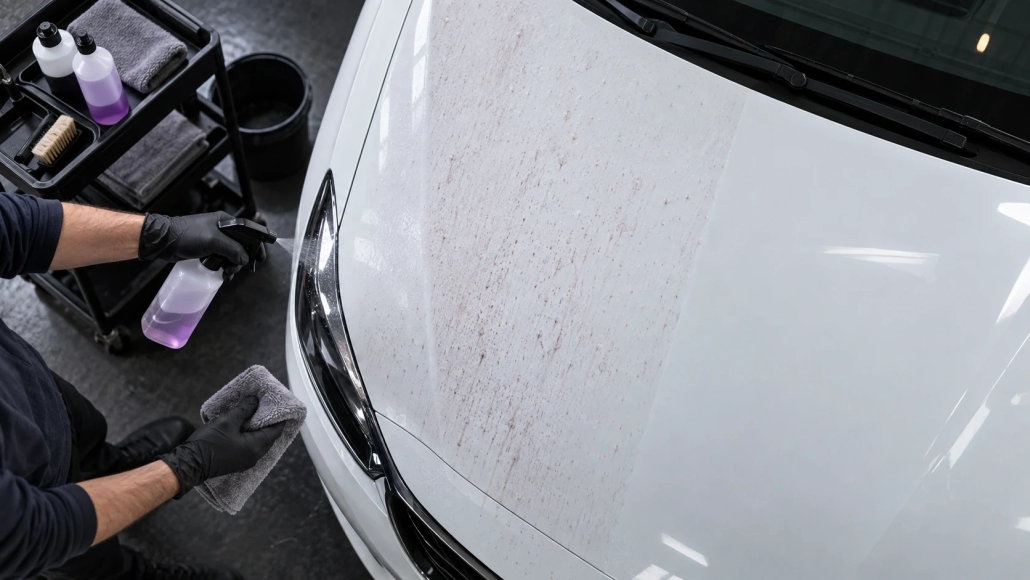
Identify when iron decontamination is appropriate and how to manage compatibility, dwell time and rinsing before coating preparation.
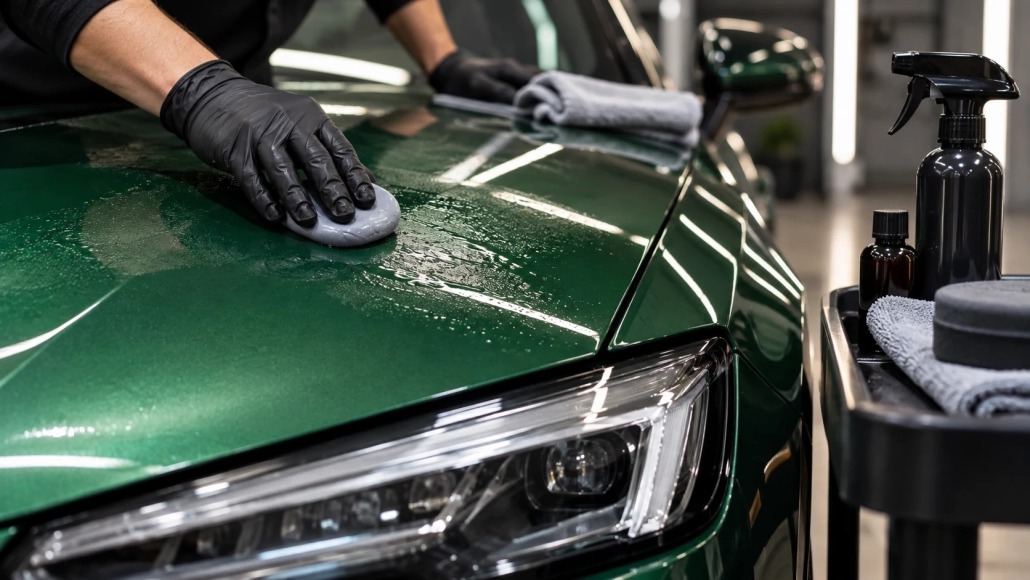
Decide when mechanical decontamination is useful, how to reduce marring, and why clay should follow inspection rather than habit.
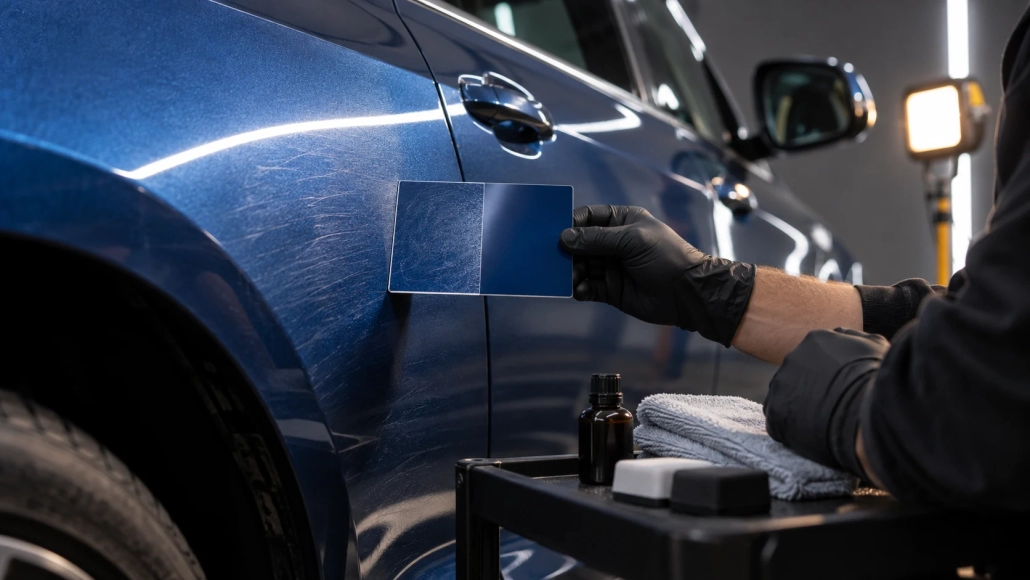
Use inspection and a test area to decide whether polishing is needed, how much correction is sensible and which defects should remain.