






A full polishing range.
From cutting and one-step correction to final finishing.
Specialist chemistry. Expert application.
 QUARTZ99 / CERAMIC BASE COAT
The foundation of your coating system.
A layerable quartz base coat designed for mechanical protection. Pair it with a suitable top coat to create the final finish.
For application by NANOLAB certified installers only.
Four formulas. Extended working time. Find the coating for your finish.
Explore the BEAST family of ceramic coatings.
Find the coating for each exterior surface.
 PPF & VINYLGLOSSProtection for glossy films and wraps.Discover
 MATTE & SATINMATTEProtection that respects the finish.Discover
 GLASSWINDOWSExplore dedicated glass protection.Discover
 WHEEL PROTECTIONWHEELSA dedicated coating for your wheels.Discover
 TRIM PROTECTIONPLASTICProtection for plastic surfaces.Discover
Dedicated care for the surfaces inside.
 LEATHER SURFACESLEATHERDiscover NANOLAB leather protection.Discover PLASTIC SURFACESPLASTICProtection for interior plastic surfaces.Discover TEXTILE SURFACESFABRICExplore the latest fabric formulation.Discover
Spray protection, maintenance and upcoming wash products.
 MAINTENANCEBEAST 365Explore the BEAST maintenance range.Discover
Next in washing, cleaning & care.
Ceramic protection for boats and yachts.
An easy-to-apply ceramic coating with an established track record on boats and yachts around the world.
Results vary with surface preparation, exposure and maintenance.
Read 50 MARINE guides →Explore MARINEProtection for the surfaces you live with.
A look at what we’re developing.
From cutting and one-step correction to final finishing.
A wider range for professional vehicle care.
Taking shape alongside BEAST & MATRIX.
Practical guidance for your next coating project.
Explore all guides →
A colour-changing iron remover can show that a reaction is occurring, but the colour alone does not certify that every contaminant has been removed or that the surface is ready for a coating. Follow the exact product's complete process.
Updated · NANOLAB Knowledge
Manufacturers describe colour changes for particular formulations, and their instructions also include preparation, contact and rinsing steps. The visible reaction answers only part of the cleaning question. Surface inspection after the approved process is still needed, and other contamination may require a different, compatible preparation step. Do not treat a dramatic colour as a general quality ranking between products.
Illustrative example: an installer sees a purple reaction on a wheel and assumes the wheel is fully clean. After rinsing, a different residue remains. Repeating the same chemical step indefinitely may not address that residue; identifying the remaining contamination is the next useful decision.
The cited manufacturer's instructions explain its own product, not NANOLAB IRON or every iron remover. Do not transfer dwell times, dilution or material permissions between brands. A colour change is not proof of coating compatibility, corrosion repair or complete surface cleanliness.
Technical references: Koch-Chemie Reactive Rust Remover instructions. These sources describe their stated methods or products; they do not certify NANOLAB products or establish compatibility with an unlisted surface.
Ask NANOLAB about the exact product and intended use. Use the current product documentation for formulation-specific instructions.
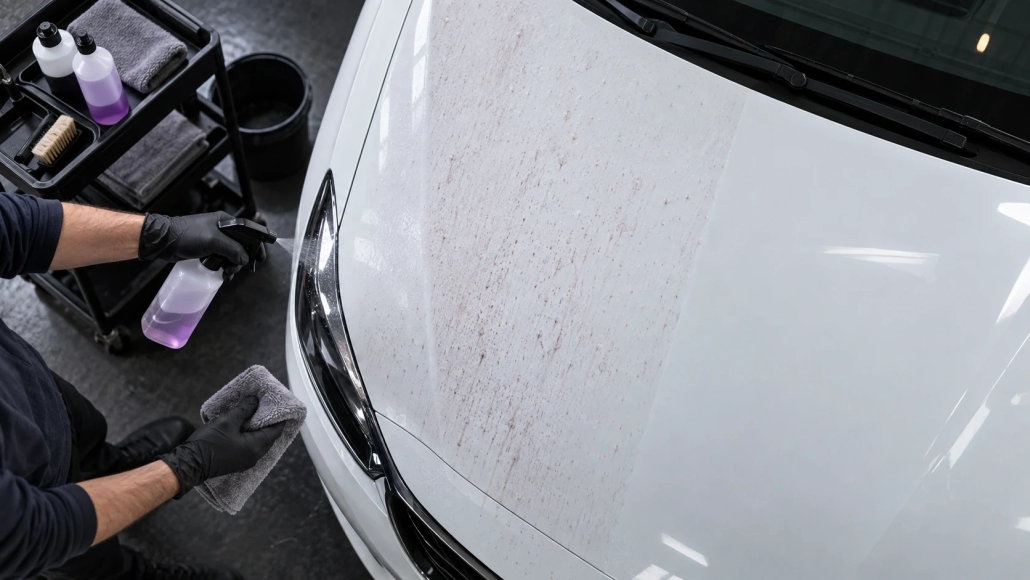
Identify when iron decontamination is appropriate and how to manage compatibility, dwell time and rinsing before coating preparation.
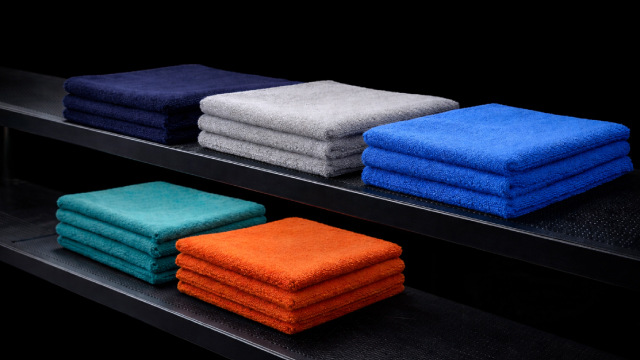
A residue remover may be appropriate for one finish while unsuitable for adjacent materials. Plan where the product can spread before applying it.
A preparation problem is easier to solve when the remaining material is described before another cleaner is chosen. Oily film, mineral deposits, loose particles and an altered finish can look similar under some lighting but call for different decisions.