






A full polishing range.
From cutting and one-step correction to final finishing.
Specialist chemistry. Expert application.
 QUARTZ99 / CERAMIC BASE COAT
The foundation of your coating system.
A layerable quartz base coat designed for mechanical protection. Pair it with a suitable top coat to create the final finish.
For application by NANOLAB certified installers only.
Four formulas. Extended working time. Find the coating for your finish.
Explore the BEAST family of ceramic coatings.
Find the coating for each exterior surface.
 PPF & VINYLGLOSSProtection for glossy films and wraps.Discover
 MATTE & SATINMATTEProtection that respects the finish.Discover
 GLASSWINDOWSExplore dedicated glass protection.Discover
 WHEEL PROTECTIONWHEELSA dedicated coating for your wheels.Discover
 TRIM PROTECTIONPLASTICProtection for plastic surfaces.Discover
Dedicated care for the surfaces inside.
 LEATHER SURFACESLEATHERDiscover NANOLAB leather protection.Discover PLASTIC SURFACESPLASTICProtection for interior plastic surfaces.Discover TEXTILE SURFACESFABRICExplore the latest fabric formulation.Discover
Spray protection, maintenance and upcoming wash products.
 MAINTENANCEBEAST 365Explore the BEAST maintenance range.Discover
Next in washing, cleaning & care.
Ceramic protection for boats and yachts.
An easy-to-apply ceramic coating with an established track record on boats and yachts around the world.
Results vary with surface preparation, exposure and maintenance.
Read 50 MARINE guides →Explore MARINEProtection for the surfaces you live with.
A look at what we’re developing.
From cutting and one-step correction to final finishing.
A wider range for professional vehicle care.
Taking shape alongside BEAST & MATRIX.
Practical guidance for your next coating project.
Explore all guides →
Choose car polish, heavy cut compound, fine cut and finishing polish. Explore dual action techniques, pad selection, defect diagnosis and paint protection.
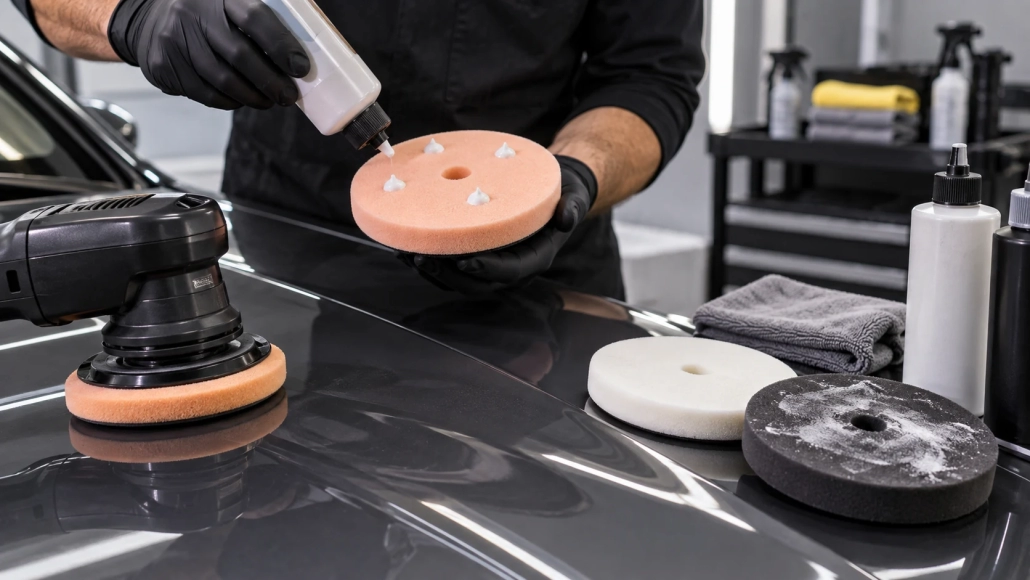
Understand pad priming and product loading so polishing starts evenly without dry contact, excessive residue or inconsistent performance.
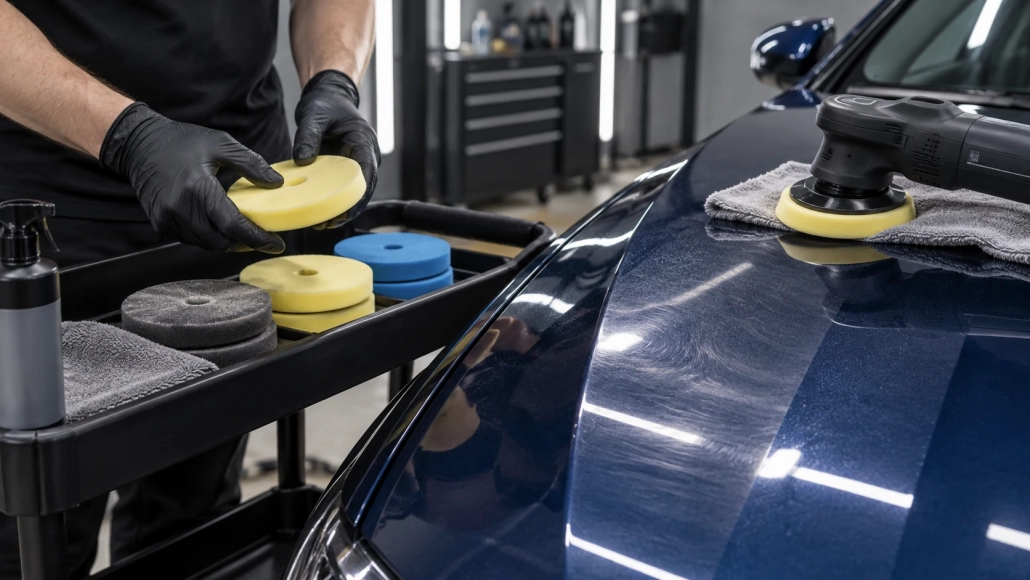
Keep polishing results consistent by rotating clean pads, separating correction stages and recognising when a pad should be retired.
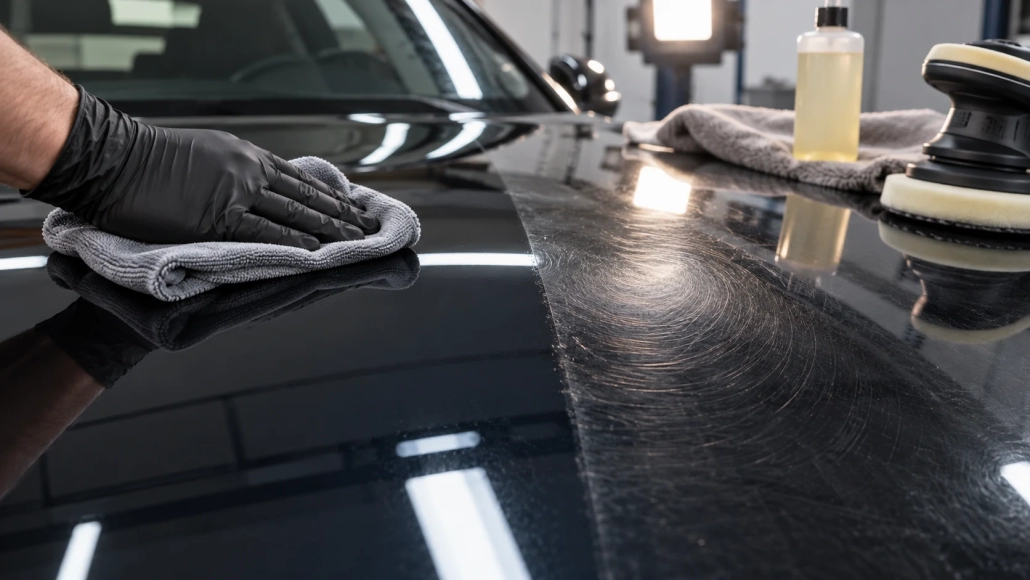
Inspect corrected paint after suitable residue removal to distinguish lasting defect improvement from temporary masking by polishing residue.
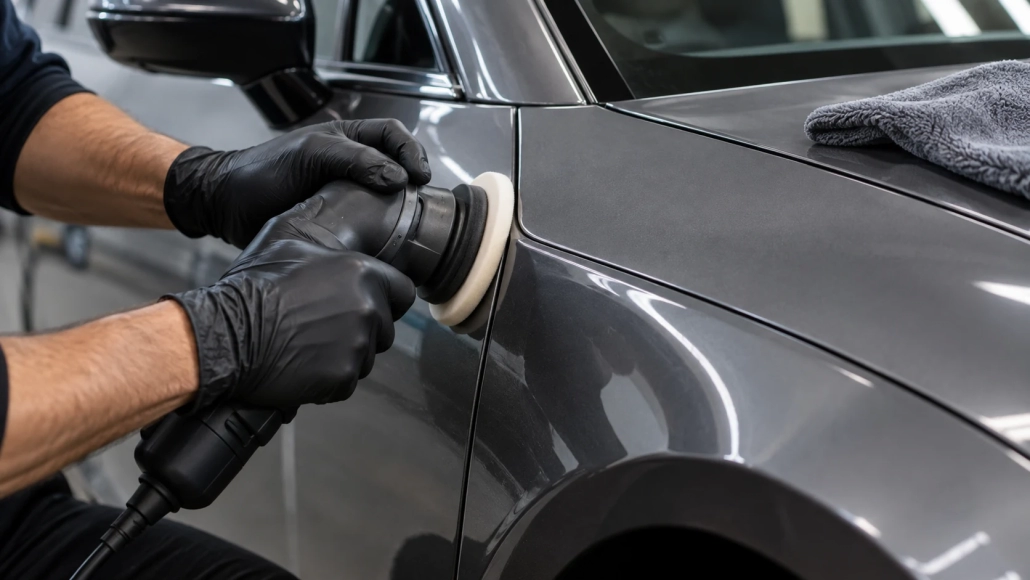
Plan paint correction around panel edges, sharp body lines and adjacent trim to reduce unnecessary abrasion and tool contact.
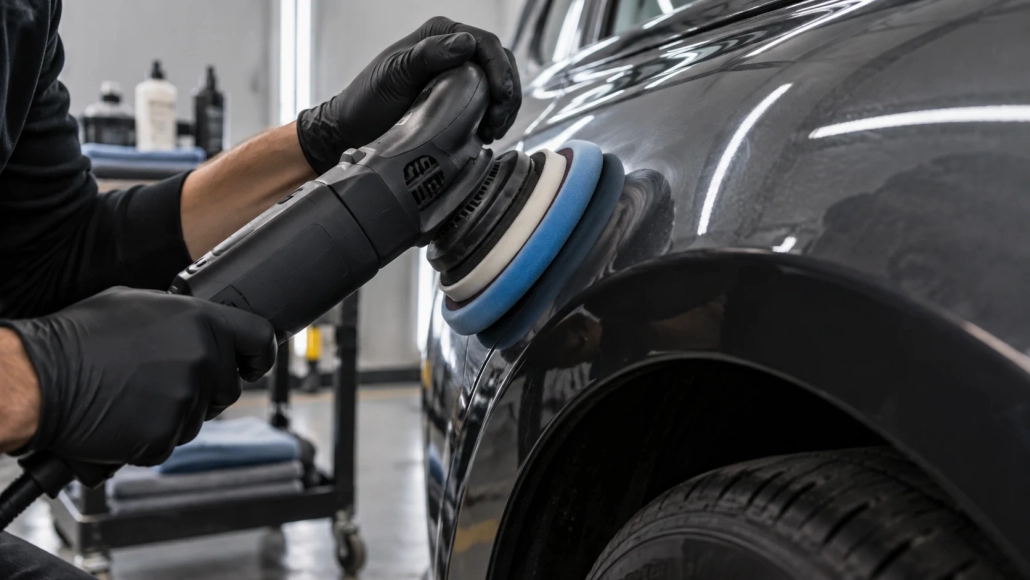
Diagnose inconsistent rotation on free-spinning dual-action polishers by checking pressure, pad contact, curves and the approved setup.
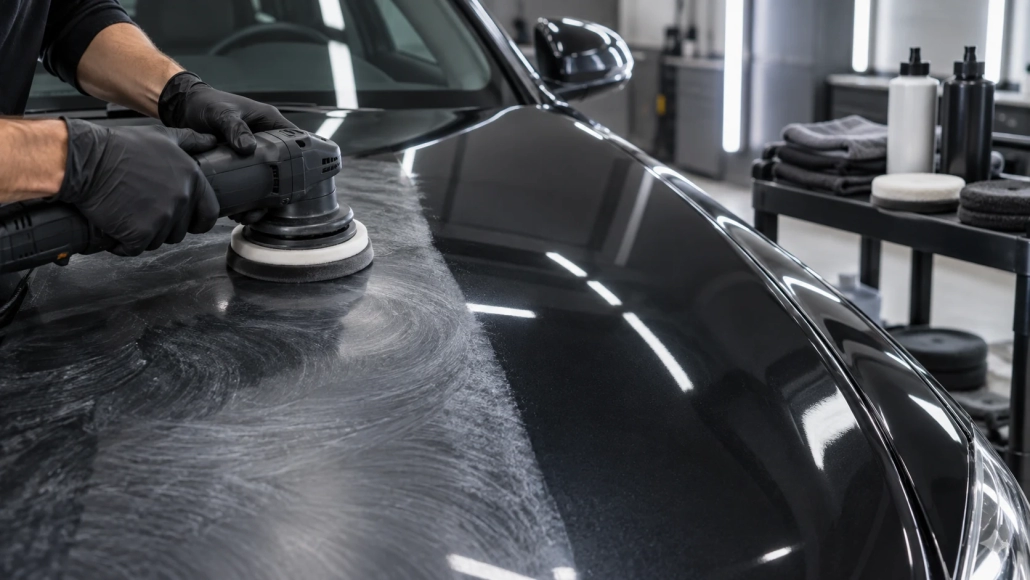
Reduce finishing haze on sensitive clear coat by checking pad choice, residue removal, towel contact and inspection technique.
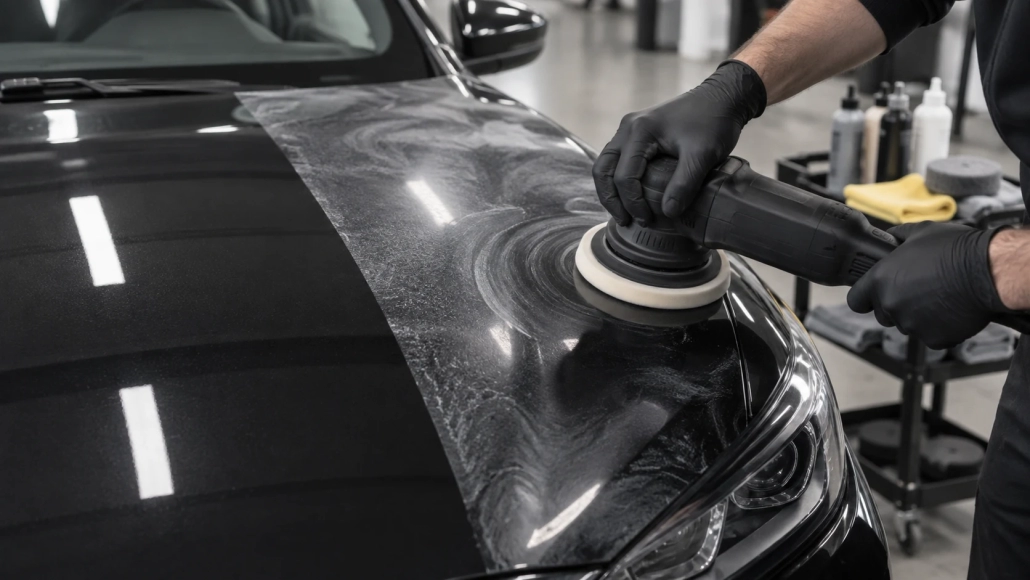
Investigate grabbing pads and difficult polish removal by reviewing surface temperature, product loading, paint history and section size.
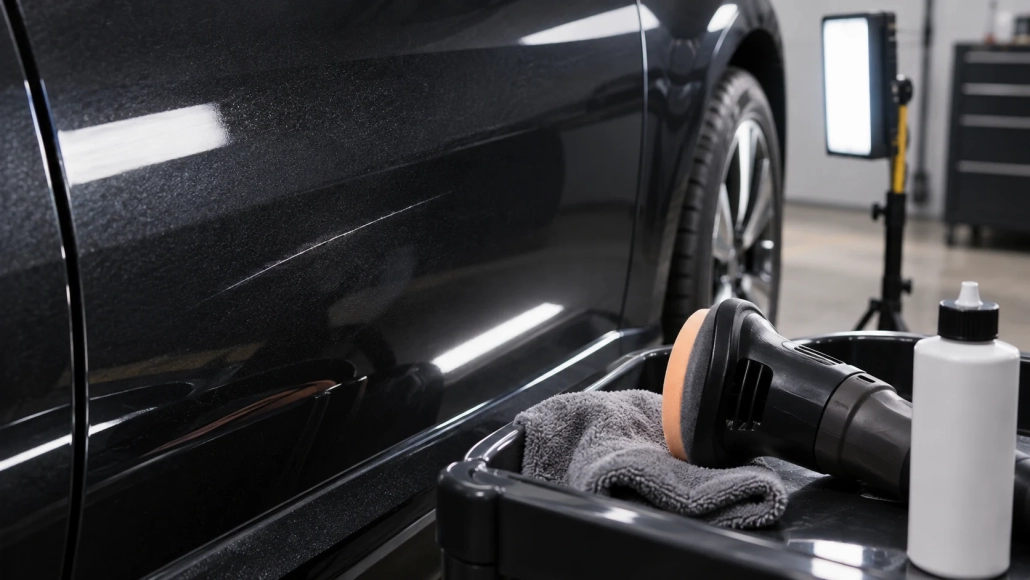
Assess an isolated paint scratch by its location, paint history and response to a conservative test instead of chasing complete removal.
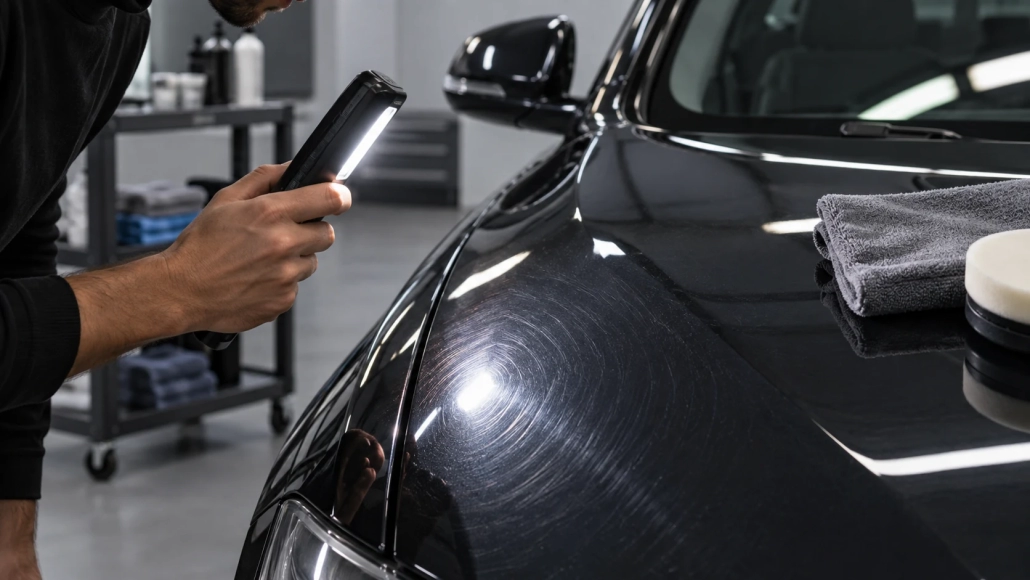
Identify polishing trails under suitable lighting and verify refinement before applying a ceramic coating to glossy paint.
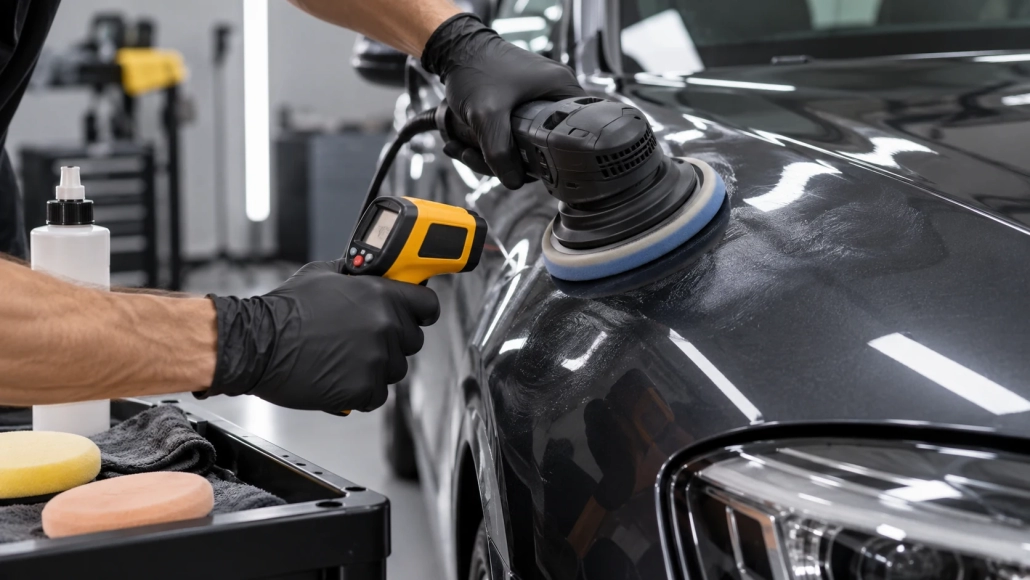
Plan polishing sections, pad rotation and inspection pauses to keep heat and tool control within the limits of the surface and equipment.
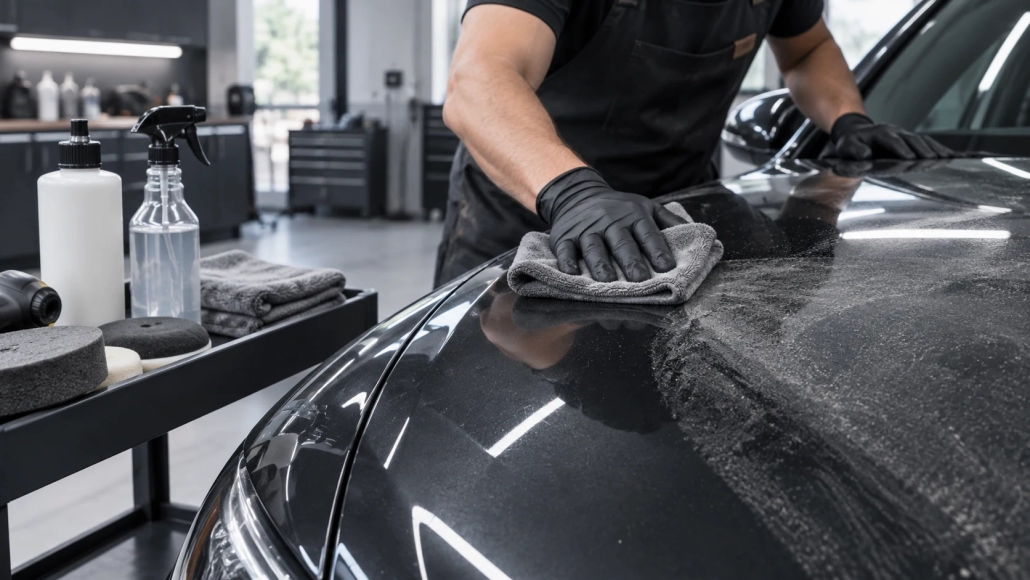
Remove polishing dust from seams, trim and the work area before final panel preparation and ceramic coating application.
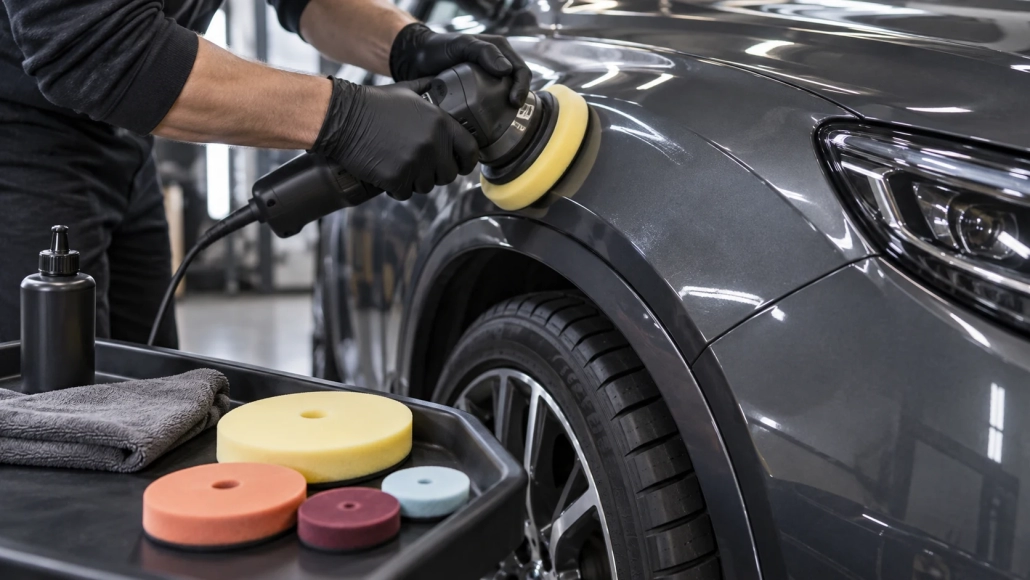
Match pad size and approved tools to panel geometry so curved areas can be corrected with controlled contact and clear inspection.