






A full polishing range.
From cutting and one-step correction to final finishing.
Specialist chemistry. Expert application.
 QUARTZ99 / CERAMIC BASE COAT
The foundation of your coating system.
A layerable quartz base coat designed for mechanical protection. Pair it with a suitable top coat to create the final finish.
For application by NANOLAB certified installers only.
Four formulas. Extended working time. Find the coating for your finish.
Explore the BEAST family of ceramic coatings.
Find the coating for each exterior surface.
 PPF & VINYLGLOSSProtection for glossy films and wraps.Discover
 MATTE & SATINMATTEProtection that respects the finish.Discover
 GLASSWINDOWSExplore dedicated glass protection.Discover
 WHEEL PROTECTIONWHEELSA dedicated coating for your wheels.Discover
 TRIM PROTECTIONPLASTICProtection for plastic surfaces.Discover
Dedicated care for the surfaces inside.
 LEATHER SURFACESLEATHERDiscover NANOLAB leather protection.Discover PLASTIC SURFACESPLASTICProtection for interior plastic surfaces.Discover TEXTILE SURFACESFABRICExplore the latest fabric formulation.Discover
Spray protection, maintenance and upcoming wash products.
 MAINTENANCEBEAST 365Explore the BEAST maintenance range.Discover
Next in washing, cleaning & care.
Ceramic protection for boats and yachts.
An easy-to-apply ceramic coating with an established track record on boats and yachts around the world.
Results vary with surface preparation, exposure and maintenance.
Read 50 MARINE guides →Explore MARINEProtection for the surfaces you live with.
A look at what we’re developing.
From cutting and one-step correction to final finishing.
A wider range for professional vehicle care.
Taking shape alongside BEAST & MATRIX.
Practical guidance for your next coating project.
Explore all guides →
Choose car polish, heavy cut compound, fine cut and finishing polish. Explore dual action techniques, pad selection, defect diagnosis and paint protection.
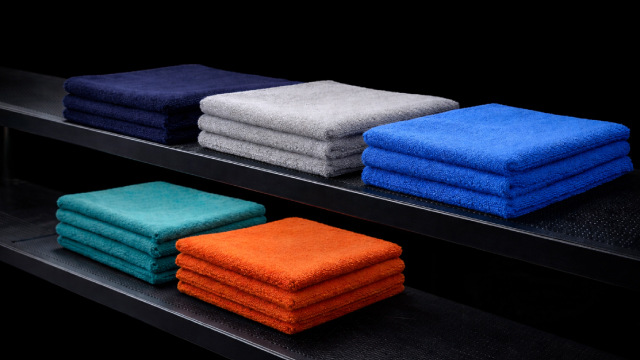
Fine cut can remove suitable light towel marks, but repeating it without changing the wiping process can create a loop: polish, wipe, mark, polish again.
A dealer-prepared car may look highly glossy while still carrying wash marks, residue or local correction defects.
A daily-use car needs a correction goal that reflects how it will be viewed and maintained.
A car kept in a garage may need little abrasive correction, or it may still carry wash marks and contamination.
After fine cut, a few isolated scratches may become more conspicuous because the surrounding haze has improved.
A fine-cut method accepted on a factory-painted wing may not be the right method for a repainted door.
Two foam pads can feel equally soft in the hand yet behave differently under a machine.
An intermediate foam pad can be useful when a soft finishing pad leaves too much light damage and a stronger cutting setup adds unnecessary haze.
Fine-cut liquid on microfiber and the same liquid on foam are two different working systems.
Reducing pressure toward the end of a fine-cut cycle is recommended in some polishing procedures, but it is not a universal finishing rule.
Lowering machine speed can change fine-cut handling and finish, but lower is not automatically gentler in every useful sense.
A fixed number of passes is easy to teach, but it does not guarantee the same fine-cut result on every panel.