






A full polishing range.
From cutting and one-step correction to final finishing.
Specialist chemistry. Expert application.
 QUARTZ99 / CERAMIC BASE COAT
The foundation of your coating system.
A layerable quartz base coat designed for mechanical protection. Pair it with a suitable top coat to create the final finish.
For application by NANOLAB certified installers only.
Four formulas. Extended working time. Find the coating for your finish.
Explore the BEAST family of ceramic coatings.
Find the coating for each exterior surface.
 PPF & VINYLGLOSSProtection for glossy films and wraps.Discover
 MATTE & SATINMATTEProtection that respects the finish.Discover
 GLASSWINDOWSExplore dedicated glass protection.Discover
 WHEEL PROTECTIONWHEELSA dedicated coating for your wheels.Discover
 TRIM PROTECTIONPLASTICProtection for plastic surfaces.Discover
Dedicated care for the surfaces inside.
 LEATHER SURFACESLEATHERDiscover NANOLAB leather protection.Discover PLASTIC SURFACESPLASTICProtection for interior plastic surfaces.Discover TEXTILE SURFACESFABRICExplore the latest fabric formulation.Discover
Spray protection, maintenance and upcoming wash products.
 MAINTENANCEBEAST 365Explore the BEAST maintenance range.Discover
Next in washing, cleaning & care.
Ceramic protection for boats and yachts.
An easy-to-apply ceramic coating with an established track record on boats and yachts around the world.
Results vary with surface preparation, exposure and maintenance.
Read 50 MARINE guides →Explore MARINEProtection for the surfaces you live with.
A look at what we’re developing.
From cutting and one-step correction to final finishing.
A wider range for professional vehicle care.
Taking shape alongside BEAST & MATRIX.
Practical guidance for your next coating project.
Explore all guides →
Understand nano ceramic coatings, water behaviour, hardness claims, wax and PPF before selecting protection.
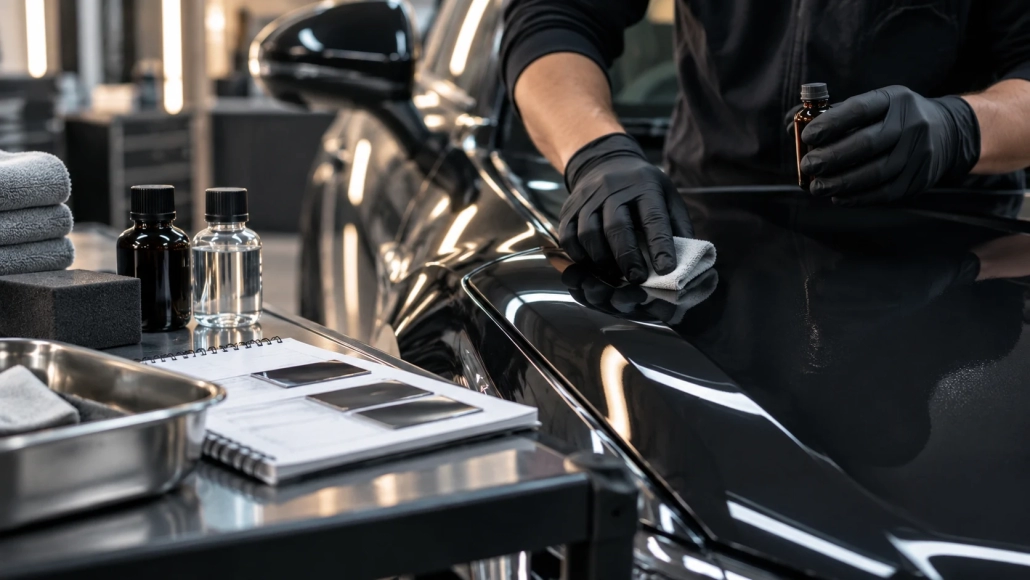
Evaluate a graphene coating through its actual compatibility and care requirements, with NANOLAB MATRIX GRAPHENE P503G as a product-specific example.
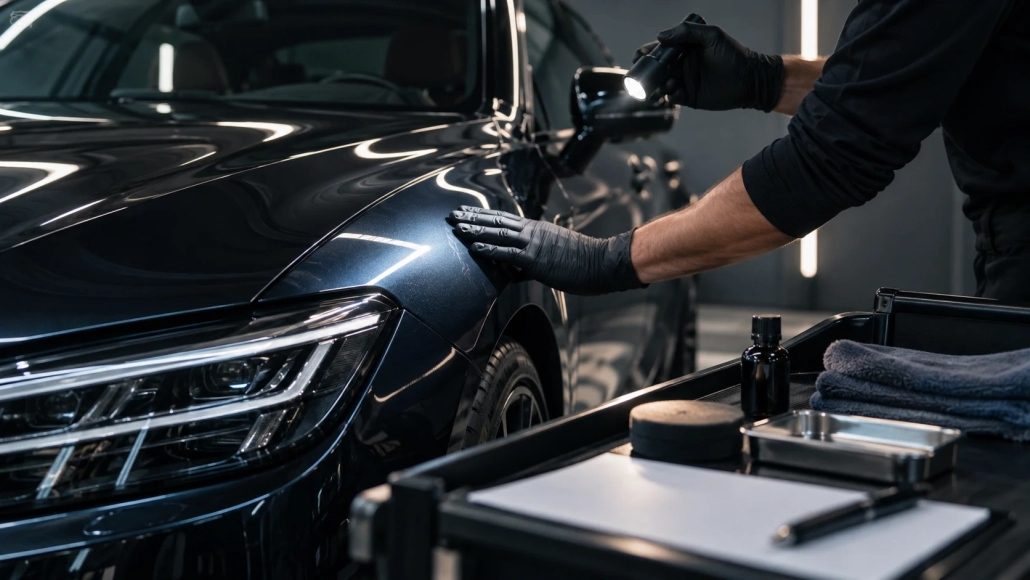
Learn how to assess gloss and finish quality without confusing visual enhancement, tactile slickness and documented protective performance.
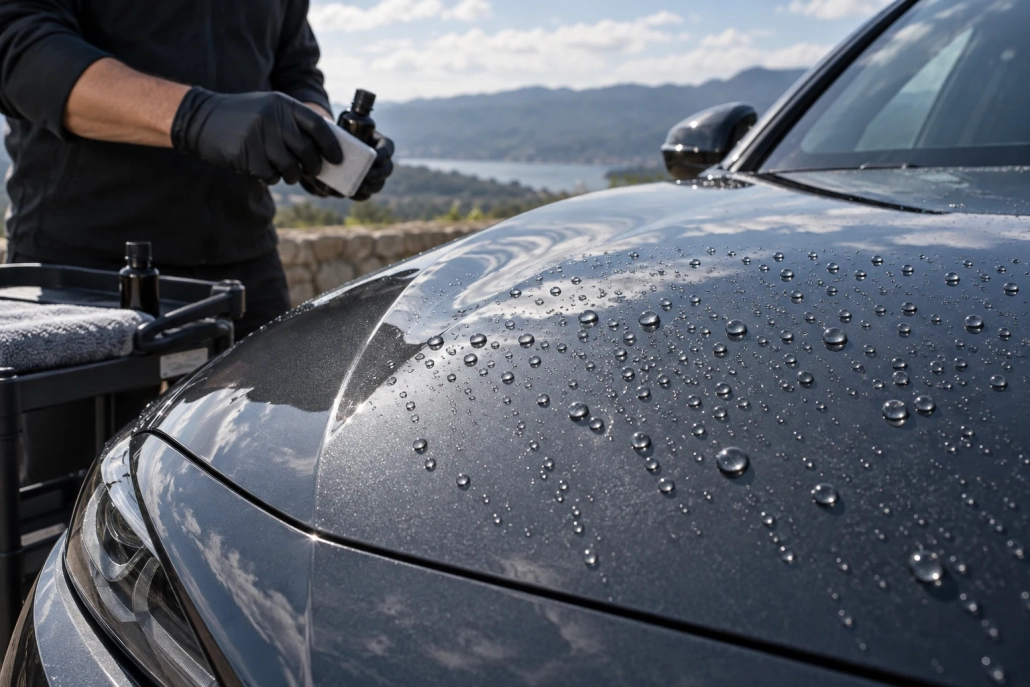
Distinguish the shape of a water drop from how easily it moves when comparing ceramic coating water behaviour.
Compare gloss readings with the same measurement geometry, surface preparation and locations rather than treating every gloss number as equivalent.
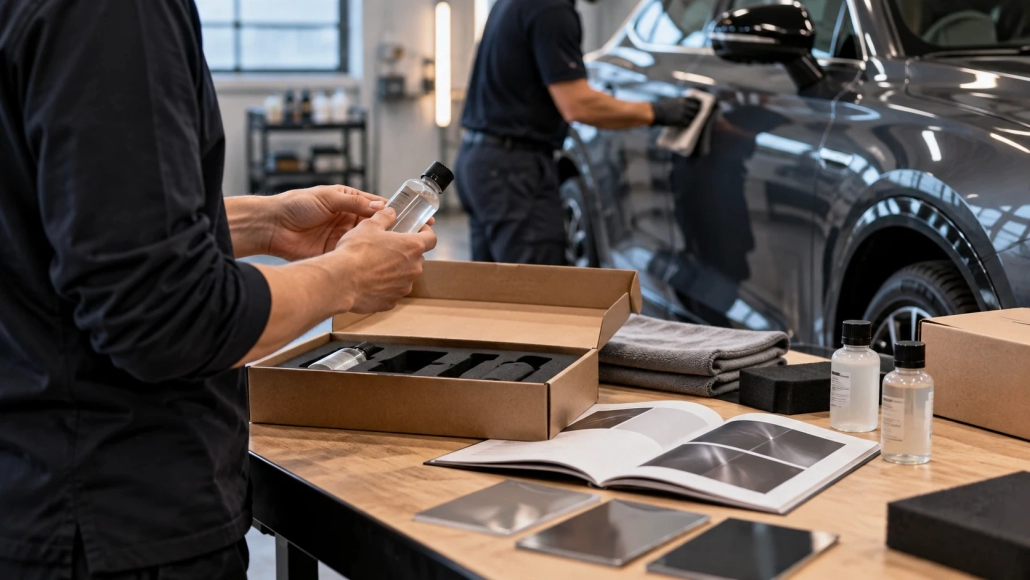
Understand why accelerated test hours cannot be converted into universal years of ceramic coating durability without relevant correlation.
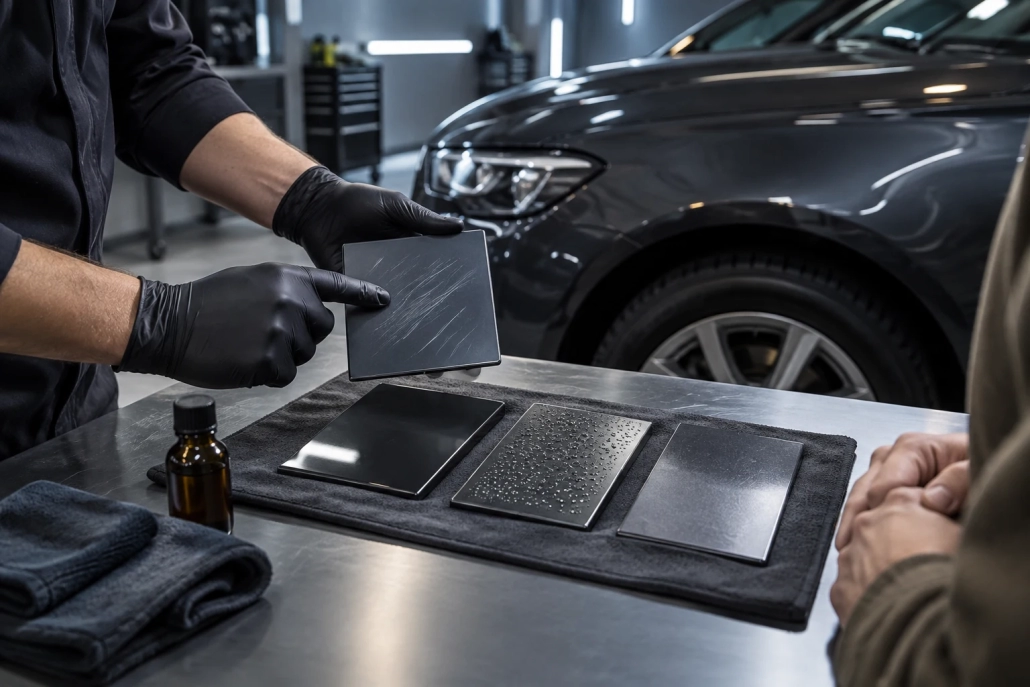
Review cleaner, dilution, contact and inspection conditions before using wash-cycle counts to compare ceramic coatings.
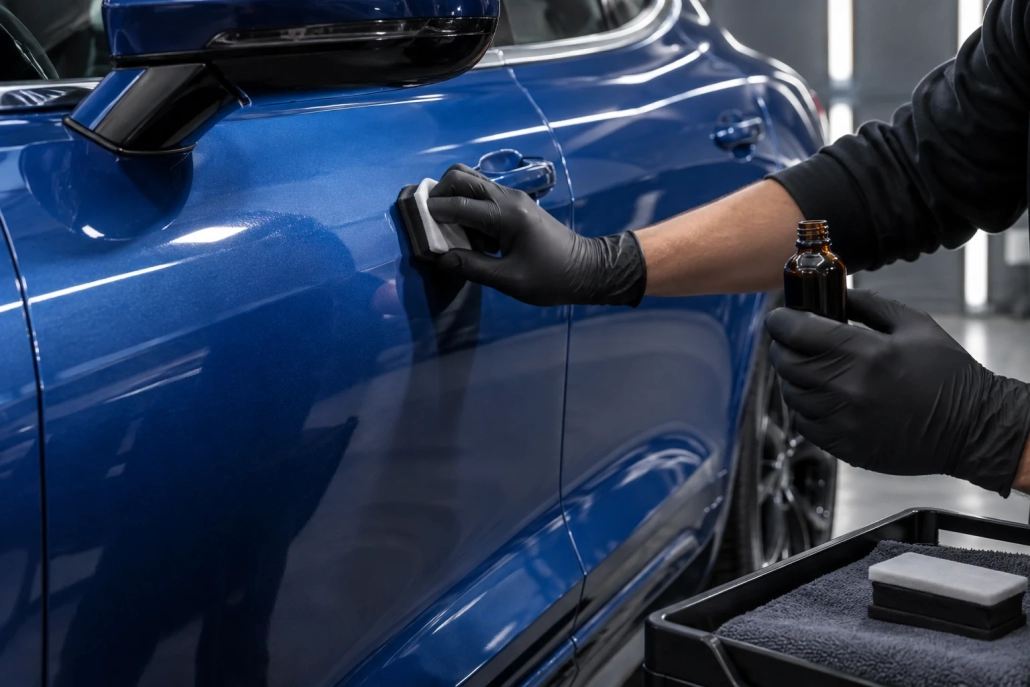
Distinguish automotive-style ceramic surface treatments from powder-coated metal finishes, including their roles, application processes and compatibility.
Understand why nano ceramic surface treatments and electroplating perform different jobs, particularly on decorative chrome and nickel components.
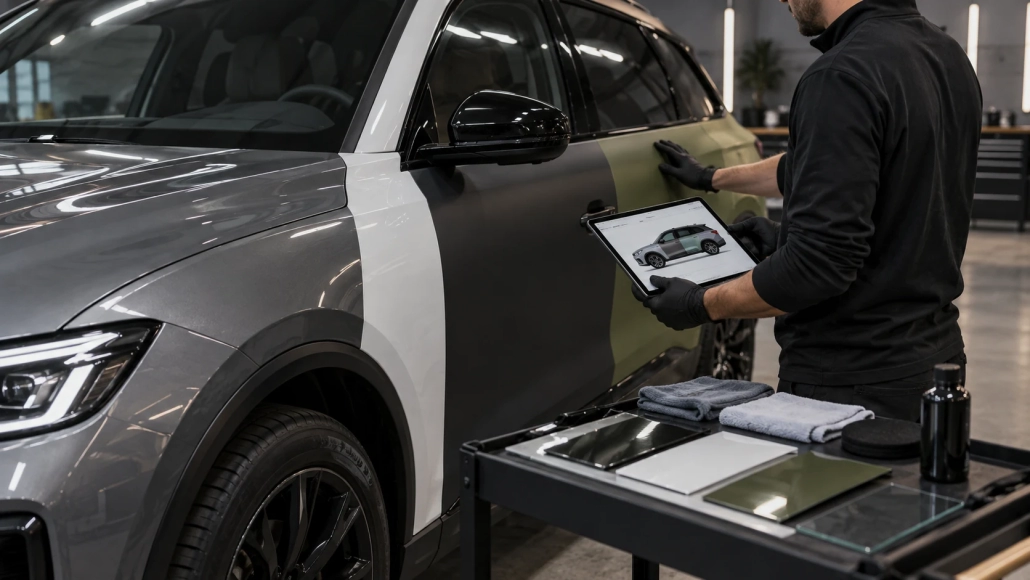
Separate anodising from an additional nano surface treatment on aluminium, and evaluate compatibility with the exact anodised finish and care process.
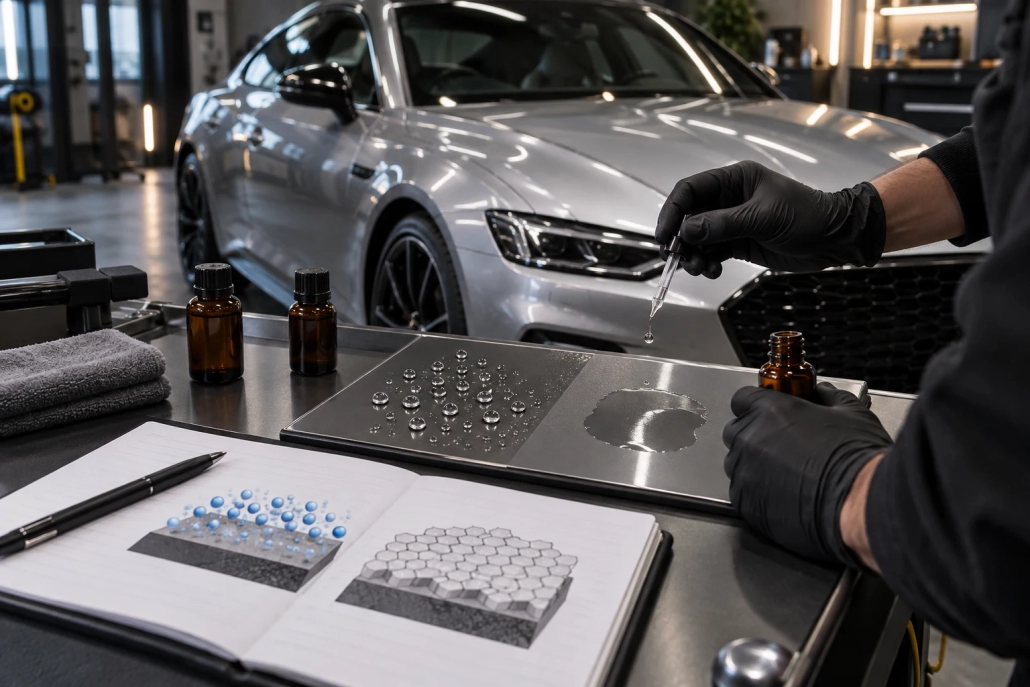
Understand sol-gel as a coating technology description and learn why it does not, by itself, establish a finished nano ceramic product’s performance.
Distinguish water repellency from oil repellency when evaluating nano coatings, and choose tests that match the contamination and surface-care task.
Understand why a nano coating tested on polished metal may behave differently on textured or matte finishes, and how to build a representative comparison.