






A full polishing range.
From cutting and one-step correction to final finishing.
Specialist chemistry. Expert application.
 QUARTZ99 / CERAMIC BASE COAT
The foundation of your coating system.
A layerable quartz base coat designed for mechanical protection. Pair it with a suitable top coat to create the final finish.
For application by NANOLAB certified installers only.
Four formulas. Extended working time. Find the coating for your finish.
Explore the BEAST family of ceramic coatings.
Find the coating for each exterior surface.
 PPF & VINYLGLOSSProtection for glossy films and wraps.Discover
 MATTE & SATINMATTEProtection that respects the finish.Discover
 GLASSWINDOWSExplore dedicated glass protection.Discover
 WHEEL PROTECTIONWHEELSA dedicated coating for your wheels.Discover
 TRIM PROTECTIONPLASTICProtection for plastic surfaces.Discover
Dedicated care for the surfaces inside.
 LEATHER SURFACESLEATHERDiscover NANOLAB leather protection.Discover PLASTIC SURFACESPLASTICProtection for interior plastic surfaces.Discover TEXTILE SURFACESFABRICExplore the latest fabric formulation.Discover
Spray protection, maintenance and upcoming wash products.
 MAINTENANCEBEAST 365Explore the BEAST maintenance range.Discover
Next in washing, cleaning & care.
Ceramic protection for boats and yachts.
An easy-to-apply ceramic coating with an established track record on boats and yachts around the world.
Results vary with surface preparation, exposure and maintenance.
Read 50 MARINE guides →Explore MARINEProtection for the surfaces you live with.
A look at what we’re developing.
From cutting and one-step correction to final finishing.
A wider range for professional vehicle care.
Taking shape alongside BEAST & MATRIX.
Practical guidance for your next coating project.
Explore all guides →
Practical guides for vehicle care, boats, living spaces, shower glass, stainless steel and private-label coating projects.
Explore 3219 guides, covering surface preparation, product selection, application and everyday maintenance.

Preserve comparability when a reference coating changes during a long trial by documenting the revision and running an overlap where feasible.
Use a controlled known-area coupon to estimate retained dry coating mass, and check whether the mass difference exceeds measurement uncertainty.
Compare fresh and aged coating spectra with matched preparation, controls and processing before attributing a new feature to chemical degradation.
Measure substrate and formulation controls when using Raman spectroscopy to investigate graphene-containing coatings.
Choose separate methods for particle-size behaviour and chemical identity when investigating agglomeration in a coating formulation.
Control temperature, sample homogeneity and entrained bubbles when measuring liquid coating density for quality control or dose conversion.
Judge a mineral-deposit removal method by both cleaning effectiveness and preservation of the underlying surface system.
Include delayed observations and representative geometry when checking solvent compatibility on decorative finishes and plastic components.
Specify whether a chemical spot remains wet, is replenished or dries down, because those exposures answer different coating-resistance questions.
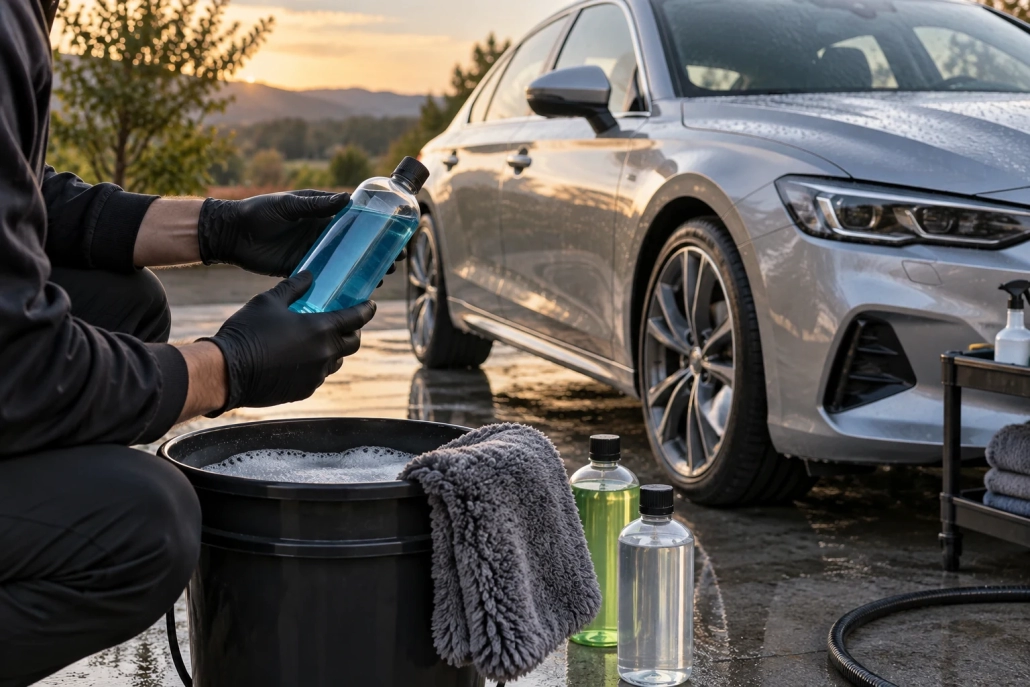
Use a laboratory neutralisation curve to investigate acid-base behaviour beyond a single pH reading, while keeping surface compatibility as a separate test.
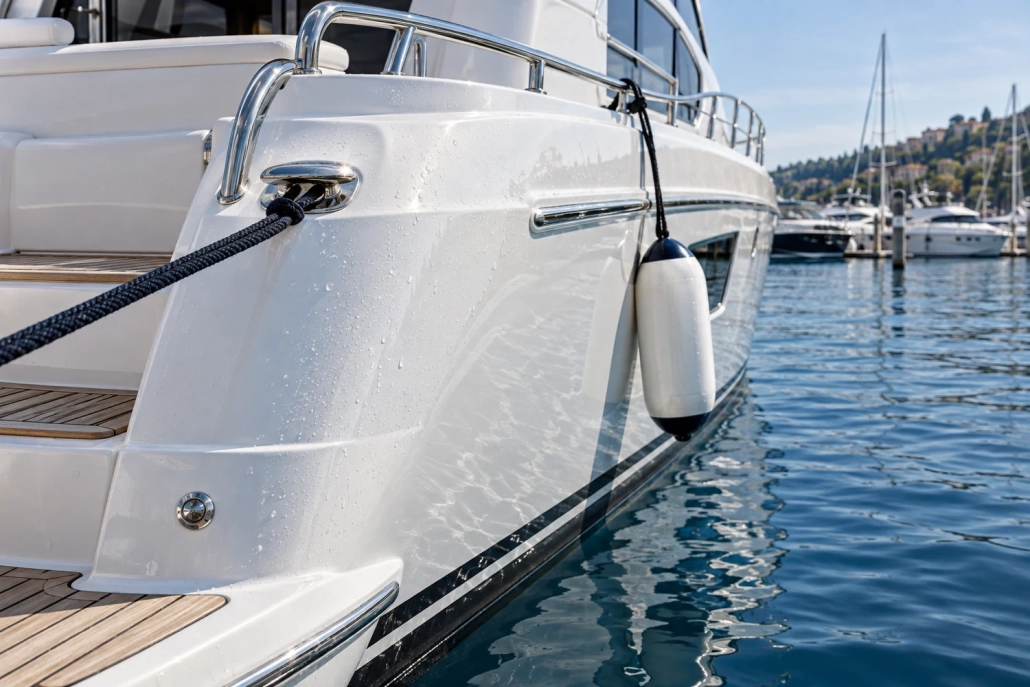
Distinguish organic surface films, mineral deposits and mixed contamination when selecting an approved cleaning approach for coated marine surfaces.
Use teach-back scenarios to verify that coating installers can choose the correct action when conditions differ from a standard demonstration.