






A full polishing range.
From cutting and one-step correction to final finishing.
Specialist chemistry. Expert application.
 QUARTZ99 / CERAMIC BASE COAT
The foundation of your coating system.
A layerable quartz base coat designed for mechanical protection. Pair it with a suitable top coat to create the final finish.
For application by NANOLAB certified installers only.
Four formulas. Extended working time. Find the coating for your finish.
Explore the BEAST family of ceramic coatings.
Find the coating for each exterior surface.
 PPF & VINYLGLOSSProtection for glossy films and wraps.Discover
 MATTE & SATINMATTEProtection that respects the finish.Discover
 GLASSWINDOWSExplore dedicated glass protection.Discover
 WHEEL PROTECTIONWHEELSA dedicated coating for your wheels.Discover
 TRIM PROTECTIONPLASTICProtection for plastic surfaces.Discover
Dedicated care for the surfaces inside.
 LEATHER SURFACESLEATHERDiscover NANOLAB leather protection.Discover PLASTIC SURFACESPLASTICProtection for interior plastic surfaces.Discover TEXTILE SURFACESFABRICExplore the latest fabric formulation.Discover
Spray protection, maintenance and upcoming wash products.
 MAINTENANCEBEAST 365Explore the BEAST maintenance range.Discover
Next in washing, cleaning & care.
Ceramic protection for boats and yachts.
An easy-to-apply ceramic coating with an established track record on boats and yachts around the world.
Results vary with surface preparation, exposure and maintenance.
Read 50 MARINE guides →Explore MARINEProtection for the surfaces you live with.
A look at what we’re developing.
From cutting and one-step correction to final finishing.
A wider range for professional vehicle care.
Taking shape alongside BEAST & MATRIX.
Practical guidance for your next coating project.
Explore all guides →
Choose a dual-action polish by machine movement, defect level and pad system, then validate correction and finish before working around the vehicle.
Updated · NANOLAB Knowledge
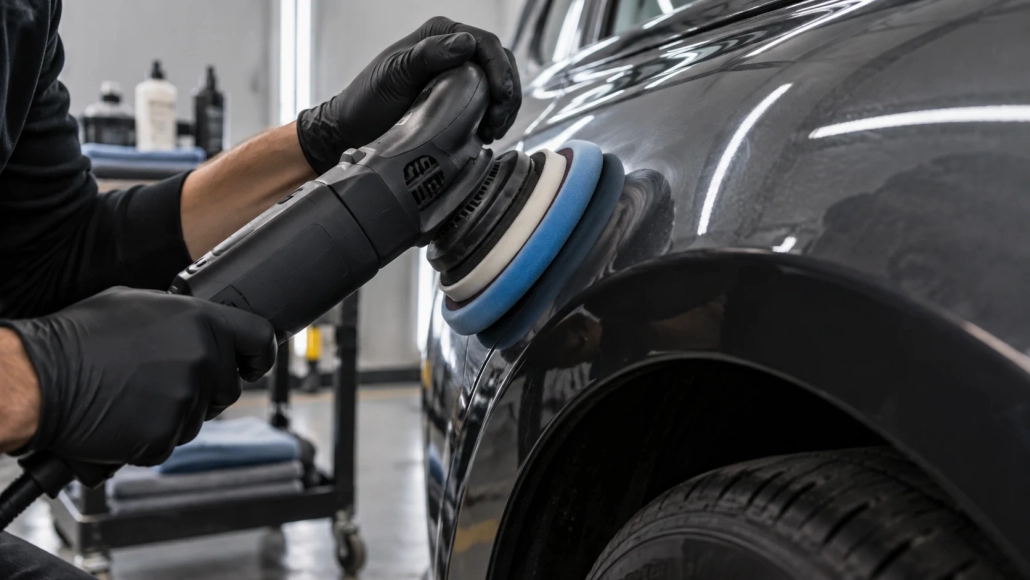
Dual-action polish is not one universal grade of liquid. A DA system can use cutting compounds, fine polishes and finishing products, provided they are approved for the tool and pad. Start by defining the job rather than searching for one bottle that promises every result.
A free-spinning random orbital tool combines orbital movement with freely rotating pad motion. A gear-driven DA mechanically links the motions. These arrangements behave differently under load, so include the actual movement in the setup description.
The machine name alone does not determine how aggressively the paint will be treated. Pad, liquid, technique and surface condition still matter.
For light defects, consider an approved fine-polish pairing. For stronger correction, evaluate a supported compound system only where the paint assessment and initial test justify it. For refinement, choose the finishing process that resolves the marks remaining after correction.
Do not assume that a product labelled rotary compound automatically has the same DA instructions. Some liquids support both actions; others specify a narrower application.
Prepare suitable glossy paint and work a representative area away from vulnerable boundaries. Use the manufacturer’s guidance for pad preparation, operating range and working cycle.
Inspect the cleaned result before increasing scope. Record target-defect reduction, any haze, ease of removal and the condition of the pad. These observations tell you whether the process can be repeated effectively.
Pad cleaning, spare pads, residue removal and lighting belong in the workflow. A successful first test with a fresh pad does not guarantee the same performance after the face has loaded with residue.
DA polishing is a complete system, not a guarantee against damage. Maintain controlled contact and reassess unfamiliar repairs or changes in paint response. The useful result is a finish you can inspect, repeat and prepare correctly for the chosen protection.
| Observation | Next check |
|---|---|
| Rotation slows on a contour | Check pad contact and the machine’s movement type; do not automatically add pressure. |
| Rapid drying or sticky residue | Check section size, pad loading and the liquid’s working instructions. |
| Correction improves but haze remains | Test a separate refinement combination before committing to the full car. |
| Little improvement after a repeatable cycle | Reassess the defect, approved system and preservation limits. |
Browse the complete car polish and compound guide.
These references illustrate named product systems. Use the current instructions for the exact product, pad and machine in your own process.
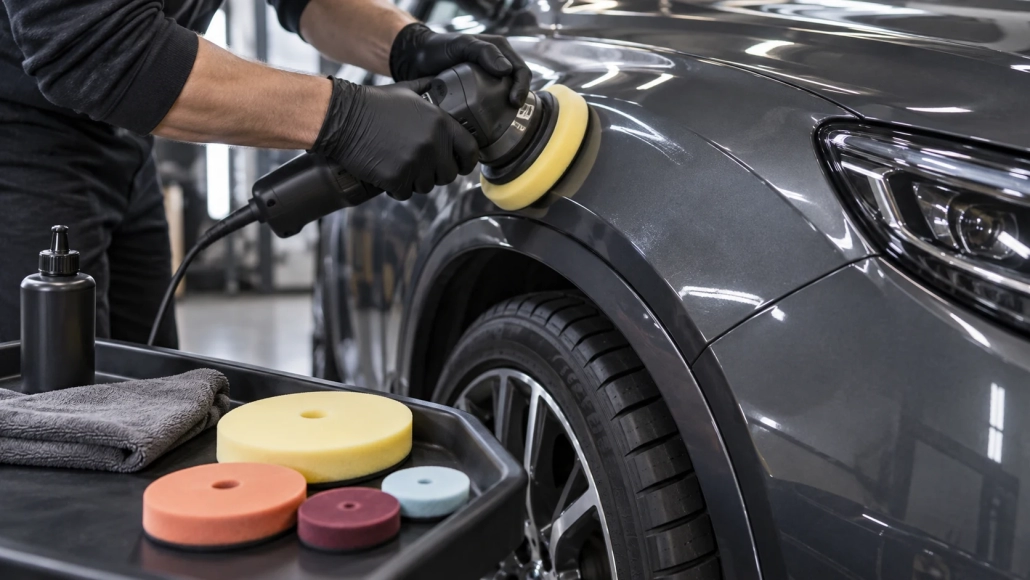
Compare rotary and DA movements by working characteristics, control and intended task without treating either machine as universally superior.
Diagnose inconsistent rotation on free-spinning dual-action polishers by checking pressure, pad contact, curves and the approved setup.

 Rotary vs Dual-Action Polishing: Choosing by Task