






A full polishing range.
From cutting and one-step correction to final finishing.
Specialist chemistry. Expert application.
 QUARTZ99 / CERAMIC BASE COAT
The foundation of your coating system.
A layerable quartz base coat designed for mechanical protection. Pair it with a suitable top coat to create the final finish.
For application by NANOLAB certified installers only.
Four formulas. Extended working time. Find the coating for your finish.
Explore the BEAST family of ceramic coatings.
Find the coating for each exterior surface.
 PPF & VINYLGLOSSProtection for glossy films and wraps.Discover
 MATTE & SATINMATTEProtection that respects the finish.Discover
 GLASSWINDOWSExplore dedicated glass protection.Discover
 WHEEL PROTECTIONWHEELSA dedicated coating for your wheels.Discover
 TRIM PROTECTIONPLASTICProtection for plastic surfaces.Discover
Dedicated care for the surfaces inside.
 LEATHER SURFACESLEATHERDiscover NANOLAB leather protection.Discover PLASTIC SURFACESPLASTICProtection for interior plastic surfaces.Discover TEXTILE SURFACESFABRICExplore the latest fabric formulation.Discover
Spray protection, maintenance and upcoming wash products.
 MAINTENANCEBEAST 365Explore the BEAST maintenance range.Discover
Next in washing, cleaning & care.
Ceramic protection for boats and yachts.
An easy-to-apply ceramic coating with an established track record on boats and yachts around the world.
Results vary with surface preparation, exposure and maintenance.
Read 50 MARINE guides →Explore MARINEProtection for the surfaces you live with.
A look at what we’re developing.
From cutting and one-step correction to final finishing.
A wider range for professional vehicle care.
Taking shape alongside BEAST & MATRIX.
Practical guidance for your next coating project.
Explore all guides →
Identify paint, film, trim and excluded components before selecting products and assigning tasks.
Updated · NANOLAB Knowledge
A vehicle surface map prevents the phrase coat the car from hiding important differences. Paint, film, glass, trim and accessories may require separate product decisions. The map connects those decisions to identifiable areas of the vehicle.
Use a simple vehicle diagram or labelled photographs. Identify known paint repairs, partial PPF, matte areas and aftermarket components. Mark unknown materials or treatment history for review. Do not classify a surface solely by its colour or position on the vehicle.
For each zone, record the intended treatment, selected product and relevant instruction reference. Include excluded components and areas awaiting confirmation. For example, a glossy painted panel beside matte film should not inherit one appearance assumption simply because both are on the same door.
The map should be accessible to everyone working on the job. Update it when inspection reveals a difference from the booking information. At completion, use it to explain the treatment to the customer and preserve the record for future maintenance. It does not need a complex drawing system: clear zone labels and consistent product identification are enough. Its value is that another person can understand what was treated, what was excluded and why the vehicle was not handled as one uniform surface.
Assign a zone identifier to each finish and record the treatment decision, responsible technician and completion status. This article's focus is the handoff between decisions and work; the initial material-identification survey remains a separate starting point.
For example, the map might distinguish glossy painted doors, a matte-wrapped roof and PPF on the front bumper. Each zone needs its own confirmed process where requirements differ. Add exclusions explicitly, especially where a customer asks for the whole car. At final inspection, reconcile the map with the work actually completed. An unexplained blank should trigger a question rather than being interpreted as either intentionally excluded or already finished.
Send NANOLAB your workshop application details. For supporting information, review the current product documentation and the professional coating guides.
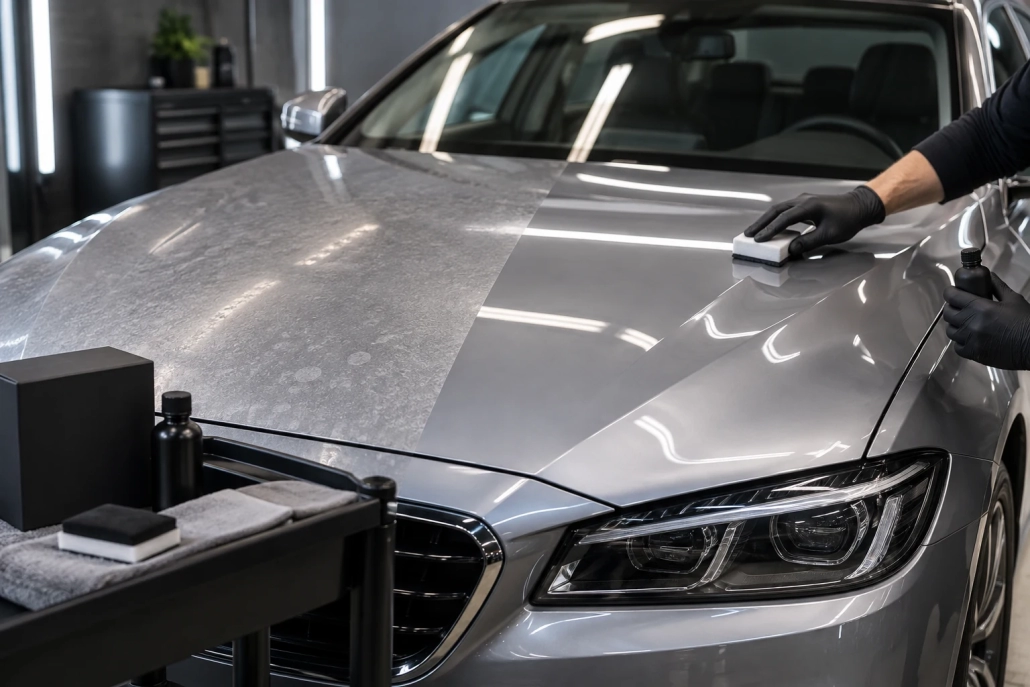
Create honest, useful photographs that document preparation results and finish condition without confusing lighting changes with correction.
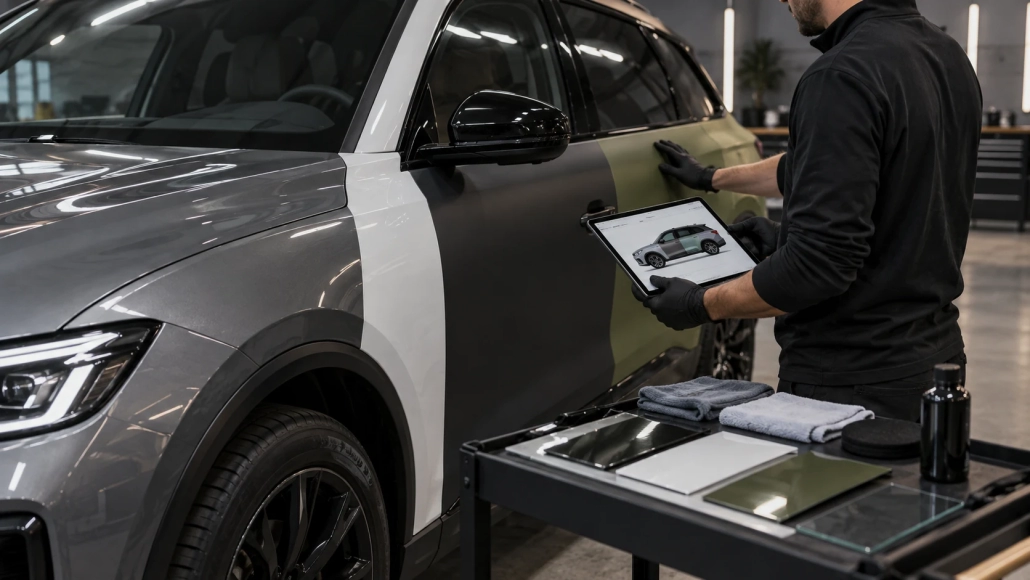
Create a surface map for vehicles combining paint, PPF, vinyl, glass and trim so every area receives a suitable NANOLAB system.

Turn vague expectations into a documented choice between appearance goals and agreed limitations.