






A full polishing range.
From cutting and one-step correction to final finishing.
Specialist chemistry. Expert application.
 QUARTZ99 / CERAMIC BASE COAT
The foundation of your coating system.
A layerable quartz base coat designed for mechanical protection. Pair it with a suitable top coat to create the final finish.
For application by NANOLAB certified installers only.
Four formulas. Extended working time. Find the coating for your finish.
Explore the BEAST family of ceramic coatings.
Find the coating for each exterior surface.
 PPF & VINYLGLOSSProtection for glossy films and wraps.Discover
 MATTE & SATINMATTEProtection that respects the finish.Discover
 GLASSWINDOWSExplore dedicated glass protection.Discover
 WHEEL PROTECTIONWHEELSA dedicated coating for your wheels.Discover
 TRIM PROTECTIONPLASTICProtection for plastic surfaces.Discover
Dedicated care for the surfaces inside.
 LEATHER SURFACESLEATHERDiscover NANOLAB leather protection.Discover PLASTIC SURFACESPLASTICProtection for interior plastic surfaces.Discover TEXTILE SURFACESFABRICExplore the latest fabric formulation.Discover
Spray protection, maintenance and upcoming wash products.
 MAINTENANCEBEAST 365Explore the BEAST maintenance range.Discover
Next in washing, cleaning & care.
Ceramic protection for boats and yachts.
An easy-to-apply ceramic coating with an established track record on boats and yachts around the world.
Results vary with surface preparation, exposure and maintenance.
Read 50 MARINE guides →Explore MARINEProtection for the surfaces you live with.
A look at what we’re developing.
From cutting and one-step correction to final finishing.
A wider range for professional vehicle care.
Taking shape alongside BEAST & MATRIX.
Practical guidance for your next coating project.
Explore all guides →
Treat a replacement PPF section as a new surface history, and document how its coating and care reconnect with the rest of the vehicle.
Updated · NANOLAB Knowledge

Replacing one damaged PPF section changes more than the film’s age. It may introduce a different roll, revised film product or new installation process beside older coated surfaces. The service record should identify that transition.
Record the panel, film boundary, replacement date and new film identity. Keep the old history available. If only part of a panel was replaced, use a photograph to show the join and avoid describing the whole panel as newly installed.
Complete installation acceptance and follow the film’s waiting and preparation requirements before coating. Confirm compatibility with the actual replacement film. The fact that the original installation accepted a particular coating does not automatically approve a different film revision.
| Area | Record after repair |
|---|---|
| Replacement film | New installation and coating dates |
| Adjacent existing film | Retained history and observed condition |
| Boundary | Care instructions and any exclusions |
Do not reset the entire vehicle’s service age merely because one section has been treated again.
A new section may not match an aged neighbouring section under every condition. Inspect and agree the appearance before completing the repair. At handover, state which area received new film, which received coating and what maintenance remains unchanged elsewhere. If a later inspection compares water behaviour, use the updated zone ages and exposure records; otherwise the repair can be mistaken for unusually strong or weak coating durability.
Ask NANOLAB about your surface and intended use. For application and care, use the current instructions for the exact product.
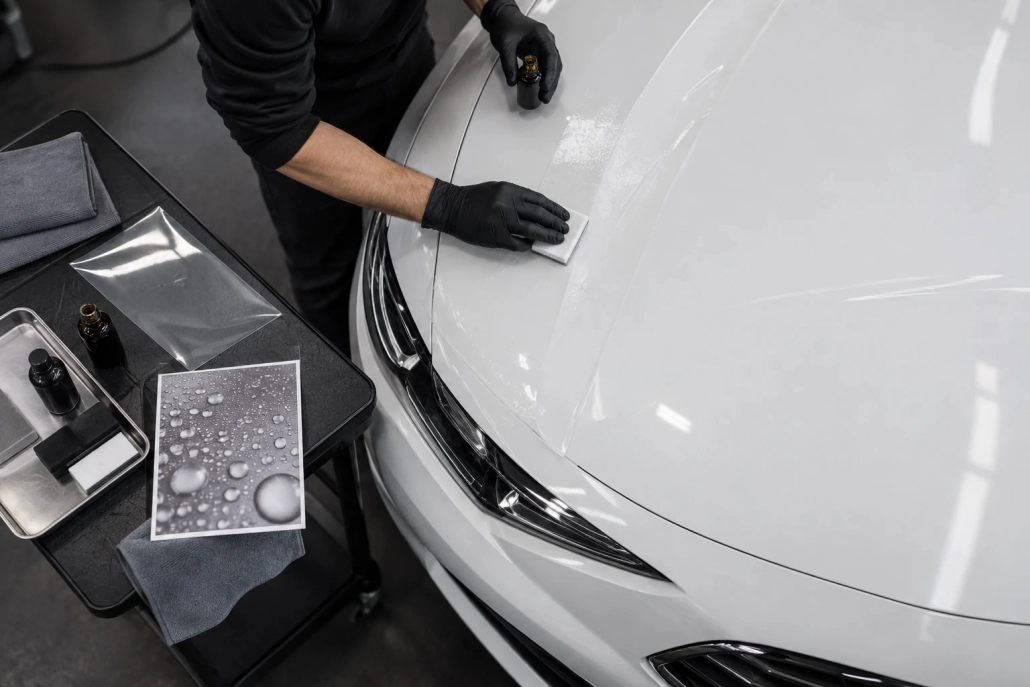
Check film condition, finish compatibility and the approved coating process before applying ceramic protection over paint protection film.
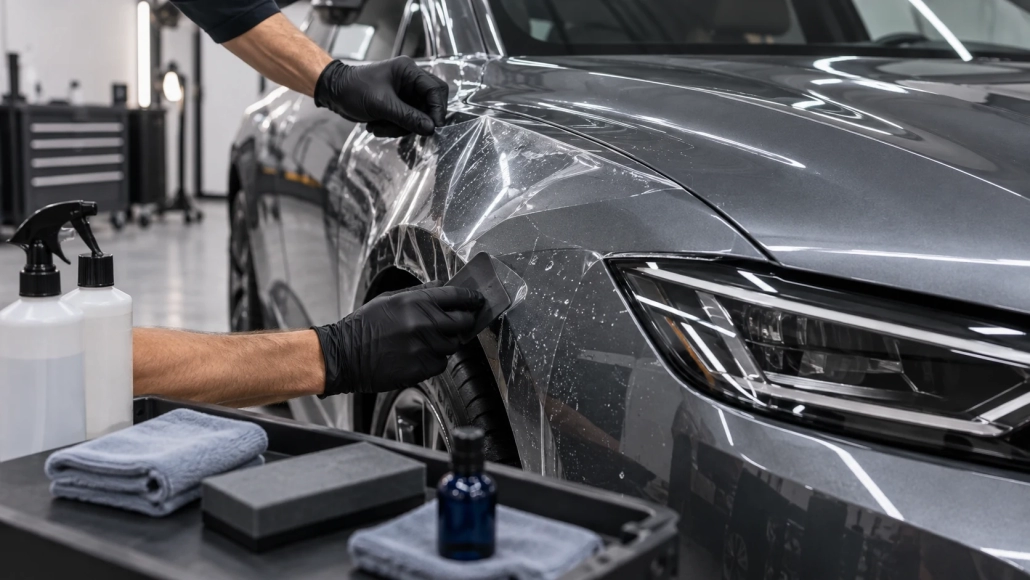
Treat replacement film as a new surface with its own installation and care requirements, then update the vehicle's protection record.
Build a compact service record for vehicles carrying several films and coatings, with clear product identities and panel-level history.
 A Service Record for Vehicles with More Than One Film and Coating System