






A full polishing range.
From cutting and one-step correction to final finishing.
Specialist chemistry. Expert application.
 QUARTZ99 / CERAMIC BASE COAT
The foundation of your coating system.
A layerable quartz base coat designed for mechanical protection. Pair it with a suitable top coat to create the final finish.
For application by NANOLAB certified installers only.
Four formulas. Extended working time. Find the coating for your finish.
Explore the BEAST family of ceramic coatings.
Find the coating for each exterior surface.
 PPF & VINYLGLOSSProtection for glossy films and wraps.Discover
 MATTE & SATINMATTEProtection that respects the finish.Discover
 GLASSWINDOWSExplore dedicated glass protection.Discover
 WHEEL PROTECTIONWHEELSA dedicated coating for your wheels.Discover
 TRIM PROTECTIONPLASTICProtection for plastic surfaces.Discover
Dedicated care for the surfaces inside.
 LEATHER SURFACESLEATHERDiscover NANOLAB leather protection.Discover PLASTIC SURFACESPLASTICProtection for interior plastic surfaces.Discover TEXTILE SURFACESFABRICExplore the latest fabric formulation.Discover
Spray protection, maintenance and upcoming wash products.
 MAINTENANCEBEAST 365Explore the BEAST maintenance range.Discover
Next in washing, cleaning & care.
Ceramic protection for boats and yachts.
An easy-to-apply ceramic coating with an established track record on boats and yachts around the world.
Results vary with surface preparation, exposure and maintenance.
Read 50 MARINE guides →Explore MARINEProtection for the surfaces you live with.
A look at what we’re developing.
From cutting and one-step correction to final finishing.
A wider range for professional vehicle care.
Taking shape alongside BEAST & MATRIX.
Practical guidance for your next coating project.
Explore all guides →
Build a compact service record for vehicles carrying several films and coatings, with clear product identities and panel-level history.
Updated · NANOLAB Knowledge

Vehicles accumulate surface systems through repairs and successive owners. A ceramic coating on exposed paint, a coated gloss PPF front and a matte wrapped roof should not be reduced to the note “vehicle protected.” A panel-level record keeps future service decisions usable.
Assign each distinct system a code and mark it on a vehicle diagram. Keep the code readable without requiring the technician to recognise products by appearance. Unknown materials should be marked as unknown until supported by records.
| Field | Example of its purpose |
|---|---|
| Surface and film identity | Determines which compatibility guidance applies |
| Coating identity and date | Establishes the local treatment history |
| Preparation and repair notes | Explains changes from the original installation |
| Care document version | Connects advice to a specific instruction set |
| Inspection images | Provides an appearance baseline |
Add a dated entry for replacement, removal, recoating or a change in approved care. Do not overwrite the earlier product with the latest name: an investigation may need to know what was on the panel before the change.
The customer-facing version can contain the map, routine care, exclusions and support contact. Keep detailed batch and process records in the job file. Before a new service, ask whether another workshop has altered any mapped area. That short check prevents a technically accurate old record from being treated as a complete description of the vehicle today.
Ask NANOLAB about your surface and intended use. For application and care, use the current instructions for the exact product.
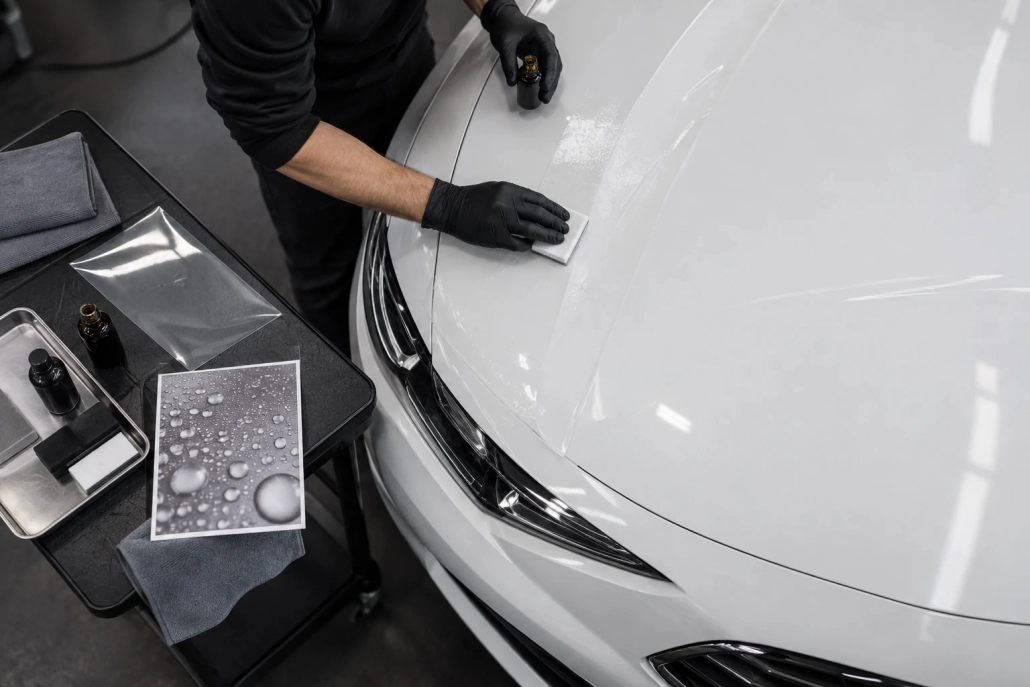
Check film condition, finish compatibility and the approved coating process before applying ceramic protection over paint protection film.
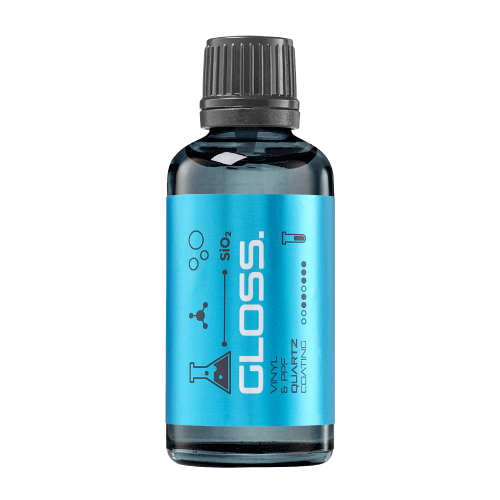
A film care plan needs the actual product identity. Use installation records instead of guessing from water behaviour or a brand logo alone.
Trace film identity, storage and installation history so a coating trial represents the PPF actually fitted to the vehicle.

 Mapping Salt-Spray Exposure on a Boat before Choosing a Coating Trial Area