






A full polishing range.
From cutting and one-step correction to final finishing.
Specialist chemistry. Expert application.
 QUARTZ99 / CERAMIC BASE COAT
The foundation of your coating system.
A layerable quartz base coat designed for mechanical protection. Pair it with a suitable top coat to create the final finish.
For application by NANOLAB certified installers only.
Four formulas. Extended working time. Find the coating for your finish.
Explore the BEAST family of ceramic coatings.
Find the coating for each exterior surface.
 PPF & VINYLGLOSSProtection for glossy films and wraps.Discover
 MATTE & SATINMATTEProtection that respects the finish.Discover
 GLASSWINDOWSExplore dedicated glass protection.Discover
 WHEEL PROTECTIONWHEELSA dedicated coating for your wheels.Discover
 TRIM PROTECTIONPLASTICProtection for plastic surfaces.Discover
Dedicated care for the surfaces inside.
 LEATHER SURFACESLEATHERDiscover NANOLAB leather protection.Discover PLASTIC SURFACESPLASTICProtection for interior plastic surfaces.Discover TEXTILE SURFACESFABRICExplore the latest fabric formulation.Discover
Spray protection, maintenance and upcoming wash products.
 MAINTENANCEBEAST 365Explore the BEAST maintenance range.Discover
Next in washing, cleaning & care.
Ceramic protection for boats and yachts.
An easy-to-apply ceramic coating with an established track record on boats and yachts around the world.
Results vary with surface preparation, exposure and maintenance.
Read 50 MARINE guides →Explore MARINEProtection for the surfaces you live with.
A look at what we’re developing.
From cutting and one-step correction to final finishing.
A wider range for professional vehicle care.
Taking shape alongside BEAST & MATRIX.
Practical guidance for your next coating project.
Explore all guides →
Map spray, shelter and washing access before choosing marine coating trial areas, so the comparison reflects real service exposure.
Updated · NANOLAB Knowledge
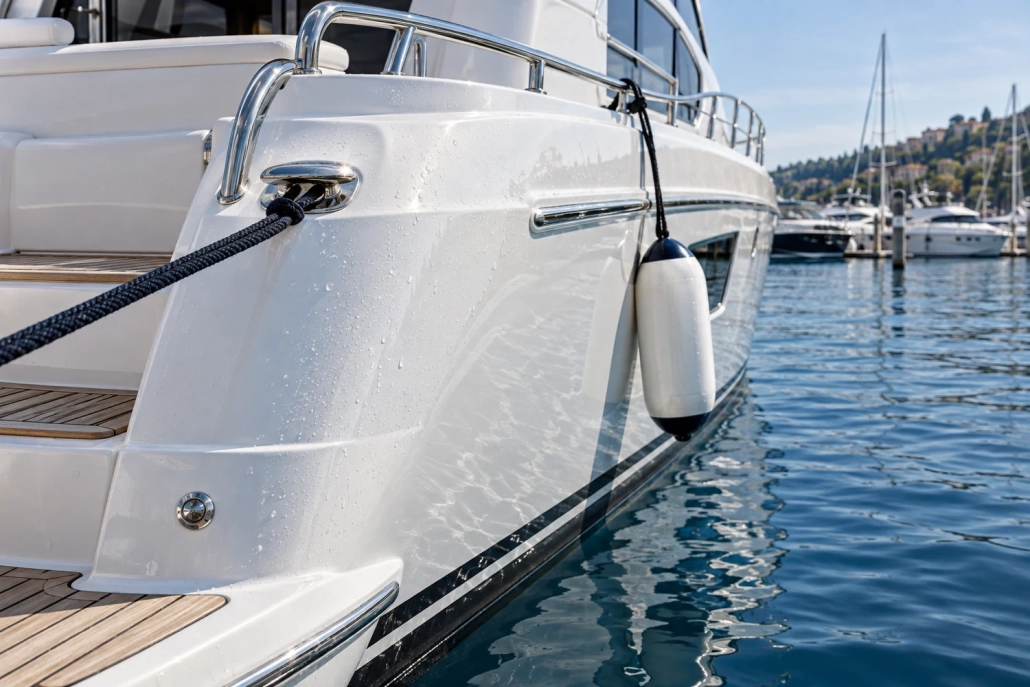
The two sides of a boat do not necessarily receive the same salt exposure. Berth orientation, prevailing spray, covers and wash access can create very different service conditions. A trial area should be selected with those differences visible.
Use a boat diagram to mark frequently sprayed surfaces, sheltered areas, runoff paths and places that are seldom rinsed. Record whether the boat is usually berthed, trailered or underway. Treat the map as a working observation, updating it when the operating pattern changes.
Where practical, place treated and reference areas next to each other on comparable material with similar orientation. Comparing a sheltered coated panel with an exposed untreated panel combines product and exposure effects.
The record need not become a navigation log. It needs enough detail to explain an important change in surface exposure.
If the trial concerns above-waterline gelcoat beside a cockpit opening, describe that location. Do not extend the finding to immersed hull surfaces, engine components or every metal fitting. For example, improved cleaning time in a sheltered cockpit zone can support a maintenance decision there while leaving the heavily sprayed bow untested. A clear exposure map makes the next trial location easier to choose and prevents an attractive test patch from representing an entire vessel without evidence.
Ask NANOLAB about your surface and intended use. For application and care, use the current instructions for the exact product.
A pre-coating inspection prevents attractive results in one area from hiding unresolved problems elsewhere.
Divide a catamaran coating project by accessible surfaces, exposure and safe working positions before estimating the job.
Investigate salt retention at marine fasteners and joints before expecting a coating on the surrounding panel to solve repeated staining.

 Salt Retention around Marine Fasteners: A Joint-Cleaning Problem