






A full polishing range.
From cutting and one-step correction to final finishing.
Specialist chemistry. Expert application.
 QUARTZ99 / CERAMIC BASE COAT
The foundation of your coating system.
A layerable quartz base coat designed for mechanical protection. Pair it with a suitable top coat to create the final finish.
For application by NANOLAB certified installers only.
Four formulas. Extended working time. Find the coating for your finish.
Explore the BEAST family of ceramic coatings.
Find the coating for each exterior surface.
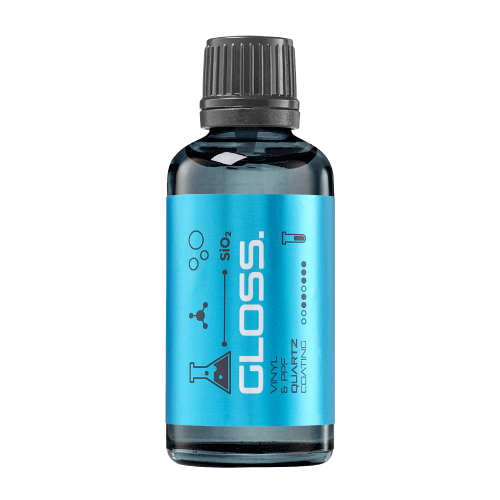
 PPF & VINYLGLOSSProtection for glossy films and wraps.Discover
 MATTE & SATINMATTEProtection that respects the finish.Discover
 GLASSWINDOWSExplore dedicated glass protection.Discover
 WHEEL PROTECTIONWHEELSA dedicated coating for your wheels.Discover
 TRIM PROTECTIONPLASTICProtection for plastic surfaces.Discover
Dedicated care for the surfaces inside.
 LEATHER SURFACESLEATHERDiscover NANOLAB leather protection.Discover PLASTIC SURFACESPLASTICProtection for interior plastic surfaces.Discover TEXTILE SURFACESFABRICExplore the latest fabric formulation.Discover
Spray protection, maintenance and upcoming wash products.
 MAINTENANCEBEAST 365Explore the BEAST maintenance range.Discover
Next in washing, cleaning & care.
Ceramic protection for boats and yachts.
An easy-to-apply ceramic coating with an established track record on boats and yachts around the world.
Results vary with surface preparation, exposure and maintenance.
Read 50 MARINE guides →Explore MARINEProtection for the surfaces you live with.
A look at what we’re developing.
From cutting and one-step correction to final finishing.
A wider range for professional vehicle care.
Taking shape alongside BEAST & MATRIX.
Practical guidance for your next coating project.
Explore all guides →
Assess matte film folds and stretched zones against an installation baseline before any coating changes the surface appearance.
Updated · NANOLAB Knowledge

Matte film appearance depends on viewing direction, illumination and installation geometry. A fold or stretched corner may look different from a flat sample before a coating is introduced. The installation should therefore have its own appearance acceptance step.
Photograph broad panels, corners and recesses using consistent lighting. Include both a normal viewing position and an angle that reveals the reported difference. Label the zone so a later photograph can be taken from a comparable position.
Ask the film installer to assess visible gloss changes, whitening, texture variation or marks against the film supplier’s criteria. Do not assume these observations share a single cause. A coating demonstration on a flat offcut does not establish that an already altered corner will become visually uniform.
If the test changes the accepted matte appearance, pause and discuss an alternative with the suppliers. Avoid polishing a matte film or adding further coats in an attempt to blend the result unless a product-specific repair procedure authorises it. For an accepted installation, retain the baseline images with the coating record. This makes future maintenance discussions about a defined condition rather than an expectation that every angle must look identical.
Ask NANOLAB about your surface and intended use. For application and care, use the current instructions for the exact product.
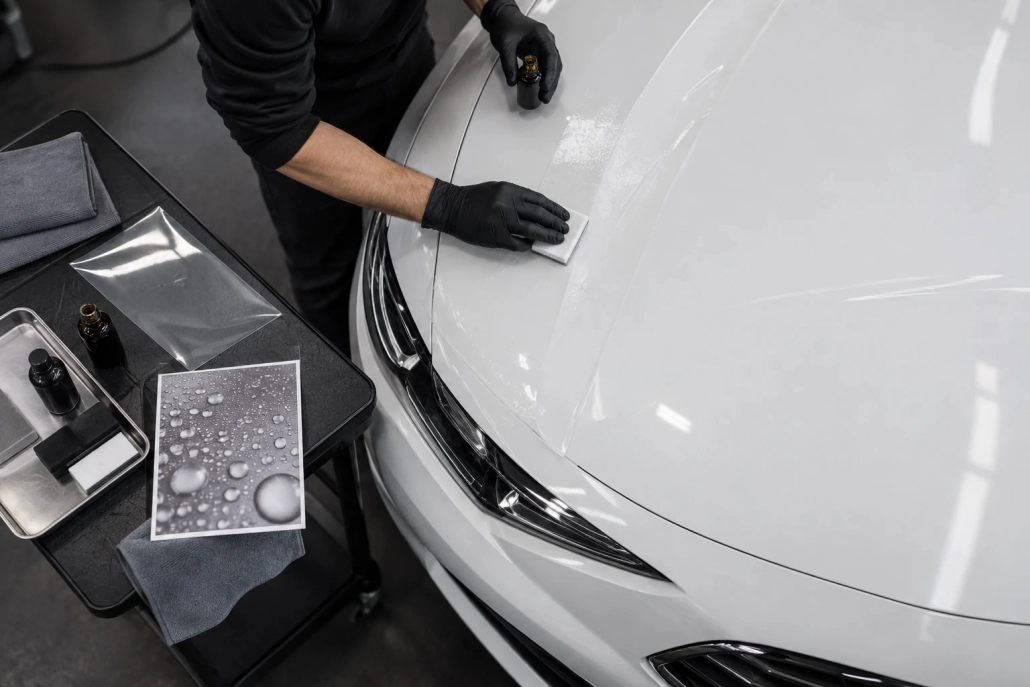
Check film condition, finish compatibility and the approved coating process before applying ceramic protection over paint protection film.
A distorted reflection over PPF can have several causes. Distinguish outer-surface residue from an installation-related appearance before polishing or coating.
Treat a replacement PPF section as a new surface history, and document how its coating and care reconnect with the rest of the vehicle.
 Replacing One PPF Section on a Coated Vehicle: Restore a Clear Maintenance ...