






A full polishing range.
From cutting and one-step correction to final finishing.
Specialist chemistry. Expert application.
 QUARTZ99 / CERAMIC BASE COAT
The foundation of your coating system.
A layerable quartz base coat designed for mechanical protection. Pair it with a suitable top coat to create the final finish.
For application by NANOLAB certified installers only.
Four formulas. Extended working time. Find the coating for your finish.
Explore the BEAST family of ceramic coatings.
Find the coating for each exterior surface.
 PPF & VINYLGLOSSProtection for glossy films and wraps.Discover
 MATTE & SATINMATTEProtection that respects the finish.Discover
 GLASSWINDOWSExplore dedicated glass protection.Discover
 WHEEL PROTECTIONWHEELSA dedicated coating for your wheels.Discover
 TRIM PROTECTIONPLASTICProtection for plastic surfaces.Discover
Dedicated care for the surfaces inside.
 LEATHER SURFACESLEATHERDiscover NANOLAB leather protection.Discover PLASTIC SURFACESPLASTICProtection for interior plastic surfaces.Discover TEXTILE SURFACESFABRICExplore the latest fabric formulation.Discover
Spray protection, maintenance and upcoming wash products.
 MAINTENANCEBEAST 365Explore the BEAST maintenance range.Discover
Next in washing, cleaning & care.
Ceramic protection for boats and yachts.
An easy-to-apply ceramic coating with an established track record on boats and yachts around the world.
Results vary with surface preparation, exposure and maintenance.
Read 50 MARINE guides →Explore MARINEProtection for the surfaces you live with.
A look at what we’re developing.
From cutting and one-step correction to final finishing.
A wider range for professional vehicle care.
Taking shape alongside BEAST & MATRIX.
Practical guidance for your next coating project.
Explore all guides →
Coordinate film installation, dust control and approved cleaning so airborne particles are not trapped in a subsequent coating step.
Updated · NANOLAB Knowledge

Freshly installed film can become visibly dusty while nearby work continues. Whether static attraction is involved or dust simply settles from the room, the practical task is to control the source and verify cleanliness before coating.
Note what happens between film installation and coating: liner disposal, carton opening, towel handling, polishing in an adjacent bay or movement of vehicles. A clean panel can be contaminated again during a short handover if these activities continue beside it.
These controls should fit the workshop’s ventilation and safety arrangements. Do not improvise electrical static-control devices or introduce an unapproved anti-static spray onto the film.
Use the specified waiting period and preparation method for the exact film and coating combination. Dry wiping a visibly dusty panel is not a substitute for an approved cleaning process. If contamination repeatedly returns, investigate the environment before repeating more aggressive cleaning.
Record the final cleaning time, inspection lighting and start of coating. For example, compare dust observations immediately after cleaning and after the usual ten-minute transfer between bays. That small process study can reveal where particles are introduced without claiming to measure electrical charge. Release the panel only when the surface condition is acceptable under the agreed inspection method.
Ask NANOLAB about your surface and intended use. For application and care, use the current instructions for the exact product.
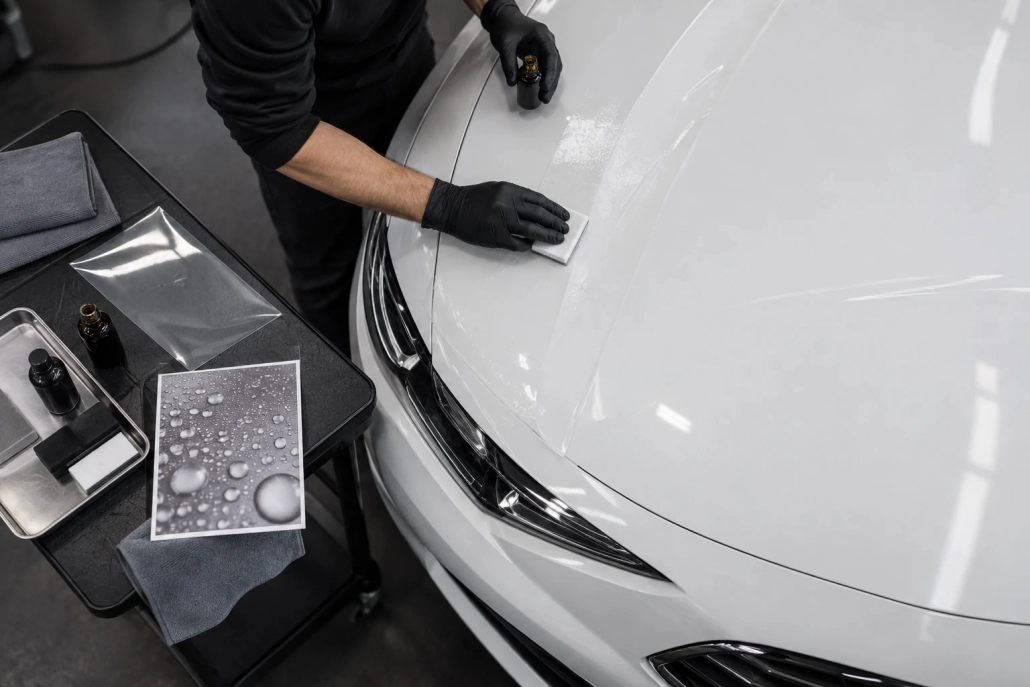
Check film condition, finish compatibility and the approved coating process before applying ceramic protection over paint protection film.
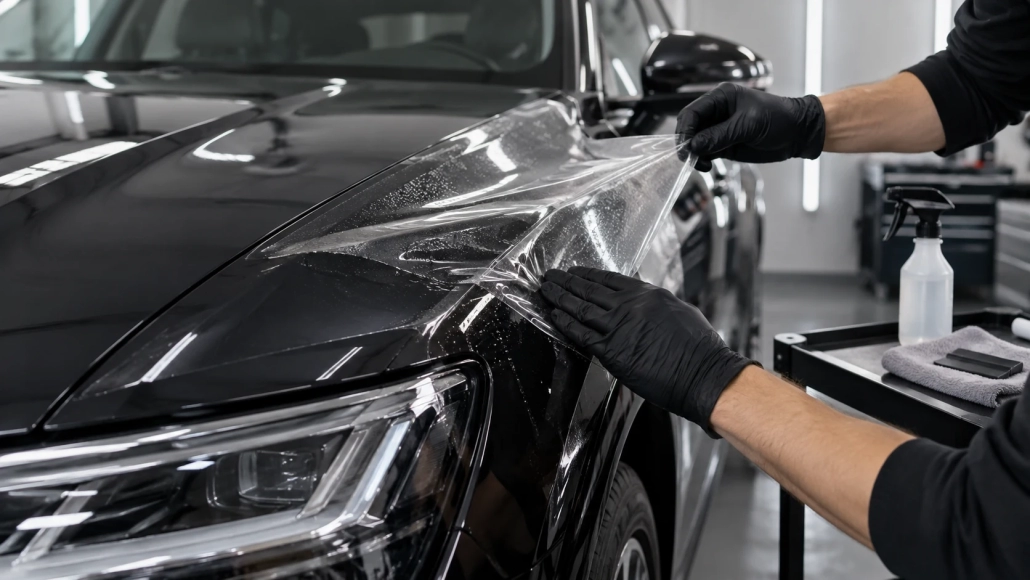
Discuss existing ceramic protection with the PPF installer and establish the required surface preparation before film installation.
Map bumper film edges, deep recesses and vehicle sensors before selecting a practical, approved coating application sequence.
 Coating a Film-Wrapped Bumper: Map Recesses, Sensors and Edges First