






A full polishing range.
From cutting and one-step correction to final finishing.
Specialist chemistry. Expert application.
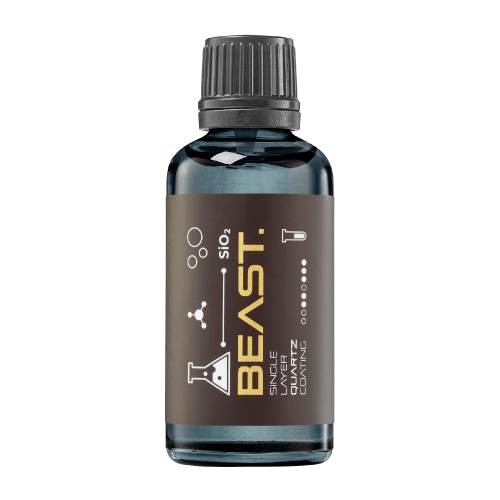
 QUARTZ99 / CERAMIC BASE COAT
The foundation of your coating system.
A layerable quartz base coat designed for mechanical protection. Pair it with a suitable top coat to create the final finish.
For application by NANOLAB certified installers only.
Four formulas. Extended working time. Find the coating for your finish.
Explore the BEAST family of ceramic coatings.
Find the coating for each exterior surface.
 PPF & VINYLGLOSSProtection for glossy films and wraps.Discover
 MATTE & SATINMATTEProtection that respects the finish.Discover
 GLASSWINDOWSExplore dedicated glass protection.Discover
 WHEEL PROTECTIONWHEELSA dedicated coating for your wheels.Discover
 TRIM PROTECTIONPLASTICProtection for plastic surfaces.Discover
Dedicated care for the surfaces inside.
 LEATHER SURFACESLEATHERDiscover NANOLAB leather protection.Discover PLASTIC SURFACESPLASTICProtection for interior plastic surfaces.Discover TEXTILE SURFACESFABRICExplore the latest fabric formulation.Discover
Spray protection, maintenance and upcoming wash products.
 MAINTENANCEBEAST 365Explore the BEAST maintenance range.Discover
Next in washing, cleaning & care.
Ceramic protection for boats and yachts.
An easy-to-apply ceramic coating with an established track record on boats and yachts around the world.
Results vary with surface preparation, exposure and maintenance.
Read 50 MARINE guides →Explore MARINEProtection for the surfaces you live with.
A look at what we’re developing.
From cutting and one-step correction to final finishing.
A wider range for professional vehicle care.
Taking shape alongside BEAST & MATRIX.
Practical guidance for your next coating project.
Explore all guides →
Test whether supplier-scorecard rankings change under plausible weights, while keeping mandatory compatibility requirements separate.
Updated · NANOLAB Knowledge
A weighted scorecard combines several criteria into one result. Sensitivity analysis checks whether a small change in the chosen weights changes the preferred supplier. A ranking that flips easily should be discussed as a close decision rather than presented as an objective certainty.
Substrate compatibility, required documentation and other essential conditions should be assessed as gates. A low price should not compensate mathematically for failing a mandatory requirement. Only eligible options belong in the weighted comparison.
Use clear scoring definitions for the remaining criteria. A score of four for application support needs an explanation that another reviewer can reproduce. Avoid mixing a measured numerical scale with an undocumented personal impression.
In an illustrative comparison, supplier A may lead when unit cost receives 40 percent of the weight, while supplier B leads when application labour receives 40 percent. That is useful information: the decision depends on which cost matters more to the actual business.
Vary weights within reasonable ranges and keep their total consistent. Do not search through arbitrary combinations until the preferred supplier wins. Preserve the original scorecard and the tested alternatives.
If a small uncertain difference in labour time drives the ranking, a better application trial may be more valuable than refining every other score. If the same option leads across plausible weights, the decision is more robust within the evidence supplied.
Report the underlying measurements and important tradeoffs alongside the final score. A weighted total is a decision aid, not a laboratory certification or proof of universal product superiority. For private-label projects, this approach helps purchasing, technical and sales teams see which assumptions actually determine the choice.
For product-specific application instructions, consult NANOLAB technical documentation or ask about your surface and intended use.

Design a coating field trial with recorded vehicles, use patterns, care routines and inspection points that produce interpretable feedback.
Several readings from one coated patch are not the same as several independently prepared test patches. Keep those two forms of repetition separate.

Use coating maintenance patterns as investigation leads without turning observational correlations into unsupported causal claims.