






A full polishing range.
From cutting and one-step correction to final finishing.
Specialist chemistry. Expert application.
 QUARTZ99 / CERAMIC BASE COAT
The foundation of your coating system.
A layerable quartz base coat designed for mechanical protection. Pair it with a suitable top coat to create the final finish.
For application by NANOLAB certified installers only.
Four formulas. Extended working time. Find the coating for your finish.
Explore the BEAST family of ceramic coatings.
Find the coating for each exterior surface.
 PPF & VINYLGLOSSProtection for glossy films and wraps.Discover
 MATTE & SATINMATTEProtection that respects the finish.Discover
 GLASSWINDOWSExplore dedicated glass protection.Discover
 WHEEL PROTECTIONWHEELSA dedicated coating for your wheels.Discover
 TRIM PROTECTIONPLASTICProtection for plastic surfaces.Discover
Dedicated care for the surfaces inside.
 LEATHER SURFACESLEATHERDiscover NANOLAB leather protection.Discover PLASTIC SURFACESPLASTICProtection for interior plastic surfaces.Discover TEXTILE SURFACESFABRICExplore the latest fabric formulation.Discover
Spray protection, maintenance and upcoming wash products.
 MAINTENANCEBEAST 365Explore the BEAST maintenance range.Discover
Next in washing, cleaning & care.
Ceramic protection for boats and yachts.
An easy-to-apply ceramic coating with an established track record on boats and yachts around the world.
Results vary with surface preparation, exposure and maintenance.
Read 50 MARINE guides →Explore MARINEProtection for the surfaces you live with.
A look at what we’re developing.
From cutting and one-step correction to final finishing.
A wider range for professional vehicle care.
Taking shape alongside BEAST & MATRIX.
Practical guidance for your next coating project.
Explore all guides →
Use an inspector-agreement table to reveal disagreements hidden by similar pass rates and improve coating inspection consistency.
Updated · NANOLAB Knowledge
Two inspectors can give similar overall pass rates while disagreeing about which surfaces pass. An agreement table preserves that difference. It is useful when a workshop is refining an appearance inspection or comparing independent assessments of a coating trial.
In an illustrative set of 100 independently inspected samples, both inspectors pass 40 and both fail 40. Inspector A passes 10 that B fails, while B passes 10 that A fails. Both inspectors report a 50 percent pass rate, yet they agree on only 80 of 100 samples.
Averaging their pass rates would hide the 20 disagreements. Keep a four-cell table: both pass, both fail, A-only pass and B-only pass. Preserve the sample identities so the team can review the disputed cases.
Check whether both inspectors used the same lighting, viewing distance, surface condition and acceptance description. An inspection performed before final residue removal is not directly comparable with one performed afterwards. Where possible, keep assessors unaware of each other's decisions until both records are complete.
Review disagreements against the defined criterion rather than choosing the more favourable result. A third review can help resolve an individual case, but retain the original independent assessments. Otherwise, the agreement record will misleadingly improve after every discussion.
Two inspectors can agree and still apply an unsuitable criterion. Raw agreement can also be high when almost every sample falls into one category. Formal agreement statistics may be appropriate for a larger study, with suitable expertise and assumptions.
For a workshop, the immediate value is practical: locate ambiguous defect definitions, improve reference examples and repeat the exercise under a stable procedure. Report sample count and the pattern of disagreement alongside any summary. This produces more useful training evidence than a single average score that conceals inconsistent decisions.
For product-specific application instructions, consult NANOLAB technical documentation or ask about your surface and intended use.
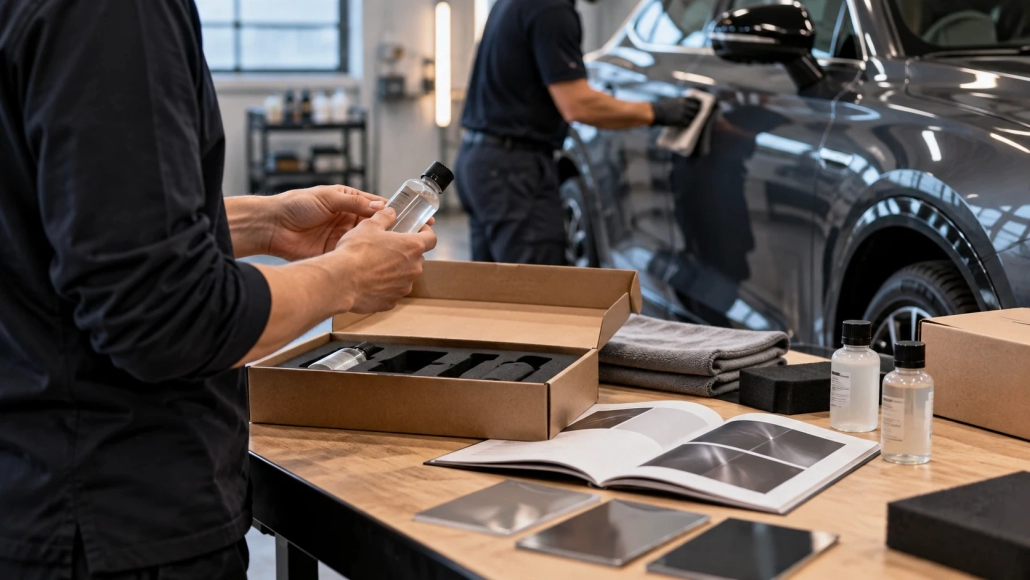
Design a coating field trial with recorded vehicles, use patterns, care routines and inspection points that produce interpretable feedback.
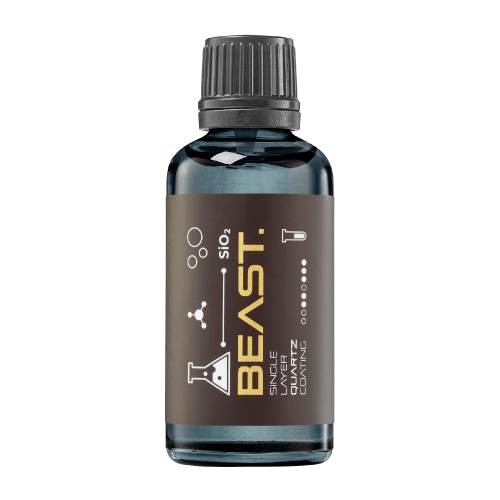
Several readings from one coated patch are not the same as several independently prepared test patches. Keep those two forms of repetition separate.

Separate statistical detectability from operational value when deciding whether a measured coating-process improvement matters.