






A full polishing range.
From cutting and one-step correction to final finishing.
Specialist chemistry. Expert application.
 QUARTZ99 / CERAMIC BASE COAT
The foundation of your coating system.
A layerable quartz base coat designed for mechanical protection. Pair it with a suitable top coat to create the final finish.
For application by NANOLAB certified installers only.
Four formulas. Extended working time. Find the coating for your finish.
Explore the BEAST family of ceramic coatings.
Find the coating for each exterior surface.
 PPF & VINYLGLOSSProtection for glossy films and wraps.Discover
 MATTE & SATINMATTEProtection that respects the finish.Discover
 GLASSWINDOWSExplore dedicated glass protection.Discover
 WHEEL PROTECTIONWHEELSA dedicated coating for your wheels.Discover
 TRIM PROTECTIONPLASTICProtection for plastic surfaces.Discover
Dedicated care for the surfaces inside.
 LEATHER SURFACESLEATHERDiscover NANOLAB leather protection.Discover PLASTIC SURFACESPLASTICProtection for interior plastic surfaces.Discover TEXTILE SURFACESFABRICExplore the latest fabric formulation.Discover
Spray protection, maintenance and upcoming wash products.
 MAINTENANCEBEAST 365Explore the BEAST maintenance range.Discover
Next in washing, cleaning & care.
Ceramic protection for boats and yachts.
An easy-to-apply ceramic coating with an established track record on boats and yachts around the world.
Results vary with surface preparation, exposure and maintenance.
Read 50 MARINE guides →Explore MARINEProtection for the surfaces you live with.
A look at what we’re developing.
From cutting and one-step correction to final finishing.
A wider range for professional vehicle care.
Taking shape alongside BEAST & MATRIX.
Practical guidance for your next coating project.
Explore all guides →
Use a pane-level production traveller to keep treated faces, exclusions and release status clear throughout a shower-glass coating process.
Updated · NANOLAB Knowledge
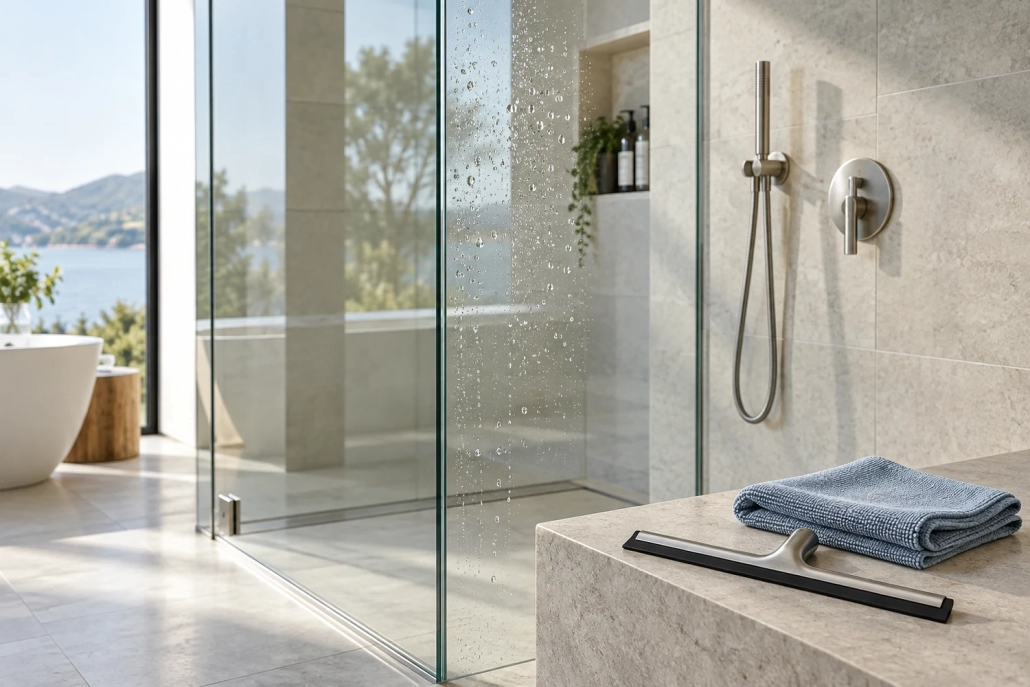
A glass panel can be correctly coated and still be installed with the wrong face toward the shower. A production traveller connects the treatment record to the physical pane as it moves through washing, coating, inspection and packing.
Use the drawing’s established orientation and a clear face designation. Include a small sketch showing holes, cut-outs or another reliable feature. Confirm that the naming convention remains understandable when the pane is turned over.
| Field | Example entry |
|---|---|
| Pane ID | Job and component identifier |
| Face A / Face B | Treated, untreated or excluded by instruction |
| Product and batch | Traceable material identity |
| Release state | Waiting, inspection hold or released |
A blank box should not mean both untreated and forgotten. Use explicit states and require a reason for an intentional omission.
Choose an approved tagging or packaging method that does not contaminate the treated area. Preserve the link between the traveller and pane when racks are rearranged. If identity is lost, hold the pane for resolution rather than guessing from water behaviour.
Check the physical orientation, drawing and traveller together before packing. Transfer the required face information to the installation instructions. A photograph of the packed orientation can help where the geometry is difficult to describe.
The traveller is most effective when it contains a few decisive fields completed at the relevant station. An elaborate form filled in from memory at the end of the shift provides weaker traceability than a short record that follows the actual pane.
Discuss a shower-glass coating project. For application and care, use the current instructions for the exact product.
A short inspection helps determine whether shower glass needs ordinary cleaning, deposit removal or specialist restoration before coating.
The inside and outside of a shower panel may have different exposure and existing treatments.
Create repeatable exclusion templates for glass coating projects where sealants or other bonding systems require an untreated contact zone.

 Sealant Exclusion Templates for Factory-Applied Glass Coatings