






A full polishing range.
From cutting and one-step correction to final finishing.
Specialist chemistry. Expert application.
 QUARTZ99 / CERAMIC BASE COAT
The foundation of your coating system.
A layerable quartz base coat designed for mechanical protection. Pair it with a suitable top coat to create the final finish.
For application by NANOLAB certified installers only.
Four formulas. Extended working time. Find the coating for your finish.
Explore the BEAST family of ceramic coatings.
Find the coating for each exterior surface.
 PPF & VINYLGLOSSProtection for glossy films and wraps.Discover
 MATTE & SATINMATTEProtection that respects the finish.Discover
 GLASSWINDOWSExplore dedicated glass protection.Discover
 WHEEL PROTECTIONWHEELSA dedicated coating for your wheels.Discover
 TRIM PROTECTIONPLASTICProtection for plastic surfaces.Discover
Dedicated care for the surfaces inside.
 LEATHER SURFACESLEATHERDiscover NANOLAB leather protection.Discover PLASTIC SURFACESPLASTICProtection for interior plastic surfaces.Discover TEXTILE SURFACESFABRICExplore the latest fabric formulation.Discover
Spray protection, maintenance and upcoming wash products.
 MAINTENANCEBEAST 365Explore the BEAST maintenance range.Discover
Next in washing, cleaning & care.
Ceramic protection for boats and yachts.
An easy-to-apply ceramic coating with an established track record on boats and yachts around the world.
Results vary with surface preparation, exposure and maintenance.
Read 50 MARINE guides →Explore MARINEProtection for the surfaces you live with.
A look at what we’re developing.
From cutting and one-step correction to final finishing.
A wider range for professional vehicle care.
Taking shape alongside BEAST & MATRIX.
Practical guidance for your next coating project.
Explore all guides →
Use representative sites to test workflow and handover before scaling the same procedure.
Updated · NANOLAB Knowledge
A multi-site coating contract should not assume that every location is equivalent. Surfaces, access and maintenance practices can differ even within one organization. A focused trial across representative sites can reveal those differences before the procedure is scaled.
Identify differences in substrate, finish, use and cleaning arrangements. Choose a manageable set that represents the main conditions rather than only the easiest location. Record excluded situations so a successful pilot is not later presented as covering them automatically.
Agree product identity, instruction references, observation methods and reporting fields. Keep local differences visible. For example, two sites may use the same glass while following different housekeeping routines; the result should preserve that context rather than merge both observations into one unexplained score.
The pilot may support one common procedure, several approved site categories or further review. Record the evidence behind that decision. Include staff training, document access and responsibility for future changes in the rollout plan. A small trial is valuable when it identifies where repetition is appropriate and where local assessment remains necessary. It should not become a ceremonial first installation that is used to justify a uniform process regardless of the conditions found elsewhere.
Choose pilot locations that represent meaningful differences among the sites, such as finish identity, cleaning practice and access constraints. Do not select only the easiest location and assume its result applies everywhere.
Keep a common reporting format while allowing product-approved differences in the process. Record which findings are local and which appear consistent across the trial. A successful pilot at one site supports that documented application; it does not automatically approve every surface in a portfolio. Before expansion, identify remaining exceptions and decide whether they need separate assessment. This makes the rollout decision more useful than a single favourable demonstration that conceals the variation the full project will face.
Send your project surface and scope to NANOLAB. For supporting information, review the current product documentation and the related coating guides.
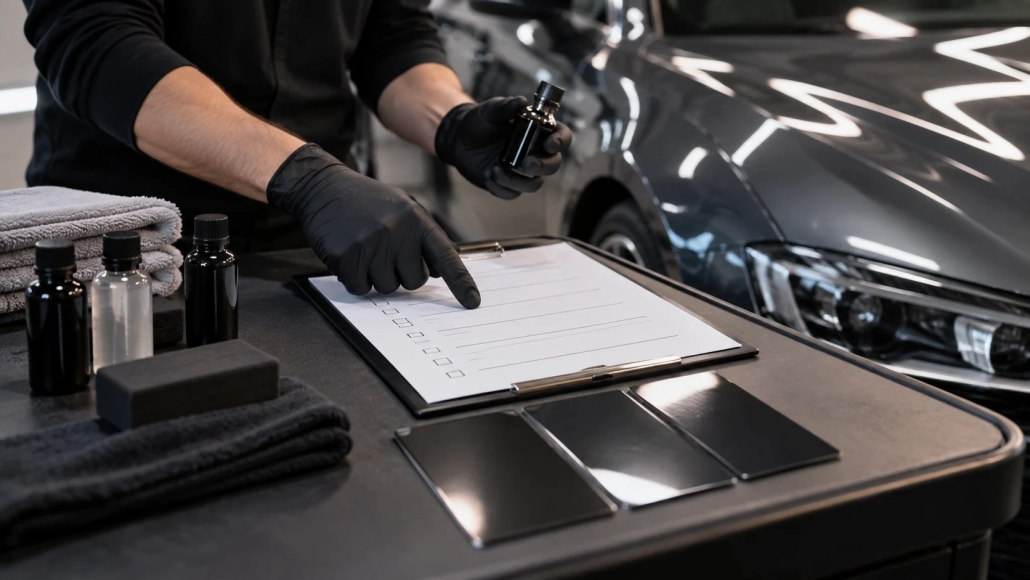
Use this checklist to compare preparation, product choice, treated surfaces and aftercare across ceramic coating proposals.
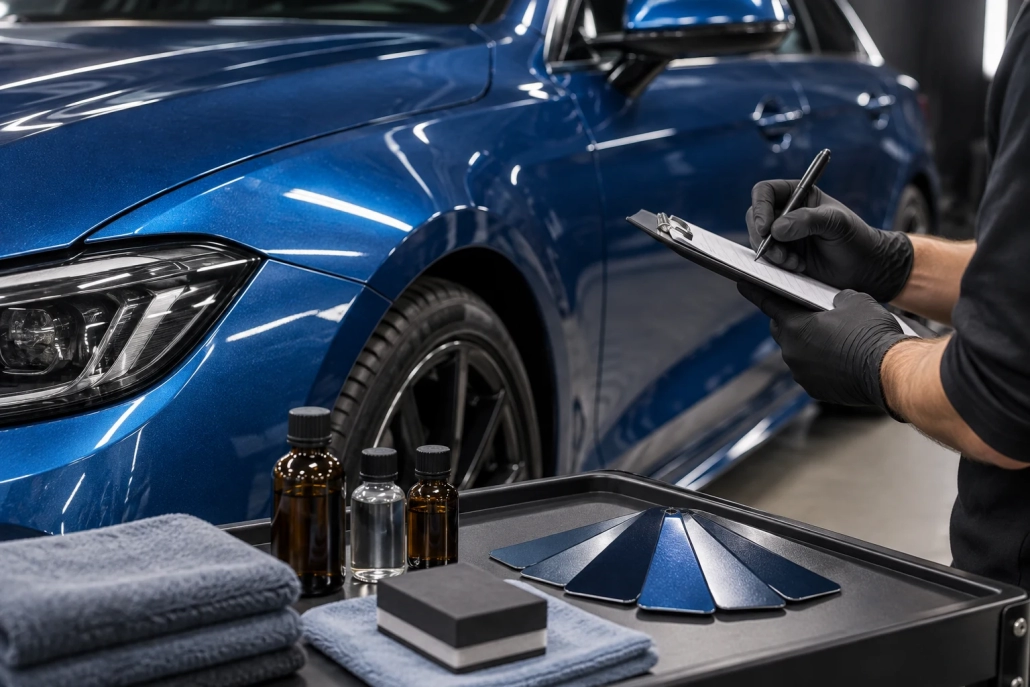
Estimate labour, materials and workshop occupancy from the actual scope, then compare planned and completed work to improve future quotes.

Define the intended inspection and cleaning work before diagnosing a need for additional coating.