






A full polishing range.
From cutting and one-step correction to final finishing.
Specialist chemistry. Expert application.
 QUARTZ99 / CERAMIC BASE COAT
The foundation of your coating system.
A layerable quartz base coat designed for mechanical protection. Pair it with a suitable top coat to create the final finish.
For application by NANOLAB certified installers only.
Four formulas. Extended working time. Find the coating for your finish.
Explore the BEAST family of ceramic coatings.
Find the coating for each exterior surface.
 PPF & VINYLGLOSSProtection for glossy films and wraps.Discover
 MATTE & SATINMATTEProtection that respects the finish.Discover
 GLASSWINDOWSExplore dedicated glass protection.Discover
 WHEEL PROTECTIONWHEELSA dedicated coating for your wheels.Discover
 TRIM PROTECTIONPLASTICProtection for plastic surfaces.Discover
Dedicated care for the surfaces inside.
 LEATHER SURFACESLEATHERDiscover NANOLAB leather protection.Discover PLASTIC SURFACESPLASTICProtection for interior plastic surfaces.Discover TEXTILE SURFACESFABRICExplore the latest fabric formulation.Discover
Spray protection, maintenance and upcoming wash products.
 MAINTENANCEBEAST 365Explore the BEAST maintenance range.Discover
Next in washing, cleaning & care.
Ceramic protection for boats and yachts.
An easy-to-apply ceramic coating with an established track record on boats and yachts around the world.
Results vary with surface preparation, exposure and maintenance.
Read 50 MARINE guides →Explore MARINEProtection for the surfaces you live with.
A look at what we’re developing.
From cutting and one-step correction to final finishing.
A wider range for professional vehicle care.
Taking shape alongside BEAST & MATRIX.
Practical guidance for your next coating project.
Explore all guides →
Define the intended inspection and cleaning work before diagnosing a need for additional coating.
Updated · NANOLAB Knowledge
A coating maintenance visit should begin with a defined purpose. The customer may need routine care, an inspection or help understanding an unfamiliar change. Those needs can lead to different work scopes, and none should automatically be interpreted as a requirement for more coating.
Record the installed product where known, relevant dates and the customer's observations. Ask about recent cleaning or repair activity. Keep the observation separate from the customer's proposed explanation. A change in water behaviour, for example, is information to investigate rather than a complete diagnosis.
State which areas will be inspected and what approved cleaning or maintenance work is included. Identify what requires separate technical review or customer approval. Use current guidance for the exact product instead of applying an unrelated maintenance routine by default.
After the agreed assessment, explain what was observed and what remains uncertain. Provide a reasoned next step if additional work is recommended. Keep photographs and product information linked to the visit record where useful. The customer should understand whether the visit completed routine care, resolved a question or identified a separate issue. That distinction makes future maintenance more coherent and prevents service records from implying a failure or corrective treatment that was never established.
State whether the visit is routine care, a condition inspection, investigation of an observation or preparation for possible renewal. Ask the customer to describe changes since the last visit, including other products applied or repairs performed.
Record the starting condition before cleaning and the observations afterwards. Do not promise renewal as the default result of every inspection. If further work is proposed, explain the evidence and confirm the appropriate product-specific process. A scoped visit produces a clear record of what was checked and what remains uncertain, allowing the next technician to understand the decision instead of seeing only a date and a generic maintenance-completed tick.
Send your project surface and scope to NANOLAB. For supporting information, review the current product documentation and the related coating guides.
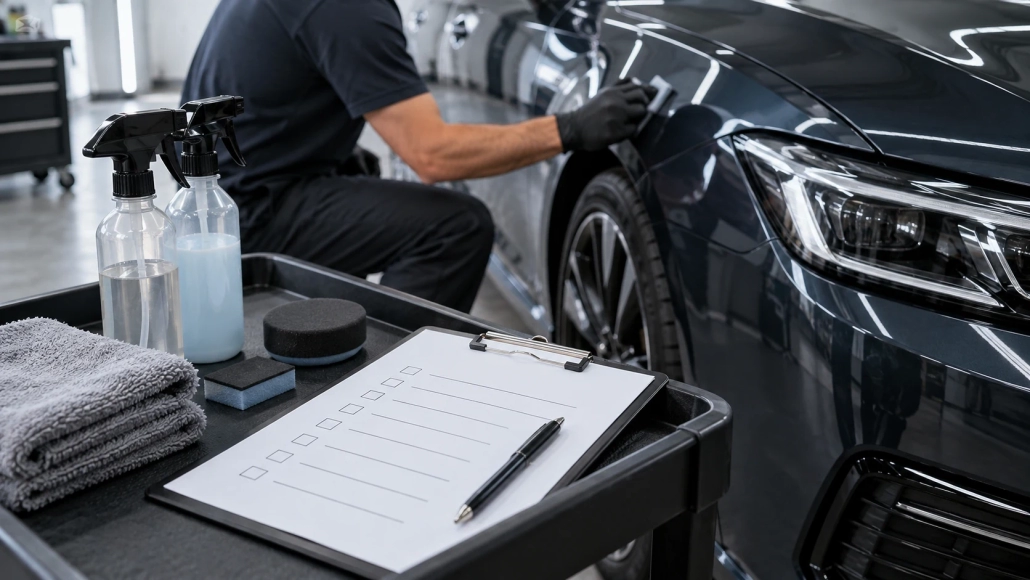
Document the starting condition, cleaning performed and findings of a coating maintenance visit so future decisions have a clear reference.
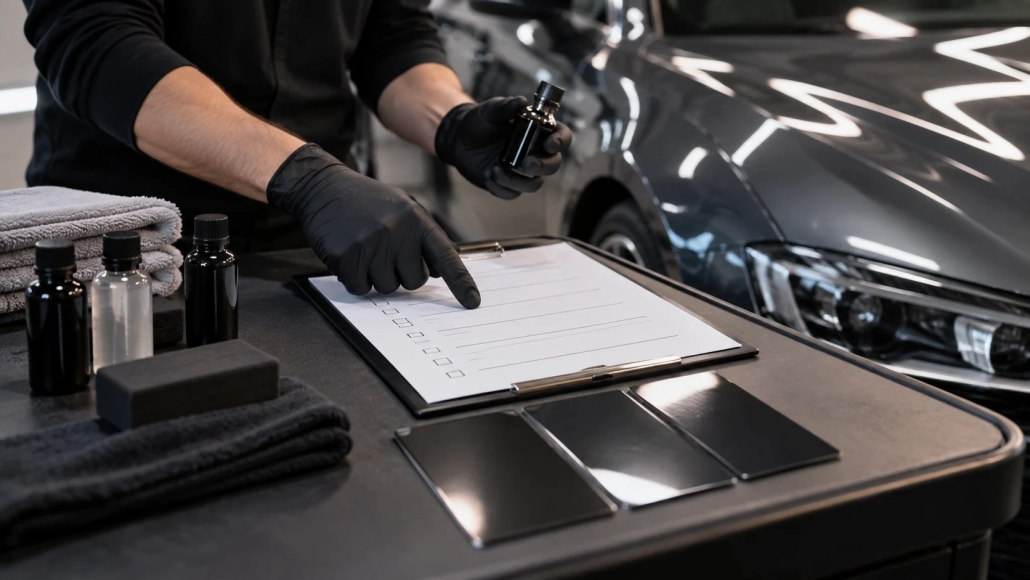
Use this checklist to compare preparation, product choice, treated surfaces and aftercare across ceramic coating proposals.

Identify contamination, access and sequencing conflicts with adjacent trades.