






A full polishing range.
From cutting and one-step correction to final finishing.
Specialist chemistry. Expert application.
 QUARTZ99 / CERAMIC BASE COAT
The foundation of your coating system.
A layerable quartz base coat designed for mechanical protection. Pair it with a suitable top coat to create the final finish.
For application by NANOLAB certified installers only.
Four formulas. Extended working time. Find the coating for your finish.
Explore the BEAST family of ceramic coatings.
Find the coating for each exterior surface.
 PPF & VINYLGLOSSProtection for glossy films and wraps.Discover
 MATTE & SATINMATTEProtection that respects the finish.Discover
 GLASSWINDOWSExplore dedicated glass protection.Discover
 WHEEL PROTECTIONWHEELSA dedicated coating for your wheels.Discover
 TRIM PROTECTIONPLASTICProtection for plastic surfaces.Discover
Dedicated care for the surfaces inside.
 LEATHER SURFACESLEATHERDiscover NANOLAB leather protection.Discover PLASTIC SURFACESPLASTICProtection for interior plastic surfaces.Discover TEXTILE SURFACESFABRICExplore the latest fabric formulation.Discover
Spray protection, maintenance and upcoming wash products.
 MAINTENANCEBEAST 365Explore the BEAST maintenance range.Discover
Next in washing, cleaning & care.
Ceramic protection for boats and yachts.
An easy-to-apply ceramic coating with an established track record on boats and yachts around the world.
Results vary with surface preparation, exposure and maintenance.
Read 50 MARINE guides →Explore MARINEProtection for the surfaces you live with.
A look at what we’re developing.
From cutting and one-step correction to final finishing.
A wider range for professional vehicle care.
Taking shape alongside BEAST & MATRIX.
Practical guidance for your next coating project.
Explore all guides →
Organise a polishing job into clear decision points for surface assessment, correction, refinement and preparation for protection.
Updated · NANOLAB Knowledge
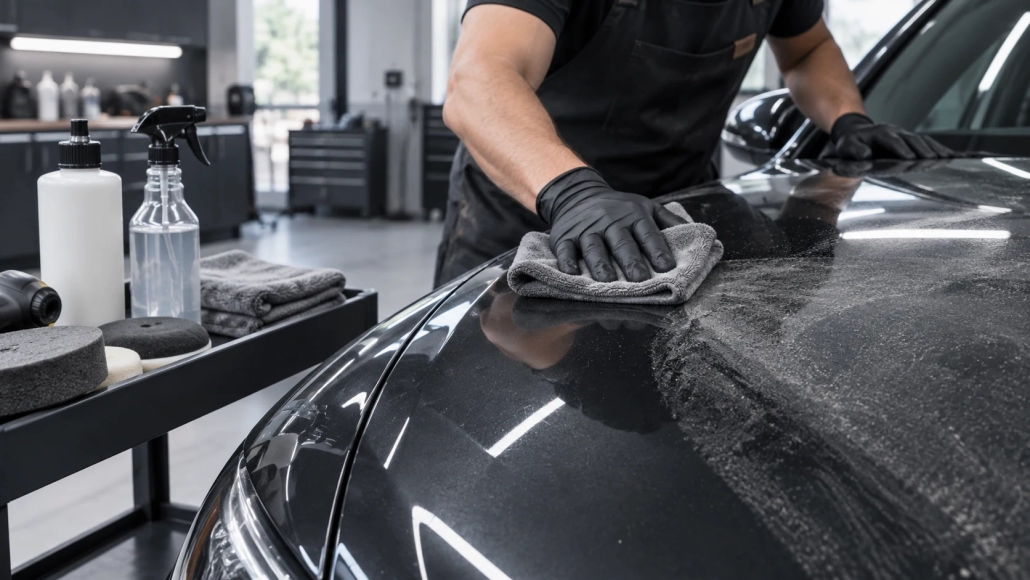
A repeatable polishing workflow is more useful than a fixed list of bottles. It identifies what must be checked before each stage and what evidence allows the work to continue. The process should adapt to the vehicle without becoming improvised.
Inspect clean suitable paint and record defects, repairs and areas requiring separate treatment. Agree the intended improvement and any exclusions. Identify the final protection system so its preparation requirements are known early.
Select representative test areas. A repaired door or unusually sensitive panel may need its own test instead of inheriting the bonnet’s result.
Test the proposed correction and any refinement it needs. Inspect after compatible residue removal. Do not approve a cutting stage without knowing how its finish will be completed.
Record machine, pad, liquid and the working method. Include cleanup and inspection, because the result depends on more than machine-on time.
Maintain the accepted method while monitoring pad condition and surface response. Reassess unexpected behaviour instead of pushing the original recipe through every panel.
Keep completed areas identifiable. A simple panel map prevents missed sections and unnecessary repeated abrasion when several technicians share the work.
Review the clean finish under the agreed lighting before protection. Remove residues from appropriate seams and surrounding areas using compatible methods, then complete the selected protection system’s preparation.
Document deliberately retained defects. The final check should confirm the actual service standard rather than reopen every previously agreed stopping decision.
A useful job record answers four questions: what was found, what was tested, what was performed and what remained. That structure supports accurate quoting, technician handovers and honest customer communication. It also makes future maintenance easier to plan without assuming the whole correction sequence must be repeated.
Browse the complete car polish and compound guide.
These references illustrate named product systems. Use the current instructions for the exact product, pad and machine in your own process.
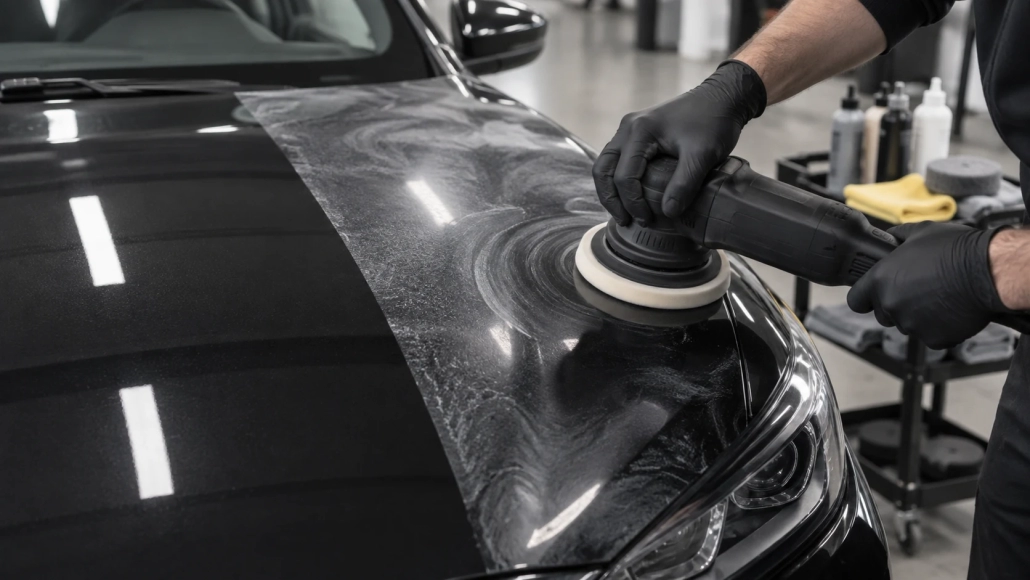
Choose a working section that allows even coverage, usable product film and reliable inspection instead of applying one size to every panel.
Remove polishing dust from seams, trim and the work area before final panel preparation and ceramic coating application.

 Choosing a Polishing Section Size That Matches the Working Cycle