






A full polishing range.
From cutting and one-step correction to final finishing.
Specialist chemistry. Expert application.
 QUARTZ99 / CERAMIC BASE COAT
The foundation of your coating system.
A layerable quartz base coat designed for mechanical protection. Pair it with a suitable top coat to create the final finish.
For application by NANOLAB certified installers only.
Four formulas. Extended working time. Find the coating for your finish.
Explore the BEAST family of ceramic coatings.
Find the coating for each exterior surface.
 PPF & VINYLGLOSSProtection for glossy films and wraps.Discover
 MATTE & SATINMATTEProtection that respects the finish.Discover
 GLASSWINDOWSExplore dedicated glass protection.Discover
 WHEEL PROTECTIONWHEELSA dedicated coating for your wheels.Discover
 TRIM PROTECTIONPLASTICProtection for plastic surfaces.Discover
Dedicated care for the surfaces inside.
 LEATHER SURFACESLEATHERDiscover NANOLAB leather protection.Discover PLASTIC SURFACESPLASTICProtection for interior plastic surfaces.Discover TEXTILE SURFACESFABRICExplore the latest fabric formulation.Discover
Spray protection, maintenance and upcoming wash products.
 MAINTENANCEBEAST 365Explore the BEAST maintenance range.Discover
Next in washing, cleaning & care.
Ceramic protection for boats and yachts.
An easy-to-apply ceramic coating with an established track record on boats and yachts around the world.
Results vary with surface preparation, exposure and maintenance.
Read 50 MARINE guides →Explore MARINEProtection for the surfaces you live with.
A look at what we’re developing.
From cutting and one-step correction to final finishing.
A wider range for professional vehicle care.
Taking shape alongside BEAST & MATRIX.
Practical guidance for your next coating project.
Explore all guides →
Compare polishing pad materials by their intended role, machine compatibility and maintenance needs before choosing a complete correction system.
Updated · NANOLAB Knowledge
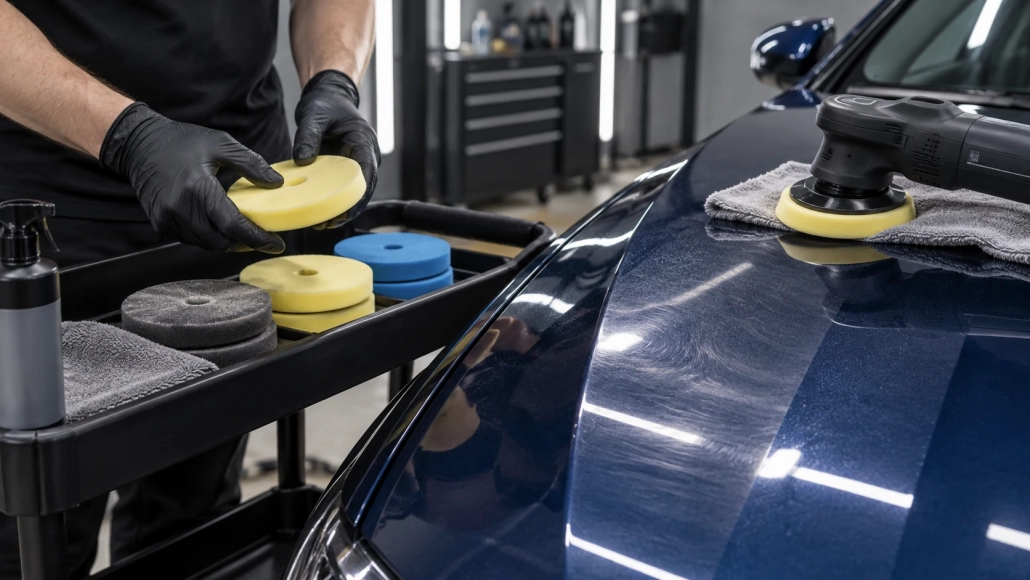
Pad material influences the polishing process, but it does not determine the result on its own. Foam, microfiber and wool are broad categories containing products with different constructions and intended roles. Begin with a supported system and then evaluate the finish.
Foam pads vary in structure, firmness and profile. Fibre pads vary in fibre arrangement, interface and working face. These features influence contact and residue handling, but a material name does not establish a universal cut ranking.
Read the pad maker’s intended use and machine compatibility. A fibre pad designed for a DA and a traditional rotary pad should not be treated as interchangeable.
A cutting pad belongs in a process that needs stronger correction and can support it. A polishing or finishing pad may suit lighter defects or refinement. The paint’s response and the liquid determine whether that role is achieved.
Do not choose a pad simply because another technician uses it on a different vehicle. Repair history and finish sensitivity can change the outcome substantially.
Record how the face behaves through several representative sections, with cleaning according to the manufacturer’s method. A pad that works well only when new may demand a different cleaning or rotation plan for a complete vehicle.
Include attachment condition, handling and the amount of refinement required. Useful performance is the full route to the accepted finish, not just initial cutting speed.
A studio does not need every pad on the market. It needs supported options that solve distinct tasks and enough clean examples to maintain consistency.
Label pads by model and stage. Keep contaminated or damaged pads out of the clean supply. A smaller, well-documented system is easier to train and repeat than a drawer of anonymous colours.
Use a test area to confirm the chosen pairing and record the final result after residue removal. Pad choice becomes reliable when material, construction and intended task are considered together.
| Material | Useful comparison | Do not assume |
|---|---|---|
| Foam | Construction, firmness, approved liquid and machine | Colour is standard across manufacturers. |
| Microfiber | Fibre condition, priming, cleaning and saturation | Every microfiber pad is a cutting pad. |
| Wool | Fibre design, backing and intended movement | A rotary wool pad is automatically suitable for a DA. |
Browse the complete car polish and compound guide.
These references illustrate named product systems. Use the current instructions for the exact product, pad and machine in your own process.
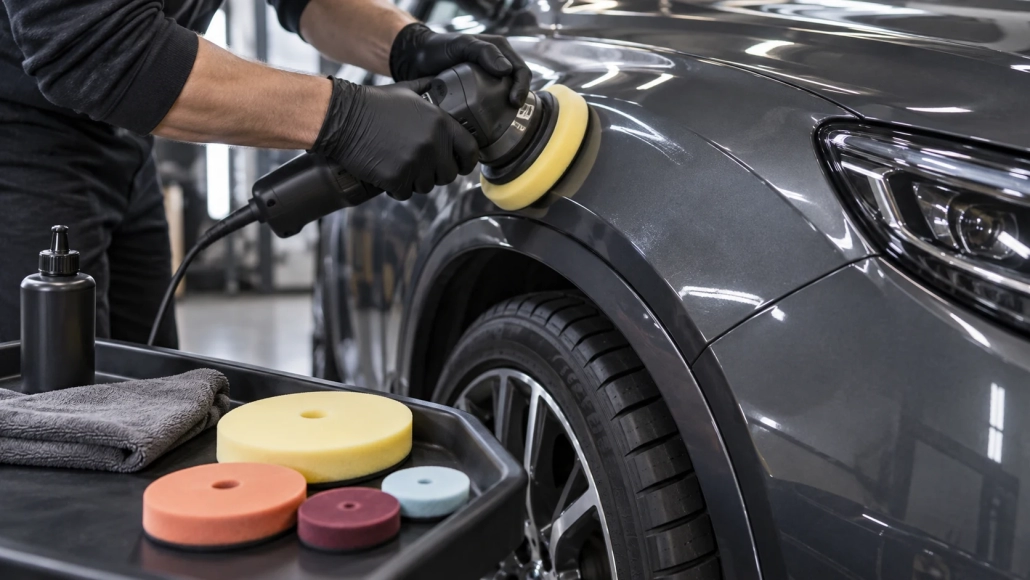
Use microfiber cutting pads as part of a supported system and recognise when loaded fibres are changing correction or refinement requirements.
Keep polishing results consistent by rotating clean pads, separating correction stages and recognising when a pad should be retired.

 Microfiber Cutting Pads: Loading, Cleaning and Finish Quality