






A full polishing range.
From cutting and one-step correction to final finishing.
Specialist chemistry. Expert application.
 QUARTZ99 / CERAMIC BASE COAT
The foundation of your coating system.
A layerable quartz base coat designed for mechanical protection. Pair it with a suitable top coat to create the final finish.
For application by NANOLAB certified installers only.
Four formulas. Extended working time. Find the coating for your finish.
Explore the BEAST family of ceramic coatings.
Find the coating for each exterior surface.
 PPF & VINYLGLOSSProtection for glossy films and wraps.Discover
 MATTE & SATINMATTEProtection that respects the finish.Discover
 GLASSWINDOWSExplore dedicated glass protection.Discover
 WHEEL PROTECTIONWHEELSA dedicated coating for your wheels.Discover
 TRIM PROTECTIONPLASTICProtection for plastic surfaces.Discover
Dedicated care for the surfaces inside.
 LEATHER SURFACESLEATHERDiscover NANOLAB leather protection.Discover PLASTIC SURFACESPLASTICProtection for interior plastic surfaces.Discover TEXTILE SURFACESFABRICExplore the latest fabric formulation.Discover
Spray protection, maintenance and upcoming wash products.
 MAINTENANCEBEAST 365Explore the BEAST maintenance range.Discover
Next in washing, cleaning & care.
Ceramic protection for boats and yachts.
An easy-to-apply ceramic coating with an established track record on boats and yachts around the world.
Results vary with surface preparation, exposure and maintenance.
Read 50 MARINE guides →Explore MARINEProtection for the surfaces you live with.
A look at what we’re developing.
From cutting and one-step correction to final finishing.
A wider range for professional vehicle care.
Taking shape alongside BEAST & MATRIX.
Practical guidance for your next coating project.
Explore all guides →
Understand where fine cut polish fits between stronger compounding and final finishing, and use the paint's response to decide its role.
Updated · NANOLAB Knowledge
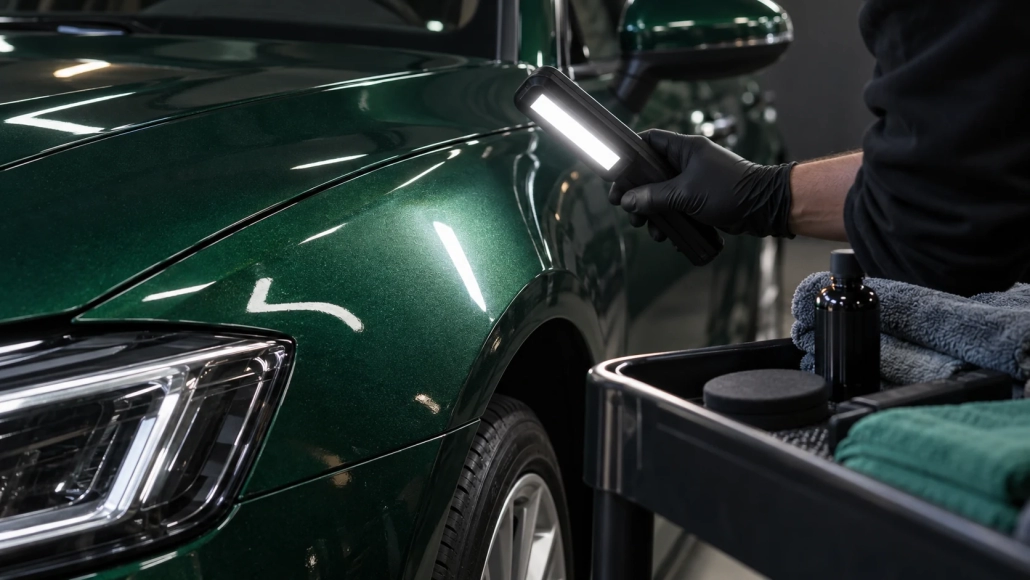
Fine cut polish can serve more than one role. It may correct lighter defects directly, refine a previous cutting stage, or produce the accepted final finish on suitable paint. The correct role comes from the actual combination and result, not the word fine alone.
A lightly swirled original panel is a different starting point from one just treated with heavy compound. In the first case, the polish addresses original damage. In the second, it may mainly refine the marks left by the preceding stage.
Identify the pattern under suitable lighting. If deep original defects remain, a fine polish should not be expected to solve them simply by working longer. Record those defects separately from the finer surface marks.
The same liquid can behave differently with a supported polishing pad or finishing pad. A pairing that increases useful correction can also change the finish on sensitive paint. Test the complete combination rather than treating pad choice as an afterthought.
Use a clean pad dedicated to the stage. Carrying coarse compound into a refining test makes the result difficult to interpret. Keep product identification on the pad storage container, not just in the technician’s memory.
Remove residue with the compatible method and compare defect visibility and clarity. Use directional light for fine marks and broader reflections for consistency across the section.
If fine cut produces the agreed finish, an additional ultra-fine stage needs to demonstrate a useful benefit. If haze remains, investigate the pad, paint response and wiping process before adding more stages.
For modest correction, fine cut may provide an efficient balance of improvement and finish. In a multi-stage service, it may be an intermediate step. Explain that distinction instead of promising a fixed removal percentage from the bottle name.
Record the accepted pairing and inspection conditions. Fine cut becomes a dependable workshop category when its role is demonstrated and repeatable, rather than assumed from its position on a shelf.
Browse the complete car polish and compound guide.
These references illustrate named product systems. Use the current instructions for the exact product, pad and machine in your own process.
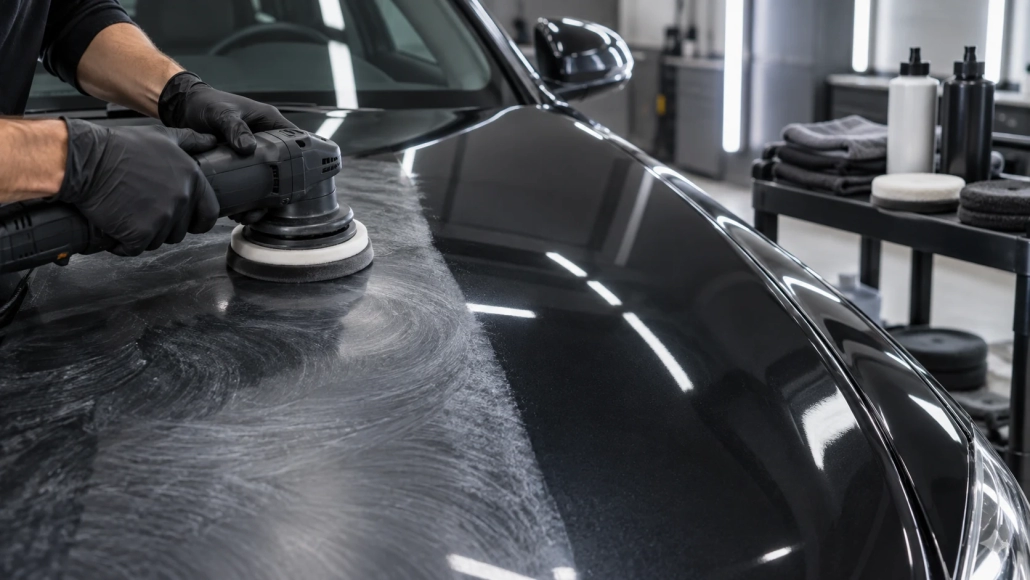
Use finishing polish to refine light process marks and assess final clarity, while keeping deeper defect removal separate from the finishing decision.
Use complementary lighting and viewing angles to reveal scratches, haze and coating residue without relying on one bright reflection.

 Finishing Polish: What the Final Stage Should Achieve