






A full polishing range.
From cutting and one-step correction to final finishing.
Specialist chemistry. Expert application.
 QUARTZ99 / CERAMIC BASE COAT
The foundation of your coating system.
A layerable quartz base coat designed for mechanical protection. Pair it with a suitable top coat to create the final finish.
For application by NANOLAB certified installers only.
Four formulas. Extended working time. Find the coating for your finish.
Explore the BEAST family of ceramic coatings.
Find the coating for each exterior surface.
 PPF & VINYLGLOSSProtection for glossy films and wraps.Discover
 MATTE & SATINMATTEProtection that respects the finish.Discover
 GLASSWINDOWSExplore dedicated glass protection.Discover
 WHEEL PROTECTIONWHEELSA dedicated coating for your wheels.Discover
 TRIM PROTECTIONPLASTICProtection for plastic surfaces.Discover
Dedicated care for the surfaces inside.
 LEATHER SURFACESLEATHERDiscover NANOLAB leather protection.Discover PLASTIC SURFACESPLASTICProtection for interior plastic surfaces.Discover TEXTILE SURFACESFABRICExplore the latest fabric formulation.Discover
Spray protection, maintenance and upcoming wash products.
 MAINTENANCEBEAST 365Explore the BEAST maintenance range.Discover
Next in washing, cleaning & care.
Ceramic protection for boats and yachts.
An easy-to-apply ceramic coating with an established track record on boats and yachts around the world.
Results vary with surface preparation, exposure and maintenance.
Read 50 MARINE guides →Explore MARINEProtection for the surfaces you live with.
A look at what we’re developing.
From cutting and one-step correction to final finishing.
A wider range for professional vehicle care.
Taking shape alongside BEAST & MATRIX.
Practical guidance for your next coating project.
Explore all guides →
Plan where heavy compounding is justified and where a milder process can achieve the required finish without treating every panel identically.
Updated · NANOLAB Knowledge
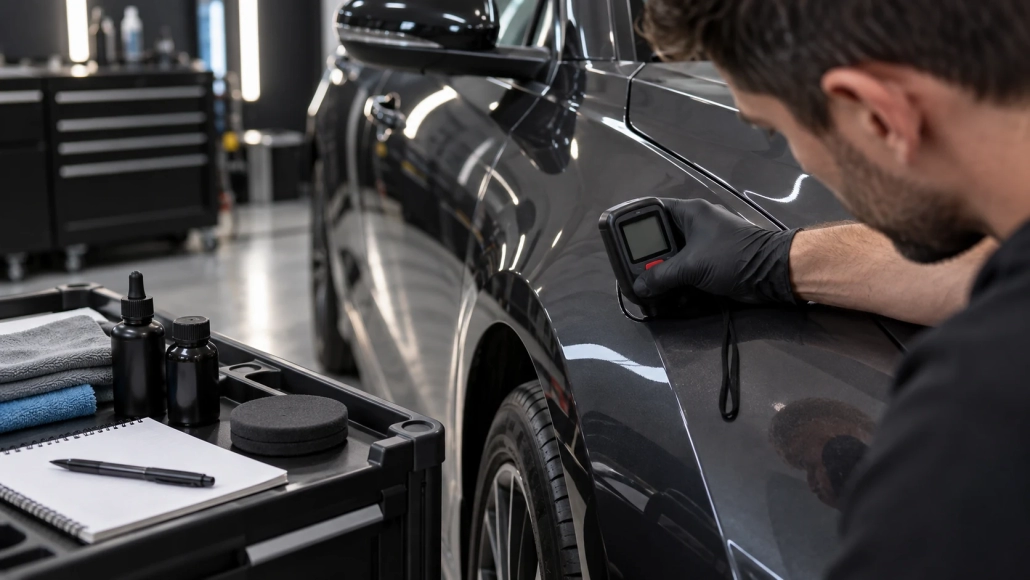
A car is not necessarily one uniform polishing surface. Panels may differ in defect severity, repair history, exposure and paint response. A strong compound that is justified on one area should not automatically set the correction level for the whole vehicle.
Inspect the clean car panel by panel. Separate widespread wash damage from local scuffs and isolated scratches. Record repairs, vulnerable areas and any finish failure before quoting a correction package.
The map does not need to be complicated. Mark which panels require a test for stronger correction, which appear suitable for a finer process, and which need a specialist decision or should be excluded.
Use representative tests to establish achievable results. If fine polishing reaches the agreed standard on a door, applying heavy compound there simply to match the bonnet’s process adds work without a demonstrated benefit.
Conversely, a locally compounded section still needs to blend visually with the surrounding finish. Inspect the transition after refinement so the repair does not leave a visibly different patch of clarity or texture.
An owner may ask for one stubborn scratch to disappear. Explain that a local defect can impose a different risk from general swirl removal. Do not let the request for uniform appearance become an unlimited removal target.
Thickness readings and paint history support this decision, but ordinary measurements do not provide a universal clear-coat allowance. Preserve uncertainty in the plan rather than inventing a safe number of passes.
Describe the result and the treatment by area, not just a stage count. A mixed process can still be coherent when the finishing standard and protection requirements are consistent.
At handover, identify any deliberately retained defects and the reason for leaving them. This gives the owner a realistic record of the work and avoids the impression that every future scratch should trigger another full-vehicle heavy correction.
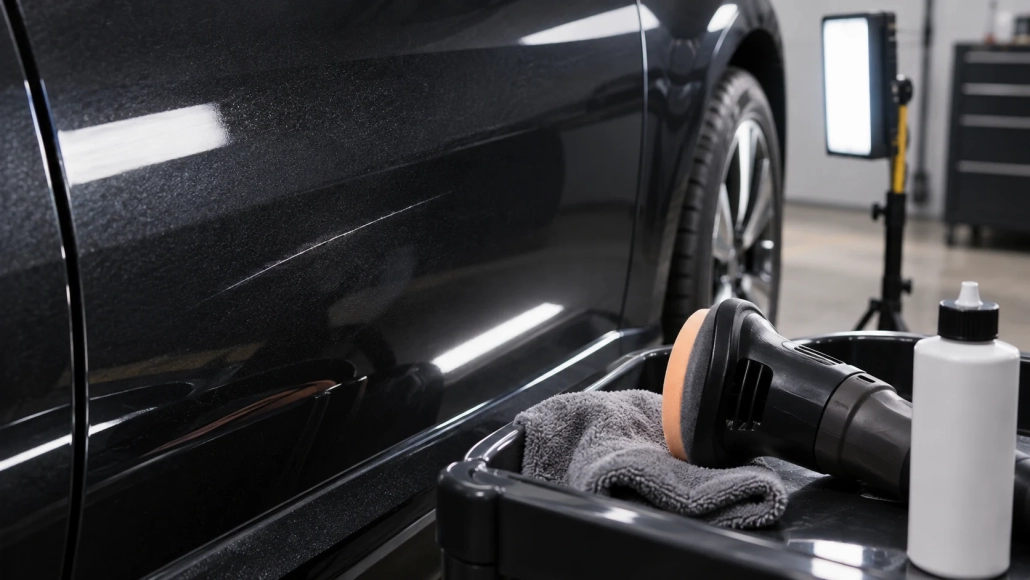
Learn when a heavy cut compound belongs in a paint correction plan and how to evaluate cutting performance, refinement and paint preservation together.
Decide whether a cutting stage needs further polishing by checking clean paint for haze, trails and remaining defects under consistent lighting.
Understand what a paint gauge can measure, where its limits matter and why readings should support rather than replace surface assessment.

 Does a Cutting Compound Always Need Finishing Polish?