






A full polishing range.
From cutting and one-step correction to final finishing.
Specialist chemistry. Expert application.
 QUARTZ99 / CERAMIC BASE COAT
The foundation of your coating system.
A layerable quartz base coat designed for mechanical protection. Pair it with a suitable top coat to create the final finish.
For application by NANOLAB certified installers only.
Four formulas. Extended working time. Find the coating for your finish.
Explore the BEAST family of ceramic coatings.
Find the coating for each exterior surface.
 PPF & VINYLGLOSSProtection for glossy films and wraps.Discover
 MATTE & SATINMATTEProtection that respects the finish.Discover
 GLASSWINDOWSExplore dedicated glass protection.Discover
 WHEEL PROTECTIONWHEELSA dedicated coating for your wheels.Discover
 TRIM PROTECTIONPLASTICProtection for plastic surfaces.Discover
Dedicated care for the surfaces inside.
 LEATHER SURFACESLEATHERDiscover NANOLAB leather protection.Discover PLASTIC SURFACESPLASTICProtection for interior plastic surfaces.Discover TEXTILE SURFACESFABRICExplore the latest fabric formulation.Discover
Spray protection, maintenance and upcoming wash products.
 MAINTENANCEBEAST 365Explore the BEAST maintenance range.Discover
Next in washing, cleaning & care.
Ceramic protection for boats and yachts.
An easy-to-apply ceramic coating with an established track record on boats and yachts around the world.
Results vary with surface preparation, exposure and maintenance.
Read 50 MARINE guides →Explore MARINEProtection for the surfaces you live with.
A look at what we’re developing.
From cutting and one-step correction to final finishing.
A wider range for professional vehicle care.
Taking shape alongside BEAST & MATRIX.
Practical guidance for your next coating project.
Explore all guides →
Map motorcycle chrome covers and decorative brightwork before coating, with clear boundaries for heat, controls, fasteners and maintenance.
Updated · NANOLAB Knowledge
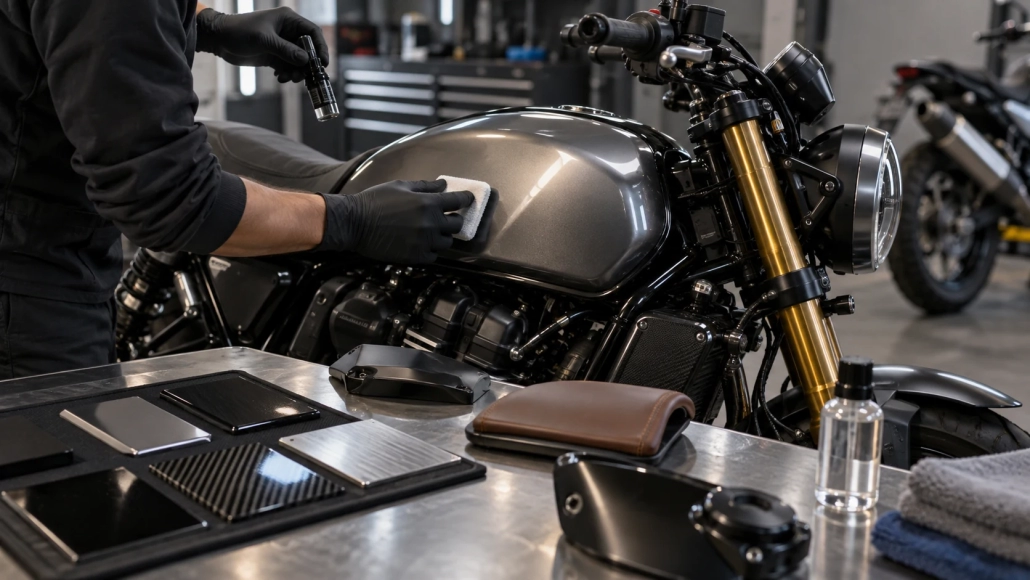
On a motorcycle, a chrome cover can sit beside a hot exhaust, a painted tank, a rubber seal and a rider contact point. A successful coating plan identifies each part and its function instead of treating every shiny area as one surface.
List the decorative parts proposed for treatment: side covers, trim strips, headlamp surrounds or other accessible brightwork. Identify the original finish and any previous repair. Record whether the part is metal or plated plastic, and whether a clear protective layer is present.
Exclude brake friction surfaces, tyres, grips, foot controls, electrical contacts and any part whose friction or operation could be affected. Do not extend approval for a cool decorative cover to exhaust headers or other hot components. Heat suitability must be established for the particular coating and location.
Let the motorcycle cool and stabilise before cleaning. Use the manufacturer’s guidance for water exposure around connectors, switches and seams. Remove road soil before considering polishing, and keep polishing compounds out of narrow joints where they are hard to remove.
Do not loosen structural fasteners or dismantle unfamiliar components just to improve coating access. A technician can define what may be safely removed and how it should be reinstalled. Coating is the final cosmetic stage after that decision.
Choose an inconspicuous part of the same finish, not an unrelated painted panel. Note the cleaner, applicator, product quantity and wiping method. Inspect reflected straight lines after the instructed cure; this makes unevenness on curved chrome easier to recognise. Keep a photograph of the untreated finish for comparison.
Explain which parts were treated and which were excluded. Specify when the bike can return to use and which cleaners are permitted. At routine washes, inspect seams, heat-adjacent areas and places repeatedly touched by clothing. If staining returns, investigate contamination and underlying finish condition before reapplication. The goal is manageable cleaning and preserved appearance within a confirmed application, not a blanket claim that every chrome motorcycle component is protected.
For your exact finish and service conditions, ask NANOLAB about coating suitability and consult the current product documentation.
Plan motorcycle coating around the different finishes and functional components, keeping slippery treatments away from essential contact surfaces.
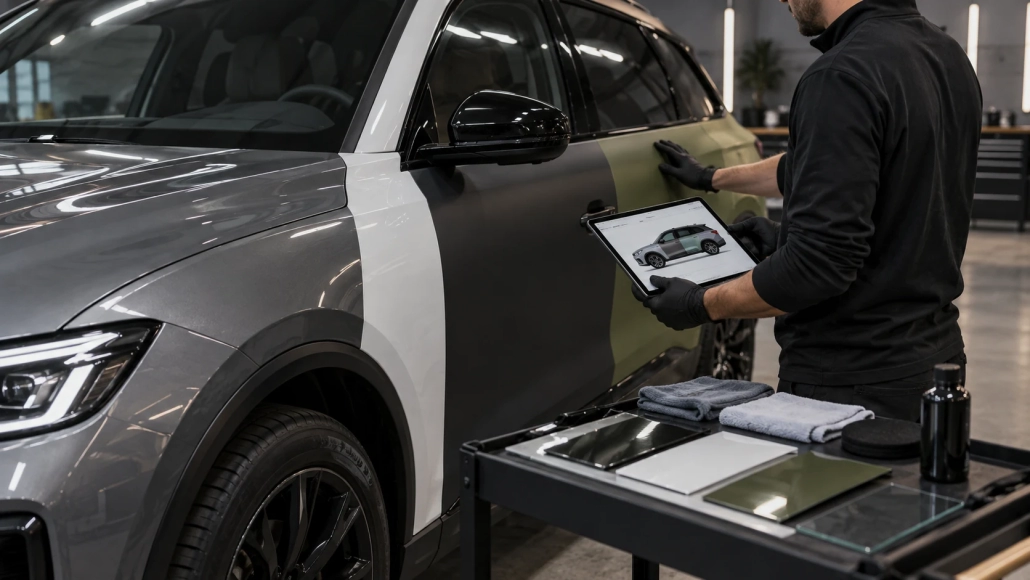
Define coating boundaries around fasteners, threads and contact surfaces so a decorative metal treatment does not interfere with assembly requirements.
Plan ceramic coating for chrome-plated bumpers, including plating inspection, access around mounting points, preparation and practical aftercare.

 Can Ceramic Coating Fix Pitted or Peeling Chrome?