






A full polishing range.
From cutting and one-step correction to final finishing.
Specialist chemistry. Expert application.
 QUARTZ99 / CERAMIC BASE COAT
The foundation of your coating system.
A layerable quartz base coat designed for mechanical protection. Pair it with a suitable top coat to create the final finish.
For application by NANOLAB certified installers only.
Four formulas. Extended working time. Find the coating for your finish.
Explore the BEAST family of ceramic coatings.
Find the coating for each exterior surface.
 PPF & VINYLGLOSSProtection for glossy films and wraps.Discover
 MATTE & SATINMATTEProtection that respects the finish.Discover
 GLASSWINDOWSExplore dedicated glass protection.Discover
 WHEEL PROTECTIONWHEELSA dedicated coating for your wheels.Discover
 TRIM PROTECTIONPLASTICProtection for plastic surfaces.Discover
Dedicated care for the surfaces inside.
 LEATHER SURFACESLEATHERDiscover NANOLAB leather protection.Discover PLASTIC SURFACESPLASTICProtection for interior plastic surfaces.Discover TEXTILE SURFACESFABRICExplore the latest fabric formulation.Discover
Spray protection, maintenance and upcoming wash products.
 MAINTENANCEBEAST 365Explore the BEAST maintenance range.Discover
Next in washing, cleaning & care.
Ceramic protection for boats and yachts.
An easy-to-apply ceramic coating with an established track record on boats and yachts around the world.
Results vary with surface preparation, exposure and maintenance.
Read 50 MARINE guides →Explore MARINEProtection for the surfaces you live with.
A look at what we’re developing.
From cutting and one-step correction to final finishing.
A wider range for professional vehicle care.
Taking shape alongside BEAST & MATRIX.
Practical guidance for your next coating project.
Explore all guides →
Make water-behaviour photographs more informative by controlling panel angle, water application and camera settings.
Updated · NANOLAB Knowledge
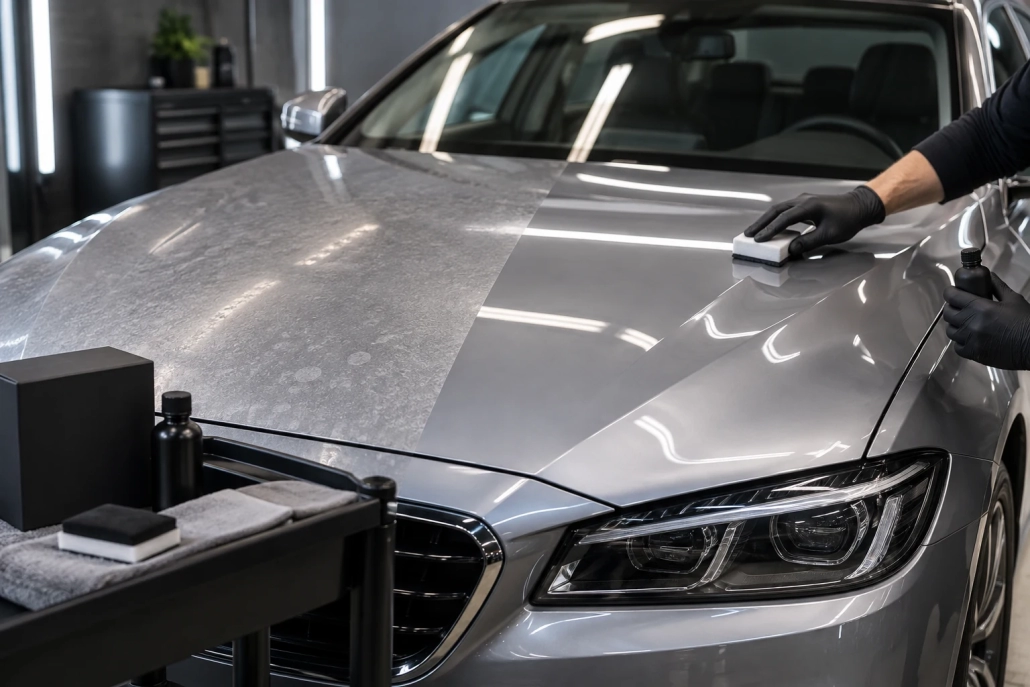
Water-beading photographs can show an aspect of ceramic coating behaviour, but they are easy to compare unfairly. Different drop sizes, viewing angles and lighting can make similar surfaces look dramatically different. A repeatable photo method improves the record.
Use equivalent clean surfaces at a documented stage of curing or maintenance. Keep the panel angle and water application method consistent. Record whether water was misted, poured or allowed to collect naturally; those methods do not necessarily create the same droplets.
Position the camera consistently and avoid selecting only the sharpest or roundest bead from one sample. Keep image processing restrained and apply the same adjustments to comparable photographs. Do not edit the water pattern.
Include an overall panel view as well as a close-up. The wider view can reveal retained water, uneven contamination or a boundary that the detail photograph omits. Label the date and test area so the image remains useful after the original conversation is forgotten.
If a numerical contact angle is claimed, use an appropriate measurement method. A phone photograph chosen for visual impact should not be presented as a calibrated scientific measurement.
Describe the visible observation and the conditions under which it was recorded. Do not use one beading image to prove scratch resistance, coating thickness or years of durability. These require different evidence.
Check NANOLAB documentation when describing a product’s intended performance. Consistent photography supports an honest comparison and a useful maintenance history while keeping visual presentation separate from claims the image cannot establish.
Create honest, useful photographs that document preparation results and finish condition without confusing lighting changes with correction.
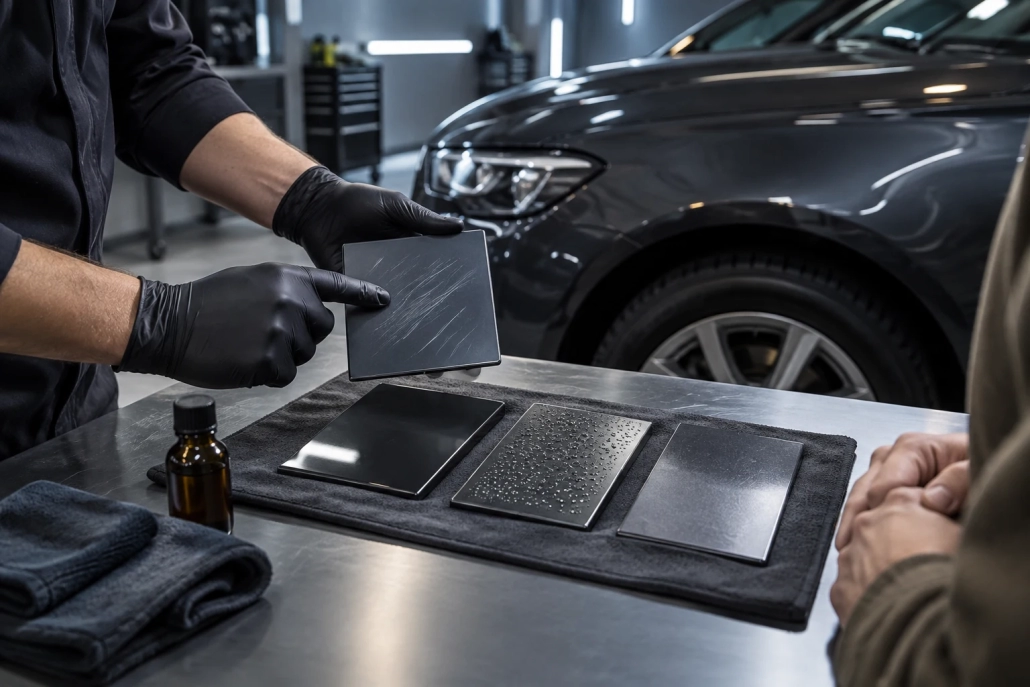
Investigate an unusual coating test result with a documented process instead of automatically deleting it or treating it as definitive.
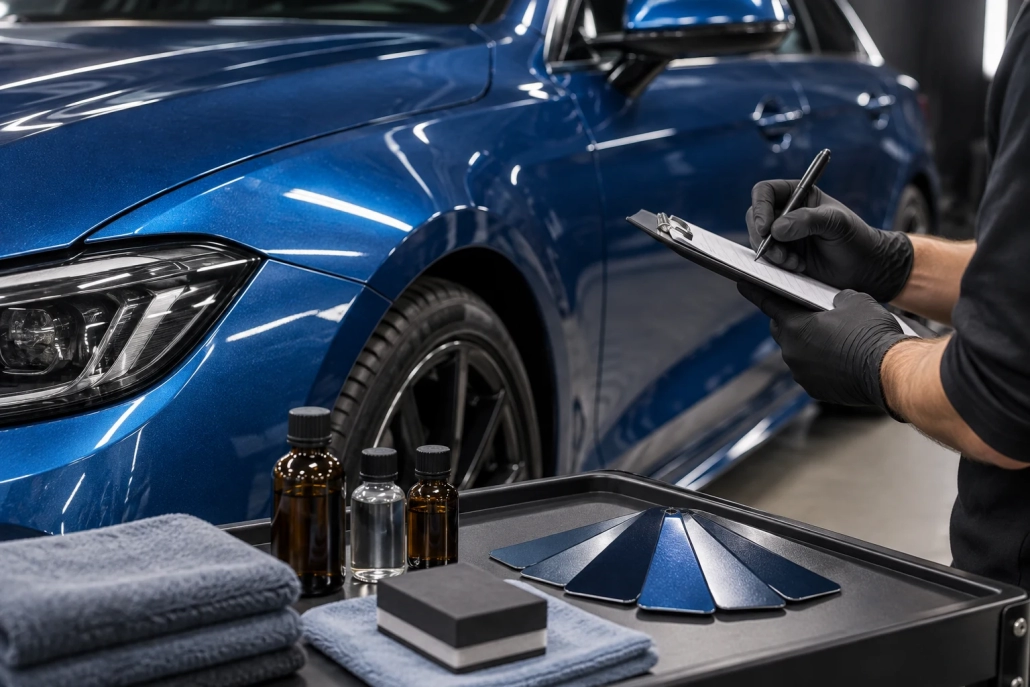
Build a clearer job estimate by separating active work, bay occupancy and the coating's required curing period.

 Ceramic Coating Test Reports: Handling an Outlier