






A full polishing range.
From cutting and one-step correction to final finishing.
Specialist chemistry. Expert application.
 QUARTZ99 / CERAMIC BASE COAT
The foundation of your coating system.
A layerable quartz base coat designed for mechanical protection. Pair it with a suitable top coat to create the final finish.
For application by NANOLAB certified installers only.
Four formulas. Extended working time. Find the coating for your finish.
Explore the BEAST family of ceramic coatings.
Find the coating for each exterior surface.
 PPF & VINYLGLOSSProtection for glossy films and wraps.Discover
 MATTE & SATINMATTEProtection that respects the finish.Discover
 GLASSWINDOWSExplore dedicated glass protection.Discover
 WHEEL PROTECTIONWHEELSA dedicated coating for your wheels.Discover
 TRIM PROTECTIONPLASTICProtection for plastic surfaces.Discover
Dedicated care for the surfaces inside.
 LEATHER SURFACESLEATHERDiscover NANOLAB leather protection.Discover PLASTIC SURFACESPLASTICProtection for interior plastic surfaces.Discover TEXTILE SURFACESFABRICExplore the latest fabric formulation.Discover
Spray protection, maintenance and upcoming wash products.
 MAINTENANCEBEAST 365Explore the BEAST maintenance range.Discover
Next in washing, cleaning & care.
Ceramic protection for boats and yachts.
An easy-to-apply ceramic coating with an established track record on boats and yachts around the world.
Results vary with surface preparation, exposure and maintenance.
Read 50 MARINE guides →Explore MARINEProtection for the surfaces you live with.
A look at what we’re developing.
From cutting and one-step correction to final finishing.
A wider range for professional vehicle care.
Taking shape alongside BEAST & MATRIX.
Practical guidance for your next coating project.
Explore all guides →
Keep preparation and coating work clean by managing glove changes, contaminated touch points and product-specific protective requirements.
Updated · NANOLAB Knowledge
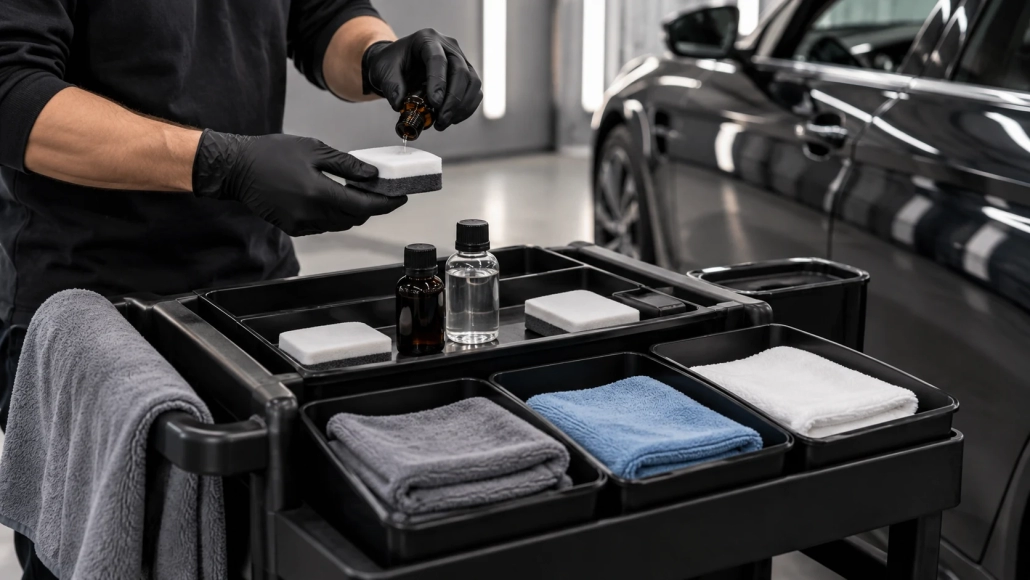
Gloves used during ceramic coating have two distinct roles: meeting the product’s protective requirements and helping control contamination. A glove that was suitable when new can still transfer wheel cleaner, dressing or polish after several different tasks.
Use the current safety data sheet and workplace assessment to choose glove material and other protection. Appearance or the word ‘detailing’ on packaging does not establish chemical suitability. Follow replacement and handling instructions, and do not treat this workflow guide as a substitute for them.
Prepare the correct supplies before the final wipe. If the required gloves are unavailable, postpone the chemical stage rather than improvising with an unrelated material. NANOLAB documentation is the starting point for product-specific safety information.
Bottle closures, trolley handles, work lights and phones can carry residue from earlier work. Touching one of those objects after preparation can undo the benefit of changing gloves. Clean suitable touch points through an appropriate process, and keep personal items outside the immediate application sequence.
For example, an installer who adjusts a wheel after applying tyre dressing should not immediately handle a coating applicator. Identify the transition, remove contaminated protection correctly and resume with clean equipment and the required fresh protection.
Separate washing, polishing, final preparation and coating supplies. Replace gloves when their condition or contamination requires it, and whenever the applicable protective instructions say to do so. Avoid washing or solvent-wiping disposable gloves as an assumed way to restore their original performance.
If a prepared panel was touched with a contaminated glove, reassess that local area before application. Record any repeated contamination route so the workstation can be improved. A short, deliberate reset is easier to manage than trying to diagnose a smearing finish after the whole vehicle is coated.
Keep coating bottles, applicators and towels organised to avoid mixing products or transferring contamination between surfaces.
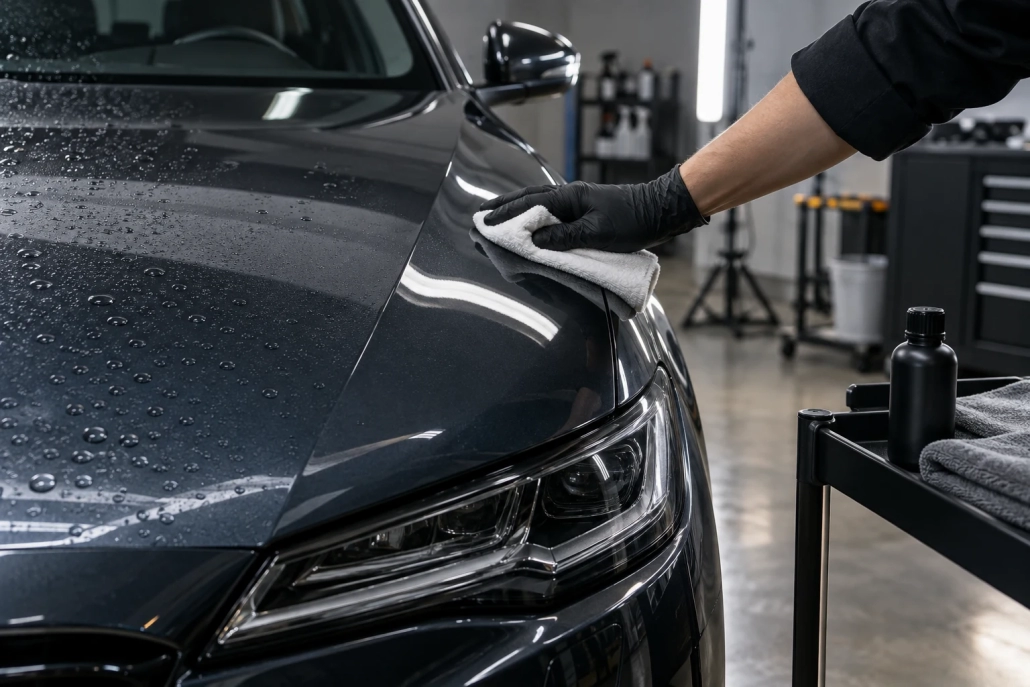
Check compressed-air quality and drying technique before using air near paint prepared for ceramic coating.
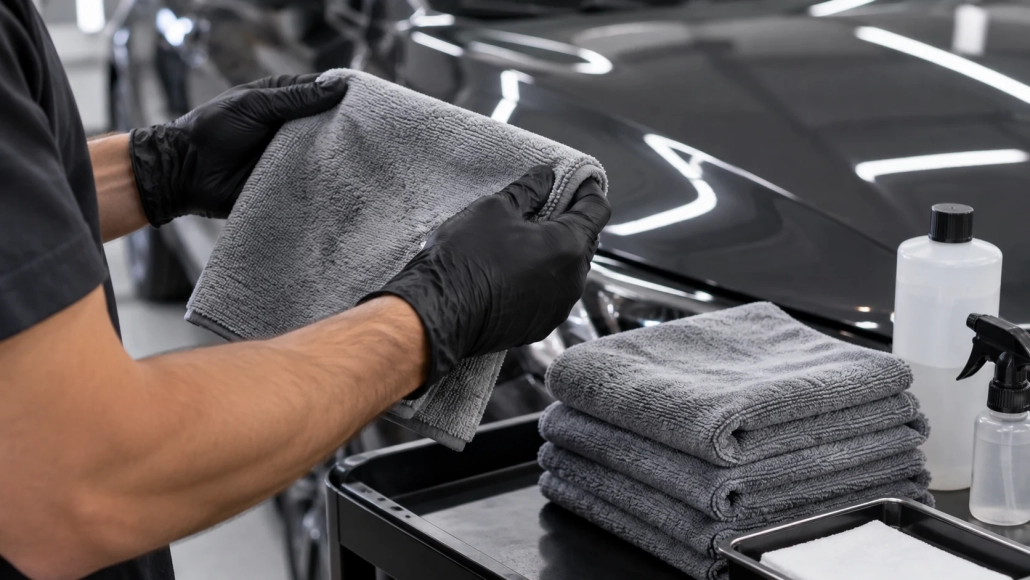
Respond to a dropped preparation towel without transferring floor grit to paint or continuing with contaminated equipment.

 Ceramic Coating During a Power Outage: A Workshop Response