






A full polishing range.
From cutting and one-step correction to final finishing.
Specialist chemistry. Expert application.
 QUARTZ99 / CERAMIC BASE COAT
The foundation of your coating system.
A layerable quartz base coat designed for mechanical protection. Pair it with a suitable top coat to create the final finish.
For application by NANOLAB certified installers only.
Four formulas. Extended working time. Find the coating for your finish.
Explore the BEAST family of ceramic coatings.
Find the coating for each exterior surface.
 PPF & VINYLGLOSSProtection for glossy films and wraps.Discover
 MATTE & SATINMATTEProtection that respects the finish.Discover
 GLASSWINDOWSExplore dedicated glass protection.Discover
 WHEEL PROTECTIONWHEELSA dedicated coating for your wheels.Discover
 TRIM PROTECTIONPLASTICProtection for plastic surfaces.Discover
Dedicated care for the surfaces inside.
 LEATHER SURFACESLEATHERDiscover NANOLAB leather protection.Discover PLASTIC SURFACESPLASTICProtection for interior plastic surfaces.Discover TEXTILE SURFACESFABRICExplore the latest fabric formulation.Discover
Spray protection, maintenance and upcoming wash products.
 MAINTENANCEBEAST 365Explore the BEAST maintenance range.Discover
Next in washing, cleaning & care.
Ceramic protection for boats and yachts.
An easy-to-apply ceramic coating with an established track record on boats and yachts around the world.
Results vary with surface preparation, exposure and maintenance.
Read 50 MARINE guides →Explore MARINEProtection for the surfaces you live with.
A look at what we’re developing.
From cutting and one-step correction to final finishing.
A wider range for professional vehicle care.
Taking shape alongside BEAST & MATRIX.
Practical guidance for your next coating project.
Explore all guides →
Check compressed-air quality and drying technique before using air near paint prepared for ceramic coating.
Updated · NANOLAB Knowledge
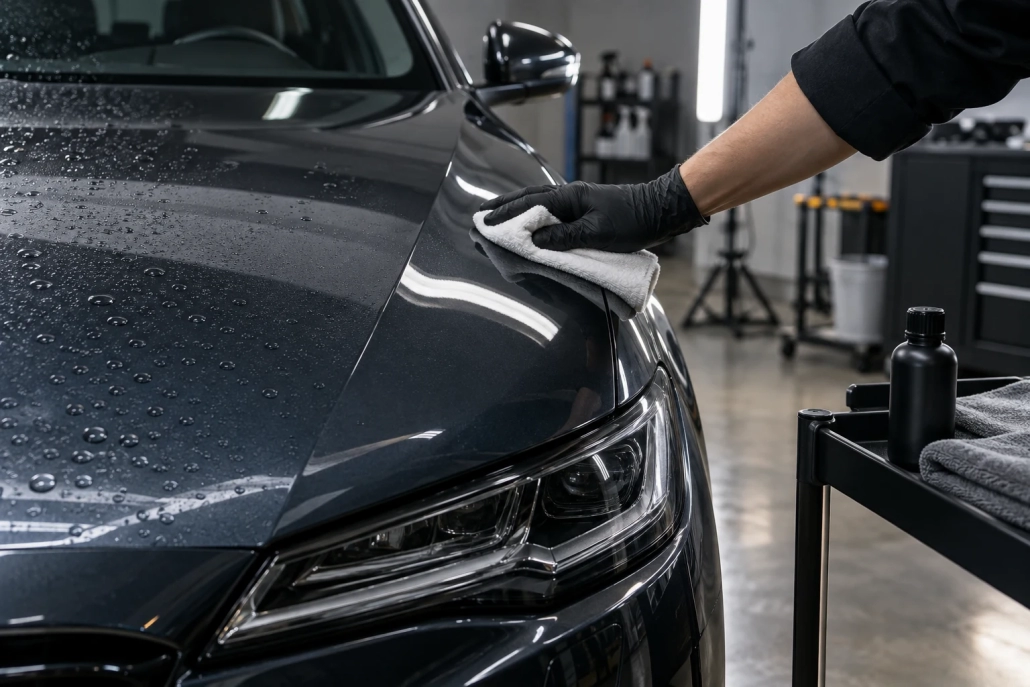
Compressed air can help move water from accessible seams, but its suitability depends on the equipment and the cleanliness of the air supply. A system used elsewhere in a workshop may introduce moisture or oil that undermines final preparation for ceramic coating.
Review the compressor, filtration, drainage and maintenance arrangements using the equipment instructions. Do not assume an air line is suitable for finish-sensitive work simply because it produces a strong stream. Shared hoses and tools can have different contamination histories.
Use an appropriate clean check surface to assess the output before directing it at prepared paint. An apparently dry burst does not certify the air system, but visible moisture or residue is a clear reason to stop and investigate. Avoid improvised testing on the customer’s final-prepared panel.
Complete seam drying before the final preparation step wherever the workflow allows. Move water toward an area that can be cleaned and dried, rather than repeatedly pushing it into another recess. Follow equipment guidance and protect vulnerable trim, seals and components from unsuitable pressure.
Check mirrors, handles, badges and lower joints after the vehicle has stood for a short period. Delayed drips deserve attention before coating begins. Never use compressed air to spread a coating unless the product explicitly supports that application method.
If air introduces residue or water after preparation, pause and repeat the necessary compatible cleaning and drying steps locally. Do not assume a quick dry wipe restores the original condition. Inspect the area before using NANOLAB PREP or another approved final-preparation product as directed.
Keep the air-system issue in the workshop record so it is corrected before the next job. Reliable preparation depends on the tools touching the process, including tools that never physically touch the paint.
Find the seams and components that retain water after washing, and prevent late drips from interrupting preparation or fresh coating application.
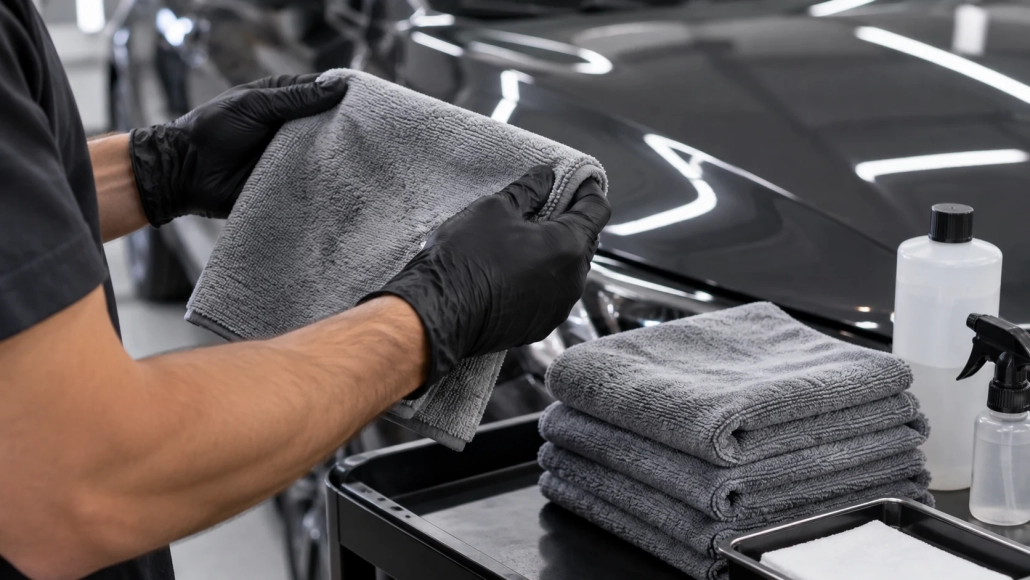
Respond to a dropped preparation towel without transferring floor grit to paint or continuing with contaminated equipment.
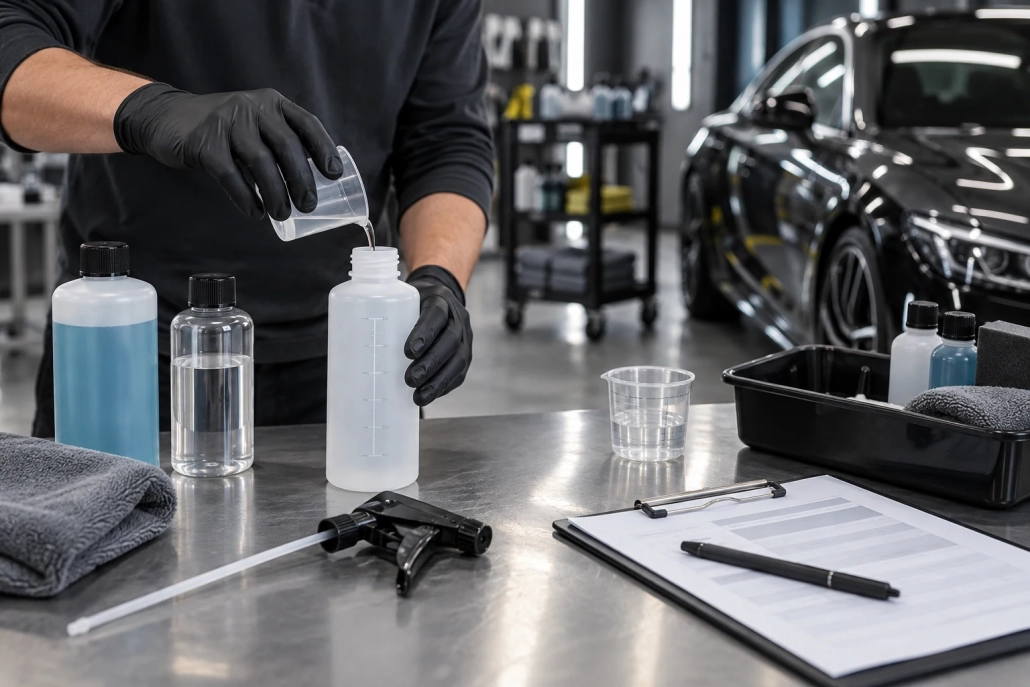
Set up and label pump sprayers for compatible pre-wash and maintenance products without confusing dilution, coverage or chemical roles.

 Ceramic Coating Preparation After a Tyre Dressing Spill