






A full polishing range.
From cutting and one-step correction to final finishing.
Specialist chemistry. Expert application.
 QUARTZ99 / CERAMIC BASE COAT
The foundation of your coating system.
A layerable quartz base coat designed for mechanical protection. Pair it with a suitable top coat to create the final finish.
For application by NANOLAB certified installers only.
Four formulas. Extended working time. Find the coating for your finish.
Explore the BEAST family of ceramic coatings.
Find the coating for each exterior surface.
 PPF & VINYLGLOSSProtection for glossy films and wraps.Discover
 MATTE & SATINMATTEProtection that respects the finish.Discover
 GLASSWINDOWSExplore dedicated glass protection.Discover
 WHEEL PROTECTIONWHEELSA dedicated coating for your wheels.Discover
 TRIM PROTECTIONPLASTICProtection for plastic surfaces.Discover
Dedicated care for the surfaces inside.
 LEATHER SURFACESLEATHERDiscover NANOLAB leather protection.Discover PLASTIC SURFACESPLASTICProtection for interior plastic surfaces.Discover TEXTILE SURFACESFABRICExplore the latest fabric formulation.Discover
Spray protection, maintenance and upcoming wash products.
 MAINTENANCEBEAST 365Explore the BEAST maintenance range.Discover
Next in washing, cleaning & care.
Ceramic protection for boats and yachts.
An easy-to-apply ceramic coating with an established track record on boats and yachts around the world.
Results vary with surface preparation, exposure and maintenance.
Read 50 MARINE guides →Explore MARINEProtection for the surfaces you live with.
A look at what we’re developing.
From cutting and one-step correction to final finishing.
A wider range for professional vehicle care.
Taking shape alongside BEAST & MATRIX.
Practical guidance for your next coating project.
Explore all guides →
Assess a visible outline after badge or sticker removal before using more cleaner, polishing the paint or applying ceramic coating.
Updated · NANOLAB Knowledge
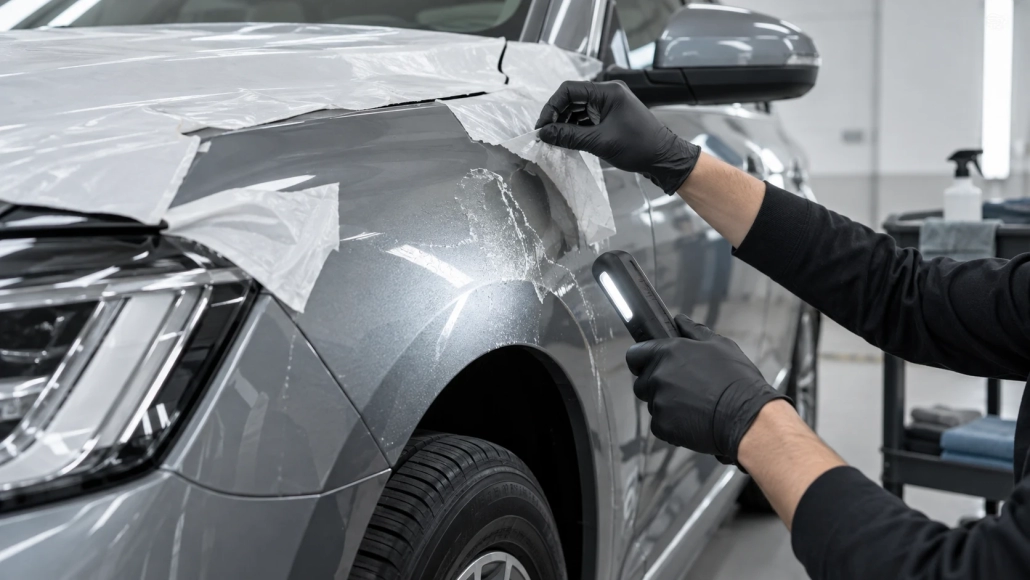
A visible outline after removing a sticker or badge is not always leftover adhesive. It may be residue, an edge of contamination or a difference in the paint’s appearance beneath the former covering. Ceramic coating should follow that diagnosis rather than lock in an unresolved expectation.
Inspect the clean, dry area under several light directions. Record whether the mark looks raised, greasy, hazy or simply different in colour or gloss. Those observations help frame the problem, but do not by themselves establish the cause.
Ask how long the item was fitted, whether the panel was repaired and which removal products were already used. Repeatedly applying stronger cleaner to an unchanged outline can create damage without addressing an underlying finish difference.
Use a suitable removal process only when residue is identified and the surface supports it. Follow the product’s contact, removal and rinsing directions. Do not use tools that can scratch the finish just because the outline is narrow.
If the mark remains after confirmed residue removal, reassess it as a paint condition. Selective polishing may help some appearance differences, but it cannot be promised to correct every protected-versus-exposed area. Test and agree the achievable result before expanding the work.
NANOLAB PREP is intended for final preparation of compatible surfaces; it should not be presented as a universal adhesive remover or a cure for colour differences. Use each product for its stated purpose.
Before coating, inspect the entire affected panel and confirm that the owner accepts any remaining outline. Record the condition and the chosen coating boundary. A clear explanation at this stage prevents an older shadow from being mistaken for a defect caused by the new ceramic coating.
Inspect new vehicles for protective-film adhesive and transport residue, then choose compatible cleaning before polishing or ceramic coating.
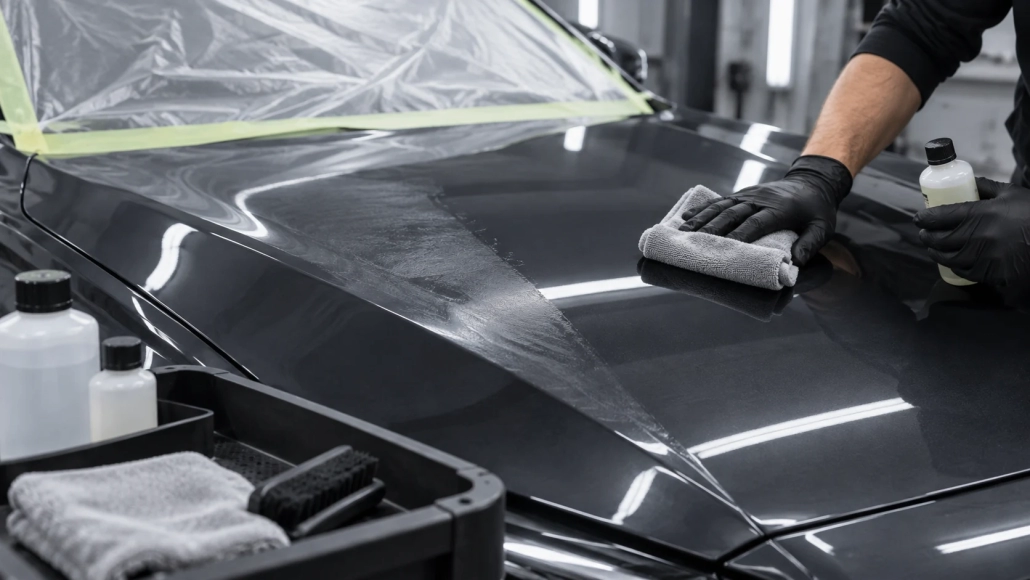
Isolate dressing contamination, reset affected preparation tools and inspect paint before continuing a ceramic coating installation.
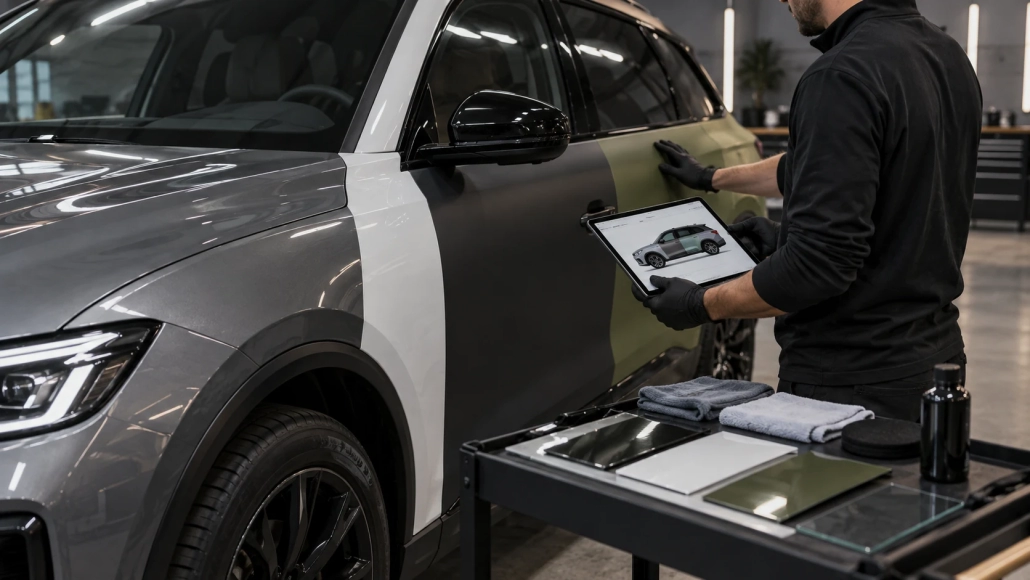
Map glossy, matte, painted and wrapped sections on a two-tone vehicle before selecting preparation methods and ceramic coatings.

 Compressed Air Before Ceramic Coating: Checking for Contamination