






A full polishing range.
From cutting and one-step correction to final finishing.
Specialist chemistry. Expert application.
 QUARTZ99 / CERAMIC BASE COAT
The foundation of your coating system.
A layerable quartz base coat designed for mechanical protection. Pair it with a suitable top coat to create the final finish.
For application by NANOLAB certified installers only.
Four formulas. Extended working time. Find the coating for your finish.
Explore the BEAST family of ceramic coatings.
Find the coating for each exterior surface.
 PPF & VINYLGLOSSProtection for glossy films and wraps.Discover
 MATTE & SATINMATTEProtection that respects the finish.Discover
 GLASSWINDOWSExplore dedicated glass protection.Discover
 WHEEL PROTECTIONWHEELSA dedicated coating for your wheels.Discover
 TRIM PROTECTIONPLASTICProtection for plastic surfaces.Discover
Dedicated care for the surfaces inside.
 LEATHER SURFACESLEATHERDiscover NANOLAB leather protection.Discover PLASTIC SURFACESPLASTICProtection for interior plastic surfaces.Discover TEXTILE SURFACESFABRICExplore the latest fabric formulation.Discover
Spray protection, maintenance and upcoming wash products.
 MAINTENANCEBEAST 365Explore the BEAST maintenance range.Discover
Next in washing, cleaning & care.
Ceramic protection for boats and yachts.
An easy-to-apply ceramic coating with an established track record on boats and yachts around the world.
Results vary with surface preparation, exposure and maintenance.
Read 50 MARINE guides →Explore MARINEProtection for the surfaces you live with.
A look at what we’re developing.
From cutting and one-step correction to final finishing.
A wider range for professional vehicle care.
Taking shape alongside BEAST & MATRIX.
Practical guidance for your next coating project.
Explore all guides →
Find the seams and components that retain water after washing, and prevent late drips from interrupting preparation or fresh coating application.
Updated · NANOLAB Knowledge
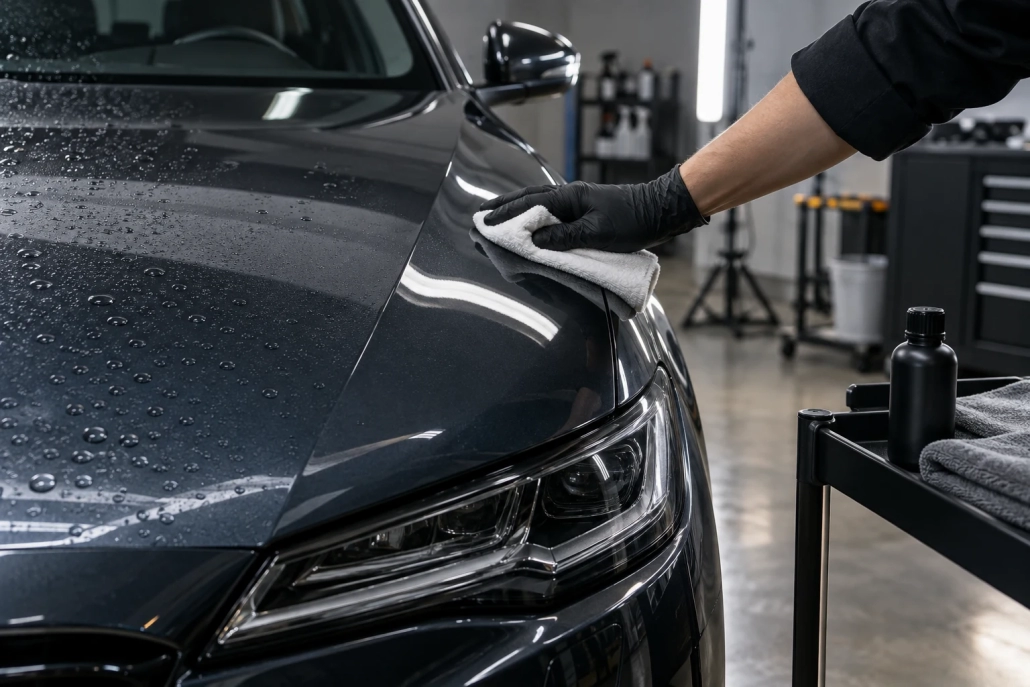
Water commonly remains around mirrors, handles, badges, trim joints, number plates and weather seals after washing. Opening a door or changing the vehicle’s position can release it onto a surface that already appears ready.
Finish the wash with a deliberate drying stage rather than relying on ambient evaporation. Mineral-bearing water left on the paint can create deposits during the wait.
Use suitable clean drying towels and, where appropriate, clean forced air. Direct water away from prepared areas and avoid pushing moisture into electrical or sensitive components. Inspect the air source and nozzle so they do not introduce oil or debris.
Cycle relevant doors and mirrors carefully, then check common drip points again. Separate dirty lower-area towels from clean paint towels.
Inspect seams under good light and confirm the final preparation wipe has completed as directed. If a drip appears during application, stop treating that area and follow the coating’s recovery instructions; do not simply wipe across partially cured material. Drying is complete when the surface and likely runoff points are ready, not merely when the broad panels look dry.
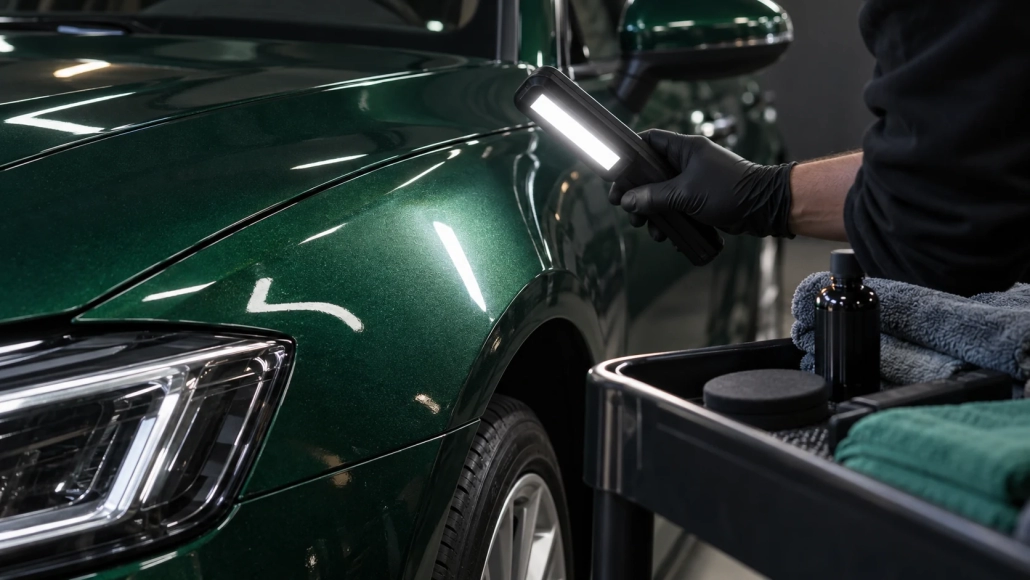
Use complementary lighting and viewing angles to reveal scratches, haze and coating residue without relying on one bright reflection.
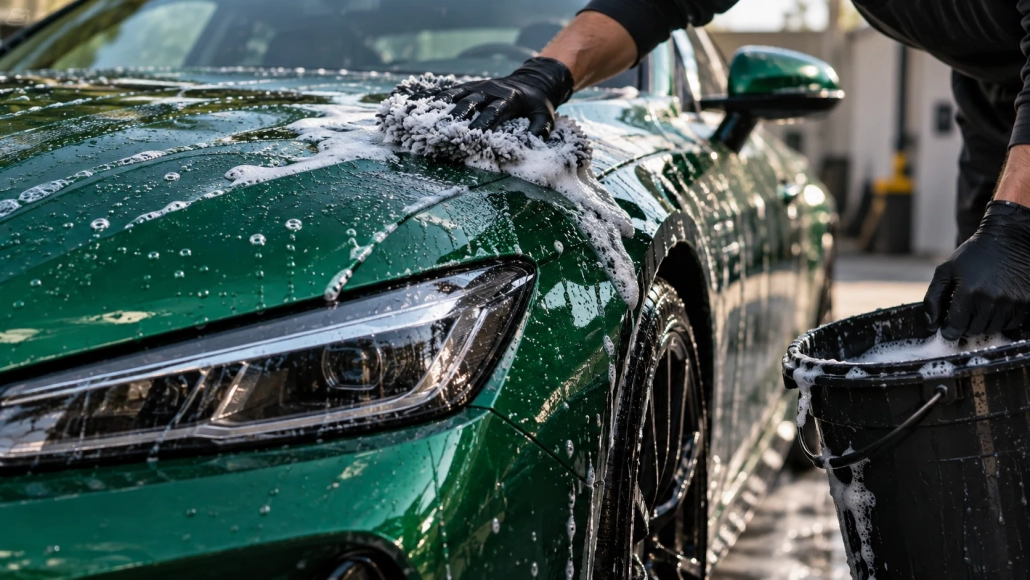
Learn how a preparation wash reveals surface condition and why extra gloss additives and unnecessary cleaning steps can complicate coating work.
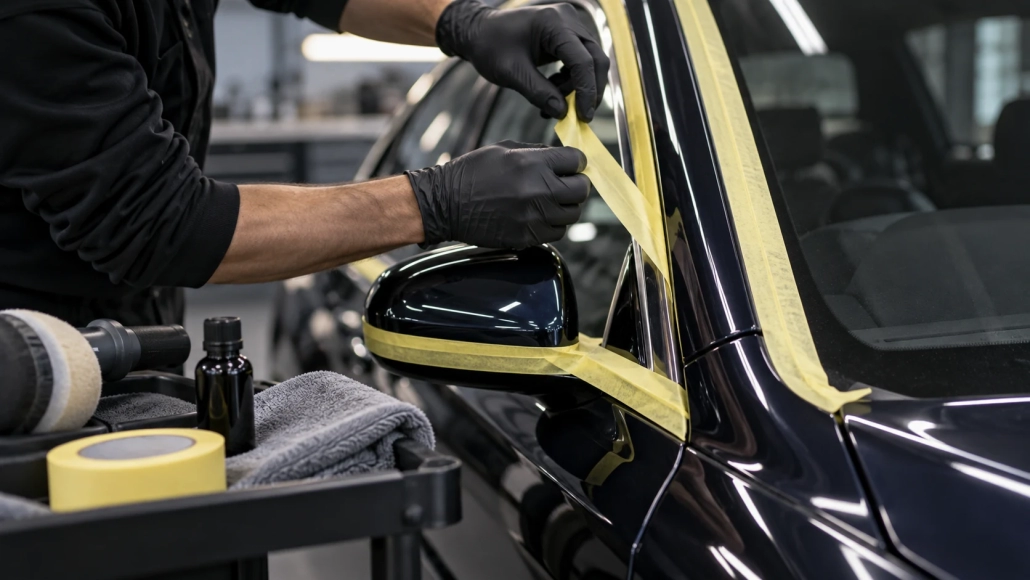
Protect sensitive trim and edges during preparation, and remove masking at the right stage so residue and moisture do not interfere with coating.

 Dividing a Vehicle into Sections for Ceramic Coating