






A full polishing range.
From cutting and one-step correction to final finishing.
Specialist chemistry. Expert application.
 QUARTZ99 / CERAMIC BASE COAT
The foundation of your coating system.
A layerable quartz base coat designed for mechanical protection. Pair it with a suitable top coat to create the final finish.
For application by NANOLAB certified installers only.
Four formulas. Extended working time. Find the coating for your finish.
Explore the BEAST family of ceramic coatings.
Find the coating for each exterior surface.
 PPF & VINYLGLOSSProtection for glossy films and wraps.Discover
 MATTE & SATINMATTEProtection that respects the finish.Discover
 GLASSWINDOWSExplore dedicated glass protection.Discover
 WHEEL PROTECTIONWHEELSA dedicated coating for your wheels.Discover
 TRIM PROTECTIONPLASTICProtection for plastic surfaces.Discover
Dedicated care for the surfaces inside.
 LEATHER SURFACESLEATHERDiscover NANOLAB leather protection.Discover PLASTIC SURFACESPLASTICProtection for interior plastic surfaces.Discover TEXTILE SURFACESFABRICExplore the latest fabric formulation.Discover
Spray protection, maintenance and upcoming wash products.
 MAINTENANCEBEAST 365Explore the BEAST maintenance range.Discover
Next in washing, cleaning & care.
Ceramic protection for boats and yachts.
An easy-to-apply ceramic coating with an established track record on boats and yachts around the world.
Results vary with surface preparation, exposure and maintenance.
Read 50 MARINE guides →Explore MARINEProtection for the surfaces you live with.
A look at what we’re developing.
From cutting and one-step correction to final finishing.
A wider range for professional vehicle care.
Taking shape alongside BEAST & MATRIX.
Practical guidance for your next coating project.
Explore all guides →
Prepare a practical response when loss of power interrupts lighting, ventilation or climate control during ceramic coating work.
Updated · NANOLAB Knowledge
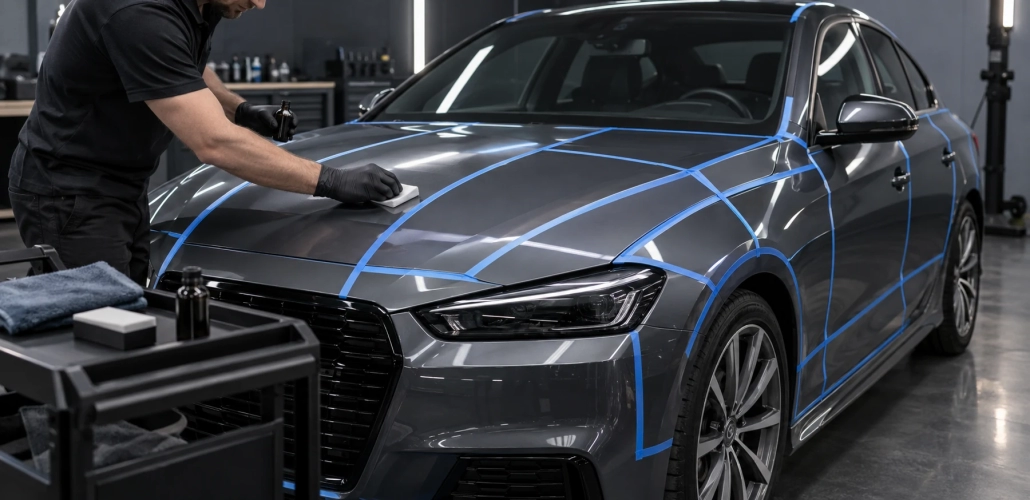
A power outage can interrupt more than a workshop’s lights. It may affect ventilation, climate control, powered doors and the ability to inspect a coating section. The response should first preserve safe conditions, then identify exactly where the application stopped.
Keep a simple panel progress record and know how to stop work safely. Any emergency lighting or backup arrangement must be appropriate for the workplace and products in use. Do not assume a portable lamp compensates for lost ventilation or unsuitable conditions.
Read the current product and safety instructions when planning the job. They determine whether work can continue under a changed environment and what protection remains necessary. A general article cannot supply a universal emergency buff-off interval.
Note the affected panel, section, application time and whether material was spread, partly levelled or already finished. If it is safe and permitted to complete the active section with available inspection, follow the product’s process. Otherwise stop, keep people safe and obtain the correct recovery advice.
Do not begin another panel because the remaining liquid seems usable. Prevent tools and open containers from becoming contaminated through the interruption. Handle and close products only as safely permitted by their instructions.
When normal services return, verify lighting, ventilation and environmental conditions instead of assuming the room immediately returned to its earlier state. Inspect the interrupted area from multiple angles and determine whether it remains within an approved correction or continuation window.
If cured residue requires correction, agree the local recovery process before extending the job. Update the progress record and release time if the disruption changes curing arrangements. At handover, communicate any revised care instructions clearly. A documented interruption provides a useful basis for decisions; a guessed timeline does not.
Keep track of applied areas and follow the product's correction guidance when an interruption affects a coating section already in progress.
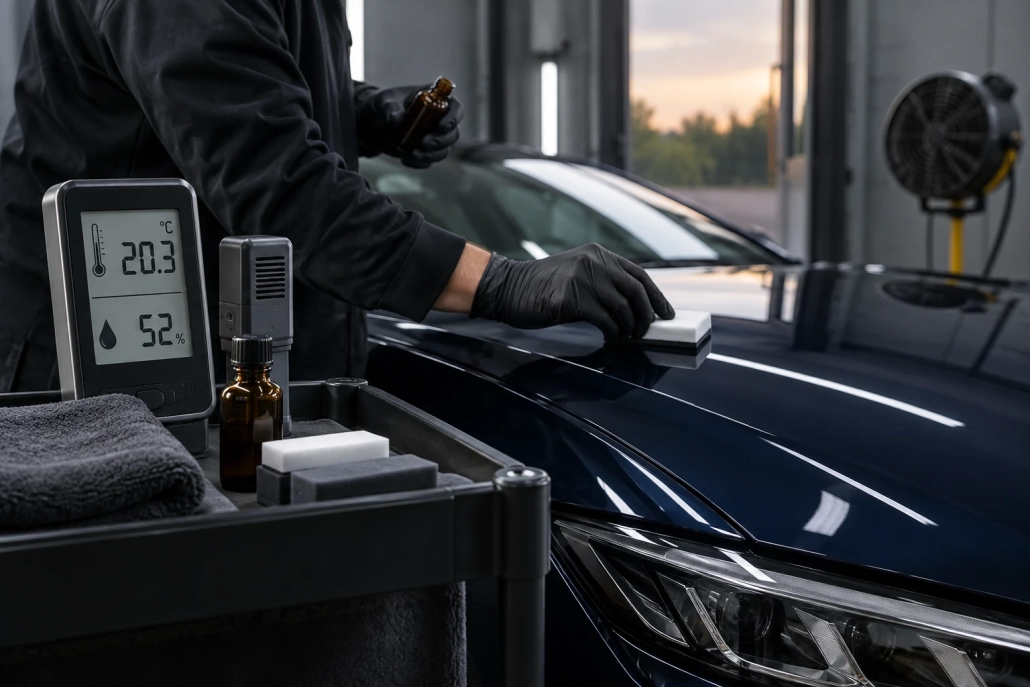
Plan a dry coating surface by checking condensation risk, panel temperature and changing workshop conditions before application.
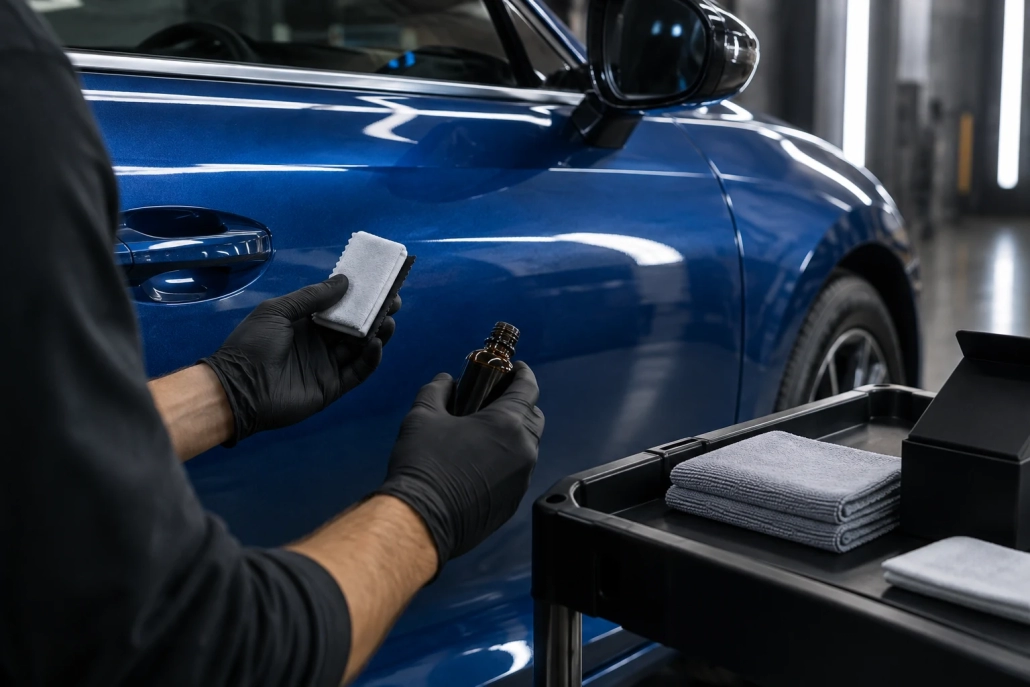
Arrange ventilation and airflow so coating work follows product instructions without blowing dust across prepared vehicle panels.

 Ceramic Coating After Paintless Dent Repair