






A full polishing range.
From cutting and one-step correction to final finishing.
Specialist chemistry. Expert application.
 QUARTZ99 / CERAMIC BASE COAT
The foundation of your coating system.
A layerable quartz base coat designed for mechanical protection. Pair it with a suitable top coat to create the final finish.
For application by NANOLAB certified installers only.
Four formulas. Extended working time. Find the coating for your finish.
Explore the BEAST family of ceramic coatings.
Find the coating for each exterior surface.
 PPF & VINYLGLOSSProtection for glossy films and wraps.Discover
 MATTE & SATINMATTEProtection that respects the finish.Discover
 GLASSWINDOWSExplore dedicated glass protection.Discover
 WHEEL PROTECTIONWHEELSA dedicated coating for your wheels.Discover
 TRIM PROTECTIONPLASTICProtection for plastic surfaces.Discover
Dedicated care for the surfaces inside.
 LEATHER SURFACESLEATHERDiscover NANOLAB leather protection.Discover PLASTIC SURFACESPLASTICProtection for interior plastic surfaces.Discover TEXTILE SURFACESFABRICExplore the latest fabric formulation.Discover
Spray protection, maintenance and upcoming wash products.
 MAINTENANCEBEAST 365Explore the BEAST maintenance range.Discover
Next in washing, cleaning & care.
Ceramic protection for boats and yachts.
An easy-to-apply ceramic coating with an established track record on boats and yachts around the world.
Results vary with surface preparation, exposure and maintenance.
Read 50 MARINE guides →Explore MARINEProtection for the surfaces you live with.
A look at what we’re developing.
From cutting and one-step correction to final finishing.
A wider range for professional vehicle care.
Taking shape alongside BEAST & MATRIX.
Practical guidance for your next coating project.
Explore all guides →
Plan ceramic coating on lower sills by identifying the finish, removing road film and arranging safe access for application and inspection.
Updated · NANOLAB Knowledge
Lower sills often receive heavier road contamination than the upper doors, yet they are easy to inspect poorly. Ceramic coating work on these areas begins with identifying the actual finish and arranging access that allows both application and complete levelling.
A sill can include glossy paint, paint protection film, textured stone-chip material and unpainted trim within a small area. Do not apply one preparation or polishing process across all of them. Record their boundaries and confirm which surfaces the selected coating supports.
Existing impact chips and failing finishes need assessment before coating. A protective treatment will not rebuild damaged paint or provide the impact protection of a physical film. Where chip resistance is the main objective, discuss the protection plan before promising a result.
Use a safe working position and approved equipment for any lifting. Do not reach beneath an inadequately supported vehicle. Arrange lighting at the height of the sill so you can see residue before work begins, not only after standing back at completion.
Clean lower contamination with suitable dedicated tools. Keep grit away from towels and applicators used on the upper paint. Dry seams and check for water that may emerge when doors are opened or the vehicle is moved.
Use small, controllable sections, respecting the coating’s instructions and the edges of adjacent materials. Check the underside of accessible painted lips for excess without extending treatment into functional or unsupported areas.
For compatible glossy paint, MATRIX PRO is one product to assess against the job requirements. Its suitability should not be assumed for every textured or unpainted section. At handover, show the owner the treated area and explain that low panels may need more frequent contamination checks than the bonnet.
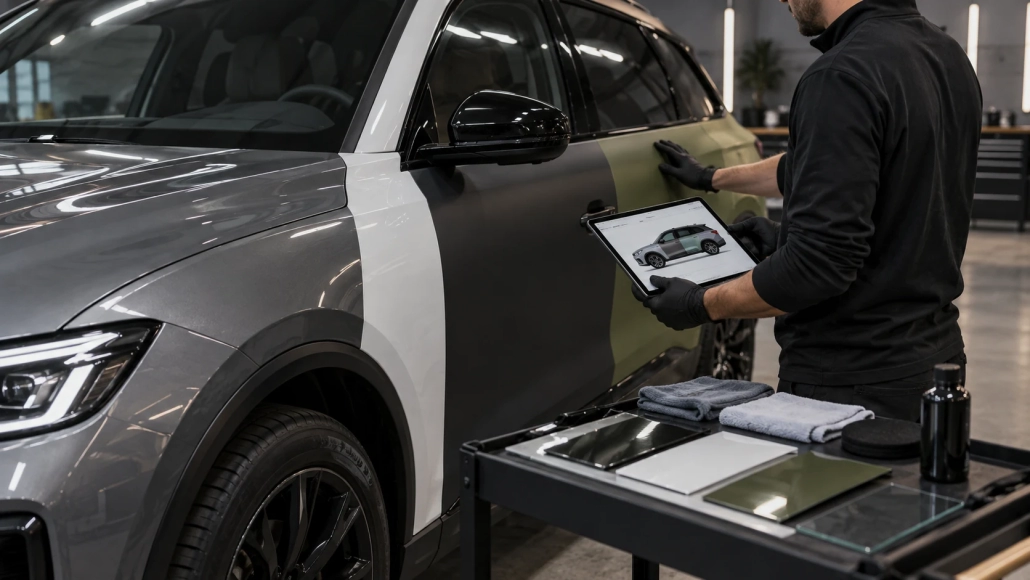
Create a surface map for vehicles combining paint, PPF, vinyl, glass and trim so every area receives a suitable NANOLAB system.
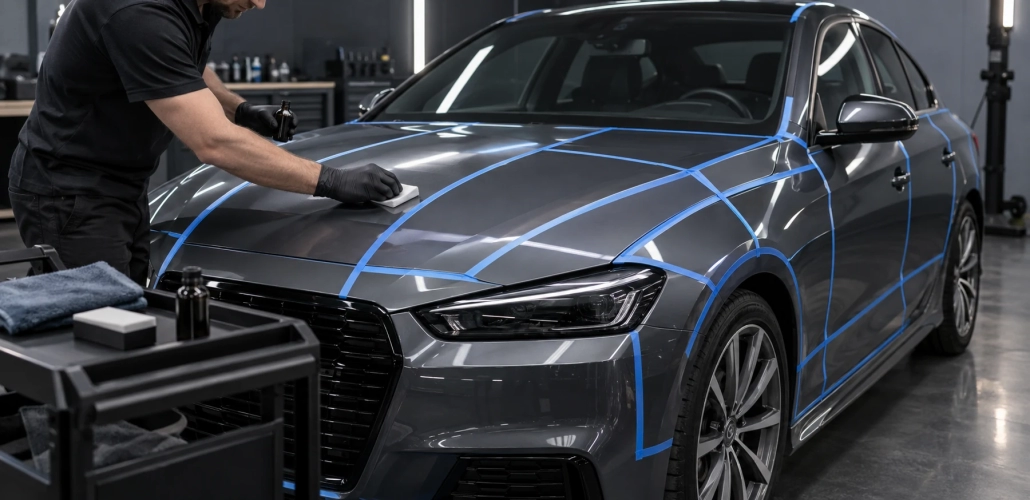
Prepare a practical response when loss of power interrupts lighting, ventilation or climate control during ceramic coating work.
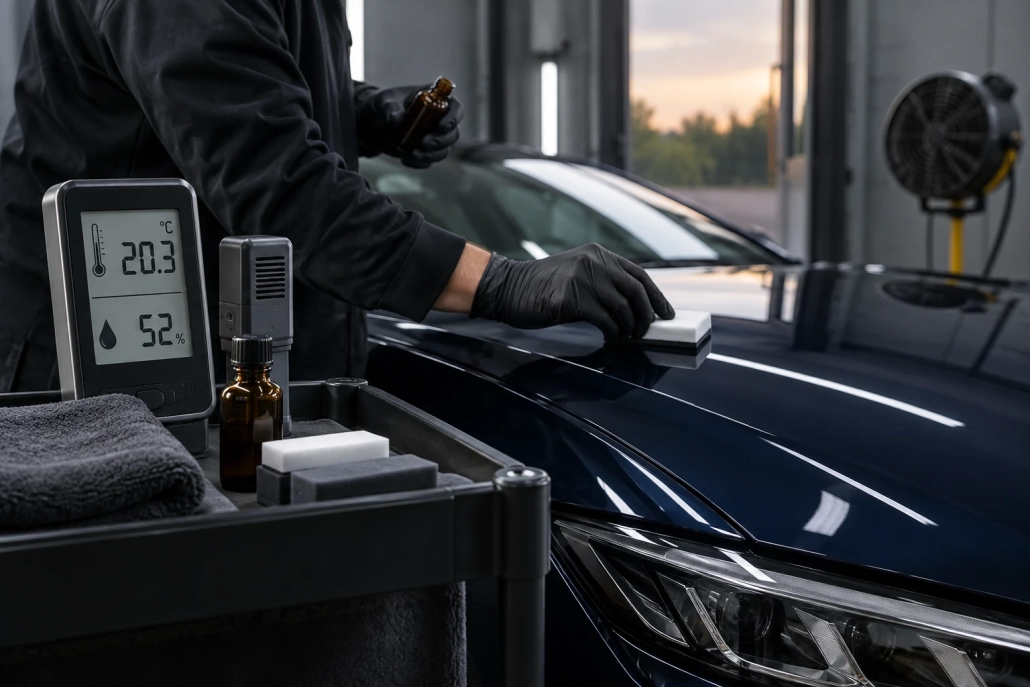
Plan a dry coating surface by checking condensation risk, panel temperature and changing workshop conditions before application.

 Ceramic Coating and Detailing Gloves: Preventing Residue Transfer