






A full polishing range.
From cutting and one-step correction to final finishing.
Specialist chemistry. Expert application.
 QUARTZ99 / CERAMIC BASE COAT
The foundation of your coating system.
A layerable quartz base coat designed for mechanical protection. Pair it with a suitable top coat to create the final finish.
For application by NANOLAB certified installers only.
Four formulas. Extended working time. Find the coating for your finish.
Explore the BEAST family of ceramic coatings.
Find the coating for each exterior surface.
 PPF & VINYLGLOSSProtection for glossy films and wraps.Discover
 MATTE & SATINMATTEProtection that respects the finish.Discover
 GLASSWINDOWSExplore dedicated glass protection.Discover
 WHEEL PROTECTIONWHEELSA dedicated coating for your wheels.Discover
 TRIM PROTECTIONPLASTICProtection for plastic surfaces.Discover
Dedicated care for the surfaces inside.
 LEATHER SURFACESLEATHERDiscover NANOLAB leather protection.Discover PLASTIC SURFACESPLASTICProtection for interior plastic surfaces.Discover TEXTILE SURFACESFABRICExplore the latest fabric formulation.Discover
Spray protection, maintenance and upcoming wash products.
 MAINTENANCEBEAST 365Explore the BEAST maintenance range.Discover
Next in washing, cleaning & care.
Ceramic protection for boats and yachts.
An easy-to-apply ceramic coating with an established track record on boats and yachts around the world.
Results vary with surface preparation, exposure and maintenance.
Read 50 MARINE guides →Explore MARINEProtection for the surfaces you live with.
A look at what we’re developing.
From cutting and one-step correction to final finishing.
A wider range for professional vehicle care.
Taking shape alongside BEAST & MATRIX.
Practical guidance for your next coating project.
Explore all guides →
Preserve original images when investigating paint haze because messaging compression and automatic enhancement can remove useful surface detail.
Updated · NANOLAB Knowledge

A messaging app is convenient for an initial coating complaint, but the image received may not be the image captured. Resizing, compression and enhancement can change fine texture and introduce edges that were not visible in the original. Treat the first photograph as a lead for investigation.
Ask for the original image as a file where the communication system allows it, together with a context view and a close detail. Explain which area needs to be shown. Avoid repeatedly saving screenshots of screenshots because each step can lose information.
Keep the original filename and capture date where available. Store an unedited copy before making annotations. Use a separate marked-up version to point out the area under discussion.
| File issue | Possible consequence |
|---|---|
| Strong resizing | Fine haze or scratches disappear |
| Aggressive sharpening | Halos appear around reflected edges |
| Noise reduction | Texture looks smoother |
| Screenshot cropping | Scale and context are lost |
If a customer reports a cloudy patch visible only in a compressed close-up, request a matched dry-surface photograph under ordinary light and another under the inspection light. If the originals show the same pattern consistently, use the application and care history to decide the next inspection step.
Even an original high-resolution image cannot identify every chemical residue or depth of damage. State which observations are visible and which require an on-site check. Do not prescribe increasingly aggressive correction solely because a compressed image looks severe.
The best use of messaging is to organise the next useful observation quickly. Preserve evidence quality before deciding whether the coating, preparation, maintenance or underlying surface needs attention.
Ask NANOLAB about your surface and intended use. For application and care, use the current instructions for the exact product.
Use clear checkpoints before application, after levelling and at handover to make coating work consistent and traceable.
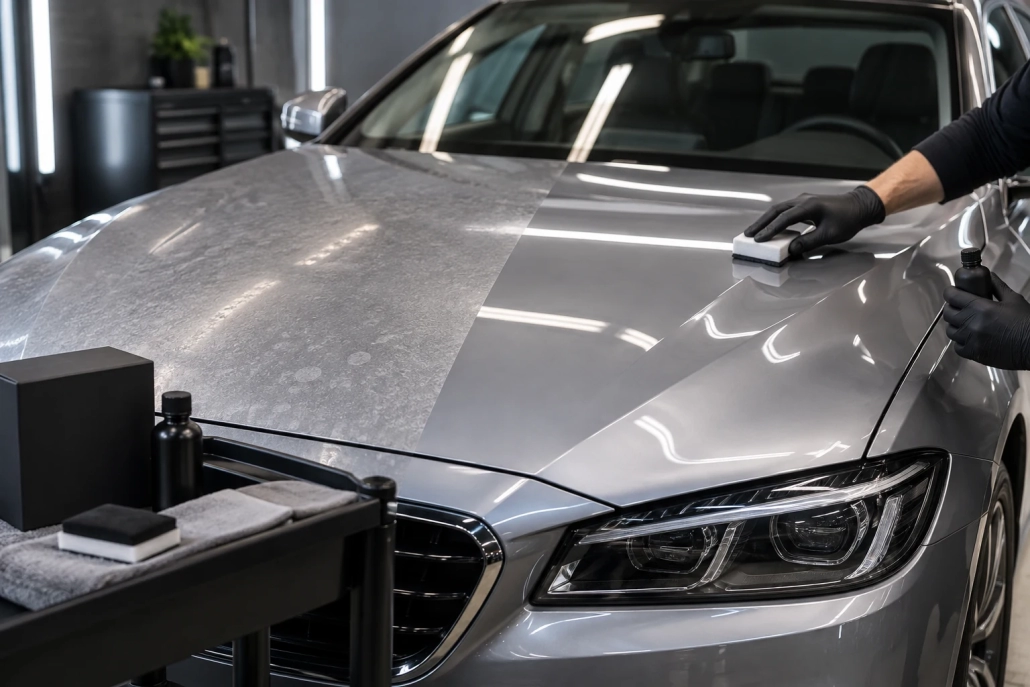
Create honest, useful photographs that document preparation results and finish condition without confusing lighting changes with correction.
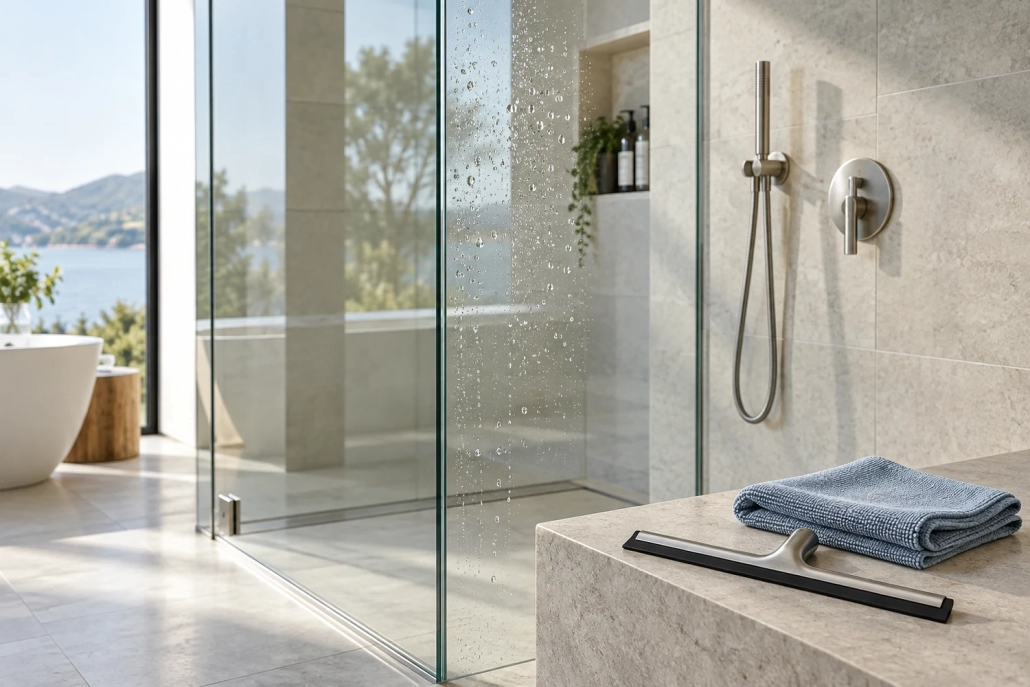
Build a repeatable glass-inspection arrangement using fixed light positions, backgrounds and viewing locations to investigate faint coating streaks.

 Building a Repeatable Low-Angle Inspection Station for Glass