






A full polishing range.
From cutting and one-step correction to final finishing.
Specialist chemistry. Expert application.
 QUARTZ99 / CERAMIC BASE COAT
The foundation of your coating system.
A layerable quartz base coat designed for mechanical protection. Pair it with a suitable top coat to create the final finish.
For application by NANOLAB certified installers only.
Four formulas. Extended working time. Find the coating for your finish.
Explore the BEAST family of ceramic coatings.
Find the coating for each exterior surface.
 PPF & VINYLGLOSSProtection for glossy films and wraps.Discover
 MATTE & SATINMATTEProtection that respects the finish.Discover
 GLASSWINDOWSExplore dedicated glass protection.Discover
 WHEEL PROTECTIONWHEELSA dedicated coating for your wheels.Discover
 TRIM PROTECTIONPLASTICProtection for plastic surfaces.Discover
Dedicated care for the surfaces inside.
 LEATHER SURFACESLEATHERDiscover NANOLAB leather protection.Discover PLASTIC SURFACESPLASTICProtection for interior plastic surfaces.Discover TEXTILE SURFACESFABRICExplore the latest fabric formulation.Discover
Spray protection, maintenance and upcoming wash products.
 MAINTENANCEBEAST 365Explore the BEAST maintenance range.Discover
Next in washing, cleaning & care.
Ceramic protection for boats and yachts.
An easy-to-apply ceramic coating with an established track record on boats and yachts around the world.
Results vary with surface preparation, exposure and maintenance.
Read 50 MARINE guides →Explore MARINEProtection for the surfaces you live with.
A look at what we’re developing.
From cutting and one-step correction to final finishing.
A wider range for professional vehicle care.
Taking shape alongside BEAST & MATRIX.
Practical guidance for your next coating project.
Explore all guides →
Trace scupper and drain runoff before treating repeated gelcoat staining as a failure of the exposed surface coating.
Updated · NANOLAB Knowledge
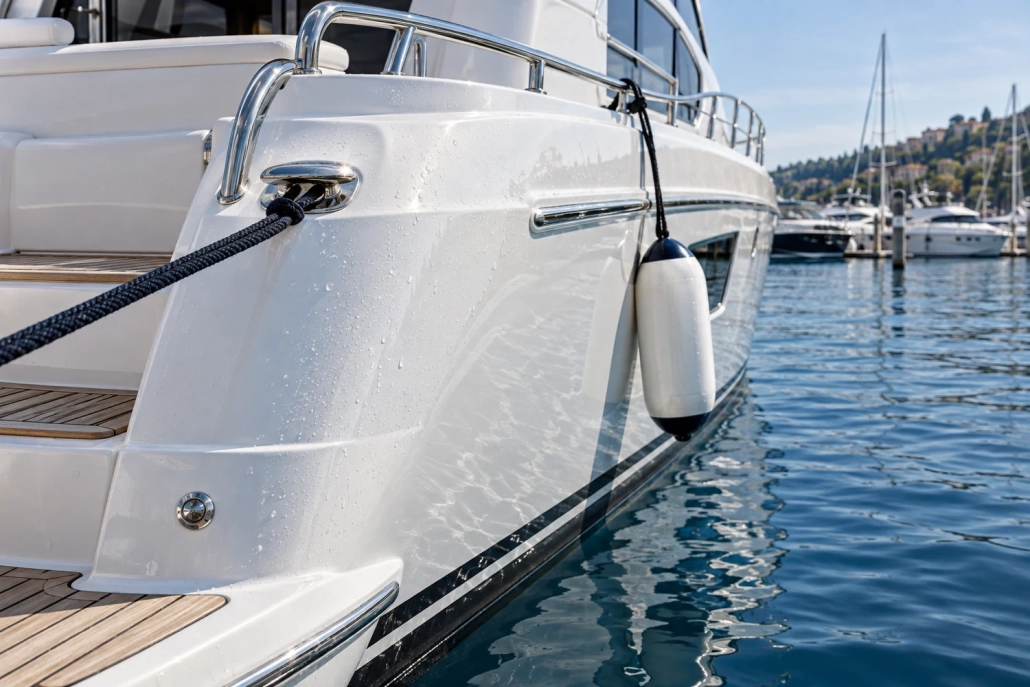
A vertical stain below a scupper can return quickly after the surrounding gelcoat is cleaned. The coating is one part of the system; the water and material flowing across it are another. A useful investigation follows the runoff upstream.
Mark the stain’s origin, width and end point on a photograph. Note whether it appears after washing, rainfall or use of a particular compartment. Check accessible upstream surfaces for accumulated dirt using the vessel’s maintenance procedures.
Restricted drainage or a leaking fitting may need repair by the appropriate technician. Do not obstruct an outlet, alter a drain or apply coating inside a component without approval. Surface treatment cannot substitute for a functioning drainage arrangement.
Keep photographs from immediately after cleaning and after subsequent runoff events. For example, two cleanings performed a week apart are difficult to compare if one follows a heavily soiled cockpit wash and the other follows light rain. Record the event as well as elapsed time. If source maintenance reduces recurrence, retain that task in the boat’s care schedule. Evaluate coating cleanability under the remaining exposure rather than promising that a protected surface will never show a runoff mark.
Ask NANOLAB about your surface and intended use. For application and care, use the current instructions for the exact product.
A pre-coating inspection prevents attractive results in one area from hiding unresolved problems elsewhere.
A boat can contain original gelcoat and repairs completed at different times with different materials.
Separate above-waterline appearance and cleaning goals from submerged fouling control when specifying a marine coating system.
 Above-Waterline Easy-Clean Coatings and Antifouling: Keep the Functions Sep...