






A full polishing range.
From cutting and one-step correction to final finishing.
Specialist chemistry. Expert application.
 QUARTZ99 / CERAMIC BASE COAT
The foundation of your coating system.
A layerable quartz base coat designed for mechanical protection. Pair it with a suitable top coat to create the final finish.
For application by NANOLAB certified installers only.
Four formulas. Extended working time. Find the coating for your finish.
Explore the BEAST family of ceramic coatings.
Find the coating for each exterior surface.
 PPF & VINYLGLOSSProtection for glossy films and wraps.Discover
 MATTE & SATINMATTEProtection that respects the finish.Discover
 GLASSWINDOWSExplore dedicated glass protection.Discover
 WHEEL PROTECTIONWHEELSA dedicated coating for your wheels.Discover
 TRIM PROTECTIONPLASTICProtection for plastic surfaces.Discover
Dedicated care for the surfaces inside.
 LEATHER SURFACESLEATHERDiscover NANOLAB leather protection.Discover PLASTIC SURFACESPLASTICProtection for interior plastic surfaces.Discover TEXTILE SURFACESFABRICExplore the latest fabric formulation.Discover
Spray protection, maintenance and upcoming wash products.
 MAINTENANCEBEAST 365Explore the BEAST maintenance range.Discover
Next in washing, cleaning & care.
Ceramic protection for boats and yachts.
An easy-to-apply ceramic coating with an established track record on boats and yachts around the world.
Results vary with surface preparation, exposure and maintenance.
Read 50 MARINE guides →Explore MARINEProtection for the surfaces you live with.
A look at what we’re developing.
From cutting and one-step correction to final finishing.
A wider range for professional vehicle care.
Taking shape alongside BEAST & MATRIX.
Practical guidance for your next coating project.
Explore all guides →
Build a polishing defect library that helps coating technicians distinguish accepted paint features from residue and missed correction.
Updated · NANOLAB Knowledge
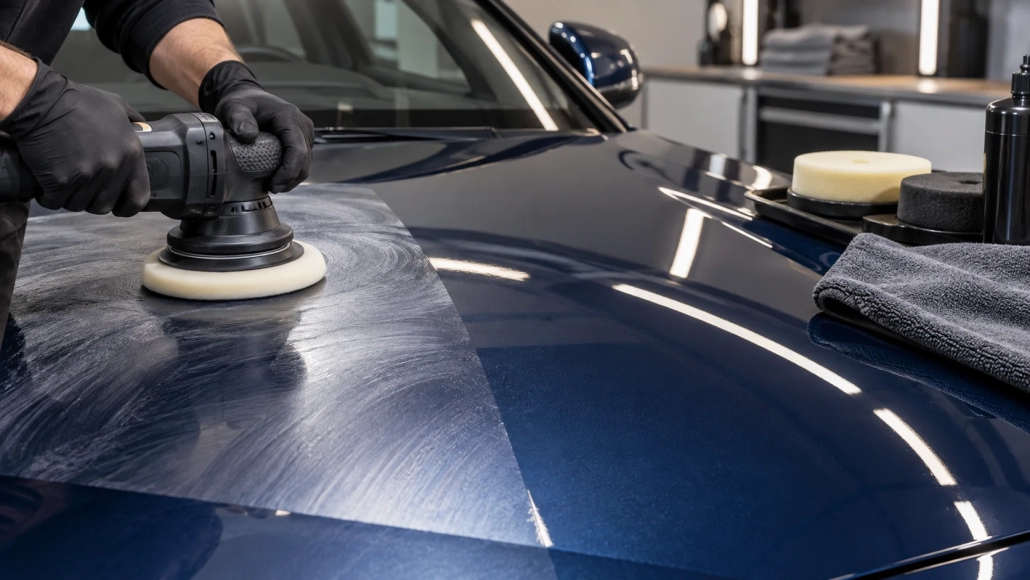
A coating technician needs to know what the polished surface should look like before application. A small defect library makes recurring quality issues easier to recognise and reduces confusion between preparation defects and coating residue.
Use workshop examples with permission and remove unnecessary customer information. Include polishing haze, hologram-like patterns, remaining scratches, wiping residue and accepted texture. Label only what has been established; uncertain examples belong in a review category.
| Library field | Purpose |
|---|---|
| Surface and history | Places the image in context |
| Lighting and angle | Makes the observation reproducible |
| Confirmed issue | Separates diagnosis from appearance |
| Approved response | Connects recognition to action |
The library should not contain only failures. Show documented deeper defects that were deliberately retained and finishes whose texture is acceptable. Otherwise, technicians may repeatedly reopen work that already meets the agreed scope.
Before coating, review the panel map and compare any concern with the relevant examples. If the current surface does not fit a known case, stop and inspect rather than forcing it into the nearest label.
For illustration, a broad smear after preparation may resemble haze in a photograph. The library should explain the confirmed diagnostic sequence, including the dry inspection after an approved cleaning check, rather than teaching recognition from one image alone.
Give technicians coded examples and ask for the next action. Useful training distinguishes “ready to coat,” “clean and recheck,” “return for correction” and “seek assessment.” Memorising a defect name is less valuable than choosing the appropriate response.
Review entries when products, lighting or finishing processes change. Retain original images and avoid exaggerated editing. A concise library of well-documented cases is more useful than hundreds of unexplained photographs.
The result is a shared visual language between polishing and coating teams, grounded in verified cases and the workshop’s actual acceptance standard.
Ask NANOLAB about your surface and intended use. For application and care, use the current instructions for the exact product.
Choose a polishing process by testing defect removal, finishing quality and clear-coat preservation rather than counting steps alone.

A small collection of labelled reference panels can help a workshop compare finish-polish processes without experimenting first on customer vehicles.
Evaluate finishing polish through dry clarity, residue removal, inspection and rework to identify the complete coating-ready workflow.
 Finishing Polish Evaluation: Balance Clarity, Residue Removal and Inspection...