






A full polishing range.
From cutting and one-step correction to final finishing.
Specialist chemistry. Expert application.
 QUARTZ99 / CERAMIC BASE COAT
The foundation of your coating system.
A layerable quartz base coat designed for mechanical protection. Pair it with a suitable top coat to create the final finish.
For application by NANOLAB certified installers only.
Four formulas. Extended working time. Find the coating for your finish.
Explore the BEAST family of ceramic coatings.
Find the coating for each exterior surface.
 PPF & VINYLGLOSSProtection for glossy films and wraps.Discover
 MATTE & SATINMATTEProtection that respects the finish.Discover
 GLASSWINDOWSExplore dedicated glass protection.Discover
 WHEEL PROTECTIONWHEELSA dedicated coating for your wheels.Discover
 TRIM PROTECTIONPLASTICProtection for plastic surfaces.Discover
Dedicated care for the surfaces inside.
 LEATHER SURFACESLEATHERDiscover NANOLAB leather protection.Discover PLASTIC SURFACESPLASTICProtection for interior plastic surfaces.Discover TEXTILE SURFACESFABRICExplore the latest fabric formulation.Discover
Spray protection, maintenance and upcoming wash products.
 MAINTENANCEBEAST 365Explore the BEAST maintenance range.Discover
Next in washing, cleaning & care.
Ceramic protection for boats and yachts.
An easy-to-apply ceramic coating with an established track record on boats and yachts around the world.
Results vary with surface preparation, exposure and maintenance.
Read 50 MARINE guides →Explore MARINEProtection for the surfaces you live with.
A look at what we’re developing.
From cutting and one-step correction to final finishing.
A wider range for professional vehicle care.
Taking shape alongside BEAST & MATRIX.
Practical guidance for your next coating project.
Explore all guides →
Agree whether factory paint texture should remain before polishing so increased gloss does not accidentally change the intended appearance.
Updated · NANOLAB Knowledge
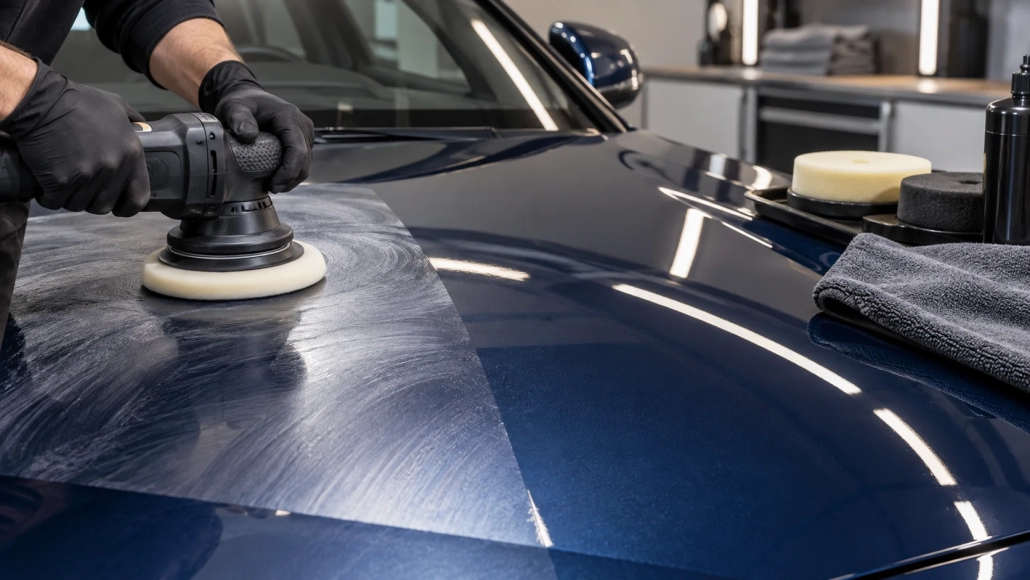
Paint appearance includes texture as well as scratches and gloss. A customer may want wash marks reduced while retaining the factory surface character. Establish that goal before selecting a correction process.
Inspect broad reflections and local defects under suitable light. Record whether the visible texture is consistent across panels or differs around repairs. Do not assume every distorted reflection is a removable scratch or coating issue.
| Goal | Scope implication |
|---|---|
| Reduce general wash marks | Preserve agreed underlying texture |
| Improve local repair appearance | Assess the repair system and surrounding match |
| Change texture substantially | Requires a separate specialist assessment |
Do not include texture levelling implicitly in an ordinary enhancement service. It can involve a different amount of material removal and a different risk profile.
Compare the corrected area with an adjacent reference under broad reflection and directional inspection. Judge both defect reduction and the retained surface character. A small glossy patch can look impressive while revealing an unwanted mismatch across a larger panel.
A vehicle has consistent factory texture and widespread light wash marks. The accepted test removes much of the marking while the broad reflection pattern remains recognisably similar. That can satisfy the brief without pursuing a flatter reflection at additional paint cost.
If one repaired panel already has a different texture, coating will not automatically make it match the original panels. Discuss the underlying finish difference before promising a uniform result.
Complete the suitable residue-removal and dry inspection steps before coating. Record the accepted appearance and remaining limitations. The coating stage should preserve the agreed result rather than become an explanation for unresolved preparation differences.
A clear texture discussion prevents two people from using “perfect finish” to mean different things. It also keeps polishing decisions aligned with paint preservation and the actual service the customer approved.
Ask NANOLAB about your surface and intended use. For application and care, use the current instructions for the exact product.
Choose a polishing process by testing defect removal, finishing quality and clear-coat preservation rather than counting steps alone.

Door jambs combine painted surfaces, seals, labels and hardware. Define what can be inspected and polished without interfering with those components.
Build a polishing defect library that helps coating technicians distinguish accepted paint features from residue and missed correction.
 Polishing Quality Escapes: Build a Defect Library for the Coating Team