






A full polishing range.
From cutting and one-step correction to final finishing.
Specialist chemistry. Expert application.
 QUARTZ99 / CERAMIC BASE COAT
The foundation of your coating system.
A layerable quartz base coat designed for mechanical protection. Pair it with a suitable top coat to create the final finish.
For application by NANOLAB certified installers only.
Four formulas. Extended working time. Find the coating for your finish.
Explore the BEAST family of ceramic coatings.
Find the coating for each exterior surface.
 PPF & VINYLGLOSSProtection for glossy films and wraps.Discover
 MATTE & SATINMATTEProtection that respects the finish.Discover
 GLASSWINDOWSExplore dedicated glass protection.Discover
 WHEEL PROTECTIONWHEELSA dedicated coating for your wheels.Discover
 TRIM PROTECTIONPLASTICProtection for plastic surfaces.Discover
Dedicated care for the surfaces inside.
 LEATHER SURFACESLEATHERDiscover NANOLAB leather protection.Discover PLASTIC SURFACESPLASTICProtection for interior plastic surfaces.Discover TEXTILE SURFACESFABRICExplore the latest fabric formulation.Discover
Spray protection, maintenance and upcoming wash products.
 MAINTENANCEBEAST 365Explore the BEAST maintenance range.Discover
Next in washing, cleaning & care.
Ceramic protection for boats and yachts.
An easy-to-apply ceramic coating with an established track record on boats and yachts around the world.
Results vary with surface preparation, exposure and maintenance.
Read 50 MARINE guides →Explore MARINEProtection for the surfaces you live with.
A look at what we’re developing.
From cutting and one-step correction to final finishing.
A wider range for professional vehicle care.
Taking shape alongside BEAST & MATRIX.
Practical guidance for your next coating project.
Explore all guides →
Evaluate finishing polish through dry clarity, residue removal, inspection and rework to identify the complete coating-ready workflow.
Updated · NANOLAB Knowledge
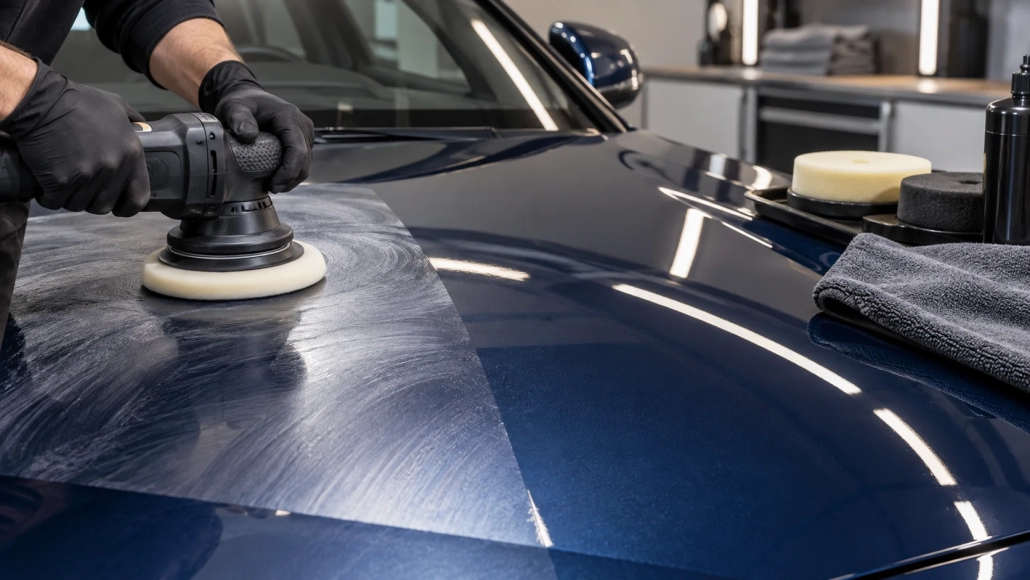
A finishing polish should be assessed by the surface it leaves after suitable preparation, not only by how glossy it looks immediately after buffing. Include residue removal and inspection in the trial because those steps determine coating readiness.
Use paint with a known, representative refinement need. Keep prior cutting work comparable. A finishing polish tested on an already excellent panel may reveal little about its ability to resolve the actual haze found in the workshop.
| Outcome | Observation |
|---|---|
| Clarity | Accepted dry appearance under agreed lighting |
| Residue removal | Effort and suitable preparation steps required |
| Inspection | Time needed to verify the result |
| Rework | Additional correction before release |
A finishing result belongs to a combination of paint, machine, pad, liquid and technique. Use compatible combinations and document the actual process. Do not transfer settings from another system without checking suitability.
Polish A produces an appealing immediate reflection but needs repeated preparation wipes before the finish can be judged. Polish B looks less dramatic initially yet reaches an accepted clear surface with a simpler complete sequence. The trial should capture that operational difference without assuming anything about undisclosed ingredients.
Claims such as “no fillers” or “no silicones” require product-specific support. A workshop appearance test alone cannot establish the full formulation. Evaluate the observed behaviour and obtain technical documentation for composition-related requirements.
Repeat where the intended use includes different paint responses. Preserve any limitation on soft, repaired or unusual finishes. A single successful black panel is useful evidence for that panel, not a universal guarantee.
Choose the process that repeatedly reaches the agreed finish with acceptable effort and paint preservation. That is the relevant handover to ceramic coating, and it is more useful than ranking polishes by the first glossy photograph.
Ask NANOLAB about your surface and intended use. For application and care, use the current instructions for the exact product.
Choose a polishing process by testing defect removal, finishing quality and clear-coat preservation rather than counting steps alone.
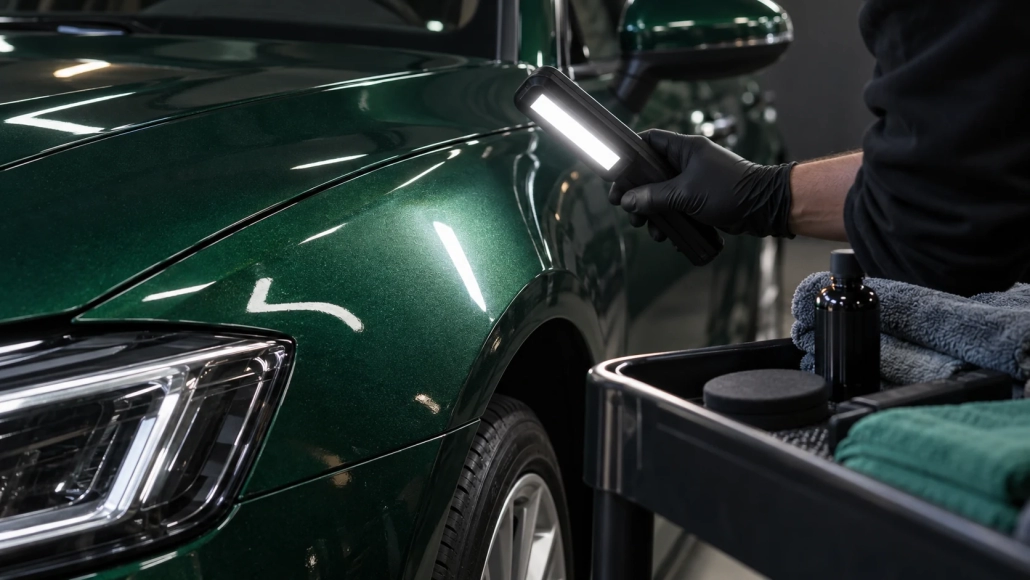
Plan black-car finishing around consistent lighting, clean pads and careful residue removal so shine does not conceal haze or fresh towel marks.
Compare polishing systems by total accepted correction time, refinement, residue removal and consumables rather than cutting speed alone.

 Private Label Coating Samples: Use a Gate Review before a Larger Order