






A full polishing range.
From cutting and one-step correction to final finishing.
Specialist chemistry. Expert application.
 QUARTZ99 / CERAMIC BASE COAT
The foundation of your coating system.
A layerable quartz base coat designed for mechanical protection. Pair it with a suitable top coat to create the final finish.
For application by NANOLAB certified installers only.
Four formulas. Extended working time. Find the coating for your finish.
Explore the BEAST family of ceramic coatings.
Find the coating for each exterior surface.
 PPF & VINYLGLOSSProtection for glossy films and wraps.Discover
 MATTE & SATINMATTEProtection that respects the finish.Discover
 GLASSWINDOWSExplore dedicated glass protection.Discover
 WHEEL PROTECTIONWHEELSA dedicated coating for your wheels.Discover
 TRIM PROTECTIONPLASTICProtection for plastic surfaces.Discover
Dedicated care for the surfaces inside.
 LEATHER SURFACESLEATHERDiscover NANOLAB leather protection.Discover PLASTIC SURFACESPLASTICProtection for interior plastic surfaces.Discover TEXTILE SURFACESFABRICExplore the latest fabric formulation.Discover
Spray protection, maintenance and upcoming wash products.
 MAINTENANCEBEAST 365Explore the BEAST maintenance range.Discover
Next in washing, cleaning & care.
Ceramic protection for boats and yachts.
An easy-to-apply ceramic coating with an established track record on boats and yachts around the world.
Results vary with surface preparation, exposure and maintenance.
Read 50 MARINE guides →Explore MARINEProtection for the surfaces you live with.
A look at what we’re developing.
From cutting and one-step correction to final finishing.
A wider range for professional vehicle care.
Taking shape alongside BEAST & MATRIX.
Practical guidance for your next coating project.
Explore all guides →
Compare shower-door coating performance using actual water exposure and cleaning access, since pivot and sliding assemblies create different local conditions.
Updated · NANOLAB Knowledge
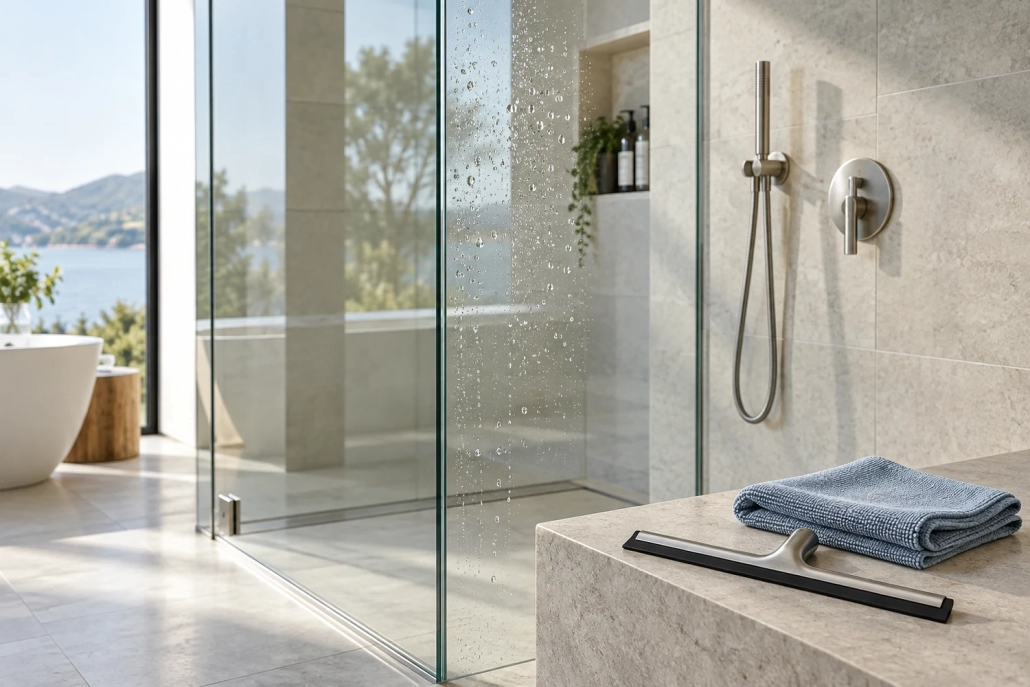
A pivot door and a sliding door can expose their glass very differently. Overlaps, seals, movement and spray direction influence where water remains. Comparing them solely by time since coating can therefore produce a misleading durability judgement.
Identify the direct-spray area, sheltered edges, overlaps and runoff paths. Note which face is coated and which zones can be cleaned routinely. Record the shower-head position and normal door configuration without changing the installation.
| Zone | Comparison concern |
|---|---|
| Direct spray | Frequent wetting and deposit load |
| Overlap or seal edge | Restricted access and retained liquid |
| Sheltered upper area | Lower exposure, not a whole-door proxy |
A sliding overlap may receive less effective routine wiping than an open pivot-door face. If one area develops residue sooner, review access and cleaning history before concluding that the coating chemistry differs.
Compare similar zones across enclosures with documented use and care. Report results by zone where exposure differs substantially. Do not average a sheltered area with a heavily wetted edge and present the result as if the entire assembly had uniform service.
Use the exposure map to explain where routine drying matters and where hardware or access limits require another solution. Any change to seals or door operation belongs with the installer.
The coating remains one part of the enclosure’s maintenance system. A useful review explains where performance is acceptable, where deposits recur and which local conditions are likely contributing.
Discuss a shower-glass coating project. For application and care, use the current instructions for the exact product.
A test patch should represent the actual enclosure, including its existing finish and maintenance needs.
Sliding doors can have overlapping panels and areas that are difficult to reach.
Use repeatable views and matched texture orientation when inspecting coated fluted glass so the glass pattern is not mistaken for coating haze.
 Inspecting Coatings on Fluted Shower Glass without Mistaking Texture for Ha...