






A full polishing range.
From cutting and one-step correction to final finishing.
Specialist chemistry. Expert application.
 QUARTZ99 / CERAMIC BASE COAT
The foundation of your coating system.
A layerable quartz base coat designed for mechanical protection. Pair it with a suitable top coat to create the final finish.
For application by NANOLAB certified installers only.
Four formulas. Extended working time. Find the coating for your finish.
Explore the BEAST family of ceramic coatings.
Find the coating for each exterior surface.
 PPF & VINYLGLOSSProtection for glossy films and wraps.Discover
 MATTE & SATINMATTEProtection that respects the finish.Discover
 GLASSWINDOWSExplore dedicated glass protection.Discover
 WHEEL PROTECTIONWHEELSA dedicated coating for your wheels.Discover
 TRIM PROTECTIONPLASTICProtection for plastic surfaces.Discover
Dedicated care for the surfaces inside.
 LEATHER SURFACESLEATHERDiscover NANOLAB leather protection.Discover PLASTIC SURFACESPLASTICProtection for interior plastic surfaces.Discover TEXTILE SURFACESFABRICExplore the latest fabric formulation.Discover
Spray protection, maintenance and upcoming wash products.
 MAINTENANCEBEAST 365Explore the BEAST maintenance range.Discover
Next in washing, cleaning & care.
Ceramic protection for boats and yachts.
An easy-to-apply ceramic coating with an established track record on boats and yachts around the world.
Results vary with surface preparation, exposure and maintenance.
Read 50 MARINE guides →Explore MARINEProtection for the surfaces you live with.
A look at what we’re developing.
From cutting and one-step correction to final finishing.
A wider range for professional vehicle care.
Taking shape alongside BEAST & MATRIX.
Practical guidance for your next coating project.
Explore all guides →
Investigate cleaner and water trapped in shower-door channels before attributing recurring streaks on nearby coated glass to coating failure.
Updated · NANOLAB Knowledge
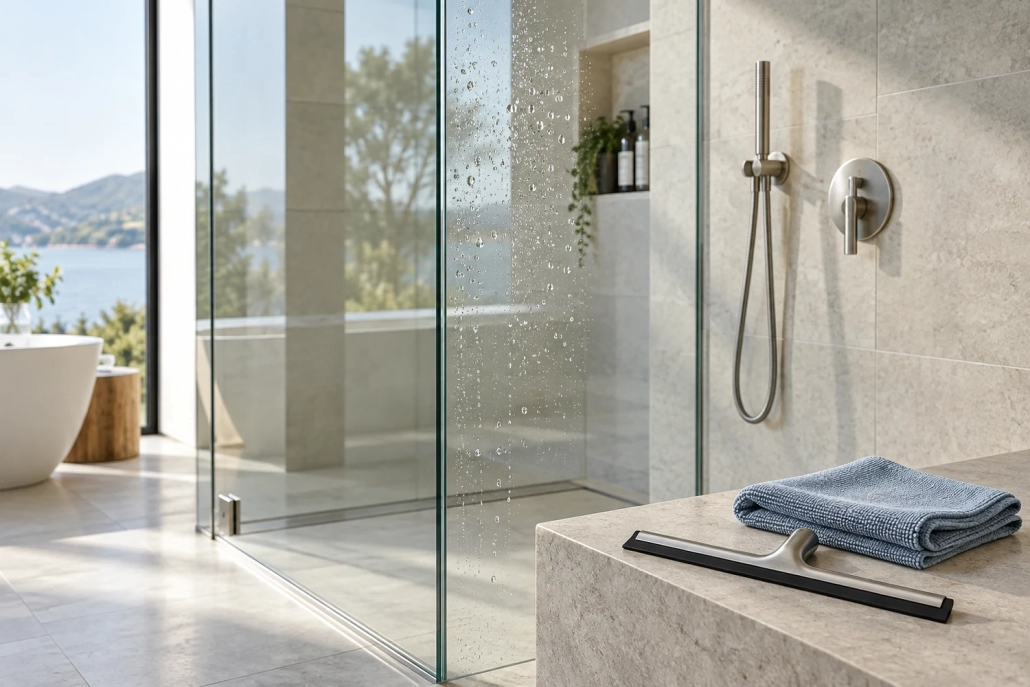
A glass pane may look clean immediately after rinsing and develop streaks later as liquid drains from a channel. That delayed source is easy to miss when inspection ends before the hardware has finished releasing water.
Trace the mark toward handles, channels, seals or overlapping components. Record whether it appears immediately, after door movement or later during drying. Compare the shape with the likely runoff path.
Use a method compatible with the glass coating and hardware. Do not flood enclosed spaces, force tools into seals or dismantle the door without the responsible installer’s guidance. Access limits should be recorded rather than overcome with improvised abrasion.
| Check | Purpose |
|---|---|
| After supported rinsing | Assess initial cleanliness |
| After normal door movement | Reveal retained-liquid release |
| After drying | Assess the final visible finish |
If runoff is suspected, document a small supported cleaning intervention and repeat the observation. A change in the streak pattern after addressing the source is more informative than repeatedly polishing the receiving area.
Explain which accessible areas should be rinsed or dried and which require installer attention. Do not promise that coating the broad face eliminates residue generated by neighbouring components.
A successful outcome removes the recurring source where possible and restores an acceptable dry appearance. Keeping the timing of the streak in the record helps distinguish trapped cleaner from a mark that was already present on the glass.
Discuss a shower-glass coating project. For application and care, use the current instructions for the exact product.
A test patch should represent the actual enclosure, including its existing finish and maintenance needs.
Audit shower glass maintenance using task records, dry inspection and a controlled cleaning check before deciding whether a coating has failed.
Compare shower-door coating performance using actual water exposure and cleaning access, since pivot and sliding assemblies create different local conditions.
 Pivot and Sliding Shower Doors: Compare Water Exposure before Judging Coating...