






A full polishing range.
From cutting and one-step correction to final finishing.
Specialist chemistry. Expert application.
 QUARTZ99 / CERAMIC BASE COAT
The foundation of your coating system.
A layerable quartz base coat designed for mechanical protection. Pair it with a suitable top coat to create the final finish.
For application by NANOLAB certified installers only.
Four formulas. Extended working time. Find the coating for your finish.
Explore the BEAST family of ceramic coatings.
Find the coating for each exterior surface.
 PPF & VINYLGLOSSProtection for glossy films and wraps.Discover
 MATTE & SATINMATTEProtection that respects the finish.Discover
 GLASSWINDOWSExplore dedicated glass protection.Discover
 WHEEL PROTECTIONWHEELSA dedicated coating for your wheels.Discover
 TRIM PROTECTIONPLASTICProtection for plastic surfaces.Discover
Dedicated care for the surfaces inside.
 LEATHER SURFACESLEATHERDiscover NANOLAB leather protection.Discover PLASTIC SURFACESPLASTICProtection for interior plastic surfaces.Discover TEXTILE SURFACESFABRICExplore the latest fabric formulation.Discover
Spray protection, maintenance and upcoming wash products.
 MAINTENANCEBEAST 365Explore the BEAST maintenance range.Discover
Next in washing, cleaning & care.
Ceramic protection for boats and yachts.
An easy-to-apply ceramic coating with an established track record on boats and yachts around the world.
Results vary with surface preparation, exposure and maintenance.
Read 50 MARINE guides →Explore MARINEProtection for the surfaces you live with.
A look at what we’re developing.
From cutting and one-step correction to final finishing.
A wider range for professional vehicle care.
Taking shape alongside BEAST & MATRIX.
Practical guidance for your next coating project.
Explore all guides →
Separate confirmed surfaces and procedures from assumptions requiring technical consultation.
Updated · NANOLAB Knowledge
An unusual coating job deserves a structured assessment before a firm recommendation or quote. The unfamiliar part may be the material, existing finish, access or intended use. Identify that uncertainty explicitly rather than applying a familiar vehicle process by analogy.
Describe the object, surface and desired result. Obtain available manufacturer or finish information and record treatment history where known. Photographs can guide the discussion, but they may not establish the material or suitability of a proposed product.
List compatibility questions, application boundaries and operational constraints. Ask the coating manufacturer for guidance tied to the actual use case. For example, a decorative panel near working hardware may require a narrower treatment scope than the customer initially imagined. Do not treat approval of one component as approval of the whole assembly.
If an inspection or pilot is needed, describe that stage separately from a full application commitment. State which assumptions affect the estimate and how changes will be handled. A useful proposal can be conditional without being vague: it should explain what is known, what must be checked and what decision follows. This protects the customer from an inappropriate promise and gives the workshop a clear path toward a supported, reviewable job plan.
Record the unusual feature, available material information, intended use, access limitations and what the customer expects. Identify which parts of the job match an established process and which require technical confirmation. Quote uncertain work conditionally rather than disguising it as routine.
For example, an unfamiliar decorative finish on an aftermarket component may need a separate recommendation even when the surrounding factory paint is straightforward. Ask for supplier information and define the next assessment step. Keep exclusions visible on the proposal. The review should lead to a supported scope, a bounded trial or a decision not to offer that application, rather than a universal coating promise made before the surface is understood.
Send NANOLAB your workshop application details. For supporting information, review the current product documentation and the professional coating guides.
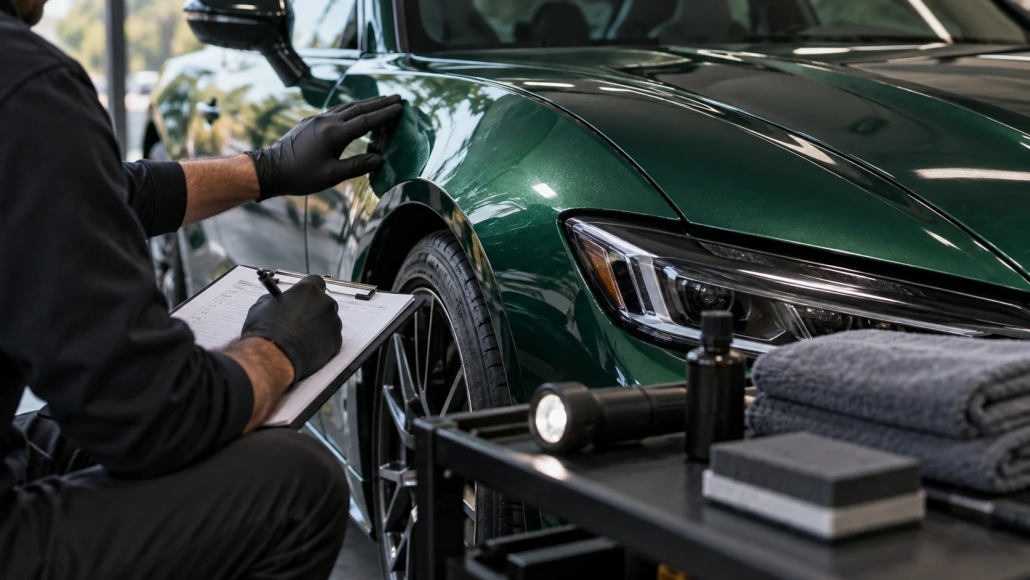
Collect the surface history, owner priorities and practical care information needed to build an accurate coating proposal.

Use clear checkpoints before application, after levelling and at handover to make coating work consistent and traceable.

Keep each surface and treatment sequence identifiable in one job record.