






A full polishing range.
From cutting and one-step correction to final finishing.
Specialist chemistry. Expert application.
 QUARTZ99 / CERAMIC BASE COAT
The foundation of your coating system.
A layerable quartz base coat designed for mechanical protection. Pair it with a suitable top coat to create the final finish.
For application by NANOLAB certified installers only.
Four formulas. Extended working time. Find the coating for your finish.
Explore the BEAST family of ceramic coatings.
Find the coating for each exterior surface.
 PPF & VINYLGLOSSProtection for glossy films and wraps.Discover
 MATTE & SATINMATTEProtection that respects the finish.Discover
 GLASSWINDOWSExplore dedicated glass protection.Discover
 WHEEL PROTECTIONWHEELSA dedicated coating for your wheels.Discover
 TRIM PROTECTIONPLASTICProtection for plastic surfaces.Discover
Dedicated care for the surfaces inside.
 LEATHER SURFACESLEATHERDiscover NANOLAB leather protection.Discover PLASTIC SURFACESPLASTICProtection for interior plastic surfaces.Discover TEXTILE SURFACESFABRICExplore the latest fabric formulation.Discover
Spray protection, maintenance and upcoming wash products.
 MAINTENANCEBEAST 365Explore the BEAST maintenance range.Discover
Next in washing, cleaning & care.
Ceramic protection for boats and yachts.
An easy-to-apply ceramic coating with an established track record on boats and yachts around the world.
Results vary with surface preparation, exposure and maintenance.
Read 50 MARINE guides →Explore MARINEProtection for the surfaces you live with.
A look at what we’re developing.
From cutting and one-step correction to final finishing.
A wider range for professional vehicle care.
Taking shape alongside BEAST & MATRIX.
Practical guidance for your next coating project.
Explore all guides →
Match water chemistry, deposited quantity and drying conditions when comparing coating demonstrations made with fresh water and seawater.
Updated · NANOLAB Knowledge
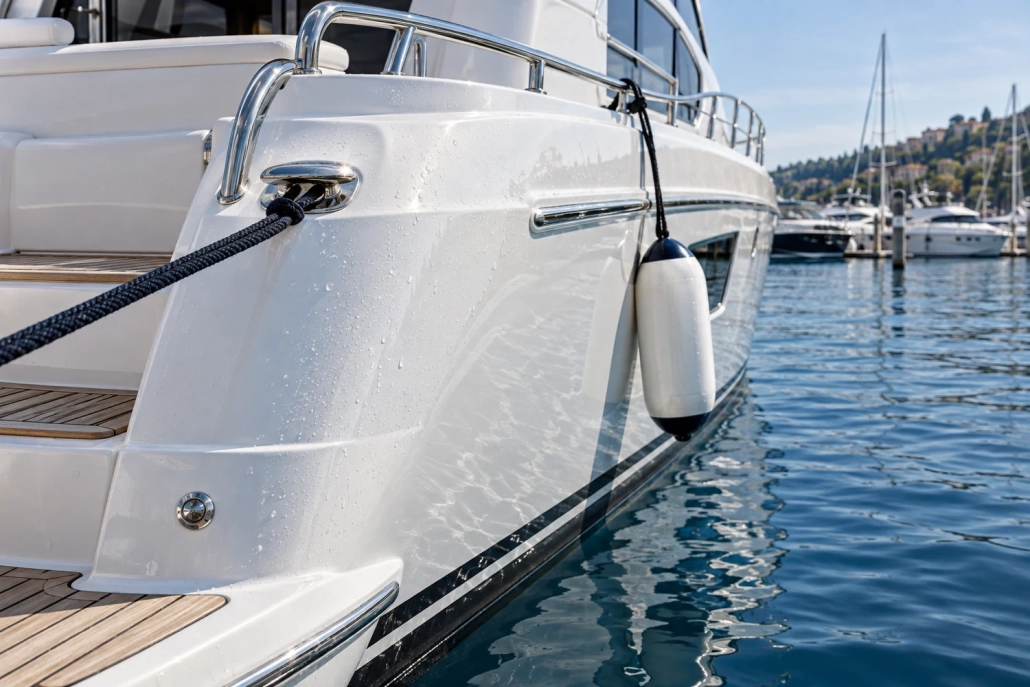
A fresh-water rinse and a seawater splash are not equivalent deposit challenges. Differences in dissolved material, deposited volume and drying can dominate the visible result. A fair demonstration defines these inputs instead of relying on two attractive photographs.
Decide whether the trial compares runoff, visible residue after drying or effort needed for approved cleaning. Those outcomes require different observations. A surface that sheds a drop quickly has not necessarily been shown to resist deposits under repeated exposure.
| Variable | Record |
|---|---|
| Water source | Collected location or prepared composition |
| Amount | Volume applied to a defined area |
| Exposure | Number of applications and drying conditions |
| Surface | Material, preparation, treatment and orientation |
If the intended use includes both fresh water and seawater, report each challenge separately. Matching liquid volume alone does not match the amount or composition of residue. If deposit mass is the controlled variable, explain how it was established and why that comparison is relevant.
After exposure, use a specified approved cleaning process and inspect the dry surface. Record remaining residue and any persistent appearance change separately. For example, a faint mark removed by routine cleaning and a mark remaining afterward are different outcomes. Keep the demonstration’s conclusion limited to the tested conditions; it does not establish every possible coastal or marine service exposure.
Ask NANOLAB about your surface and intended use. For application and care, use the current instructions for the exact product.
A pre-coating inspection prevents attractive results in one area from hiding unresolved problems elsewhere.
The period after application is part of the coating process.
Report the zones actually inspected on a coated vessel and identify inaccessible areas so a partial survey is not mistaken for complete coverage.
 Marine Coating Inspection by Reachable Zones: Report Uninspected Areas Expl...