






A full polishing range.
From cutting and one-step correction to final finishing.
Specialist chemistry. Expert application.
 QUARTZ99 / CERAMIC BASE COAT
The foundation of your coating system.
A layerable quartz base coat designed for mechanical protection. Pair it with a suitable top coat to create the final finish.
For application by NANOLAB certified installers only.
Four formulas. Extended working time. Find the coating for your finish.
Explore the BEAST family of ceramic coatings.
Find the coating for each exterior surface.
 PPF & VINYLGLOSSProtection for glossy films and wraps.Discover
 MATTE & SATINMATTEProtection that respects the finish.Discover
 GLASSWINDOWSExplore dedicated glass protection.Discover
 WHEEL PROTECTIONWHEELSA dedicated coating for your wheels.Discover
 TRIM PROTECTIONPLASTICProtection for plastic surfaces.Discover
Dedicated care for the surfaces inside.
 LEATHER SURFACESLEATHERDiscover NANOLAB leather protection.Discover PLASTIC SURFACESPLASTICProtection for interior plastic surfaces.Discover TEXTILE SURFACESFABRICExplore the latest fabric formulation.Discover
Spray protection, maintenance and upcoming wash products.
 MAINTENANCEBEAST 365Explore the BEAST maintenance range.Discover
Next in washing, cleaning & care.
Ceramic protection for boats and yachts.
An easy-to-apply ceramic coating with an established track record on boats and yachts around the world.
Results vary with surface preparation, exposure and maintenance.
Read 50 MARINE guides →Explore MARINEProtection for the surfaces you live with.
A look at what we’re developing.
From cutting and one-step correction to final finishing.
A wider range for professional vehicle care.
Taking shape alongside BEAST & MATRIX.
Practical guidance for your next coating project.
Explore all guides →
Agree test methods, raw data, report content and usage rights before commissioning a third-party coating evaluation.
Updated · NANOLAB Knowledge
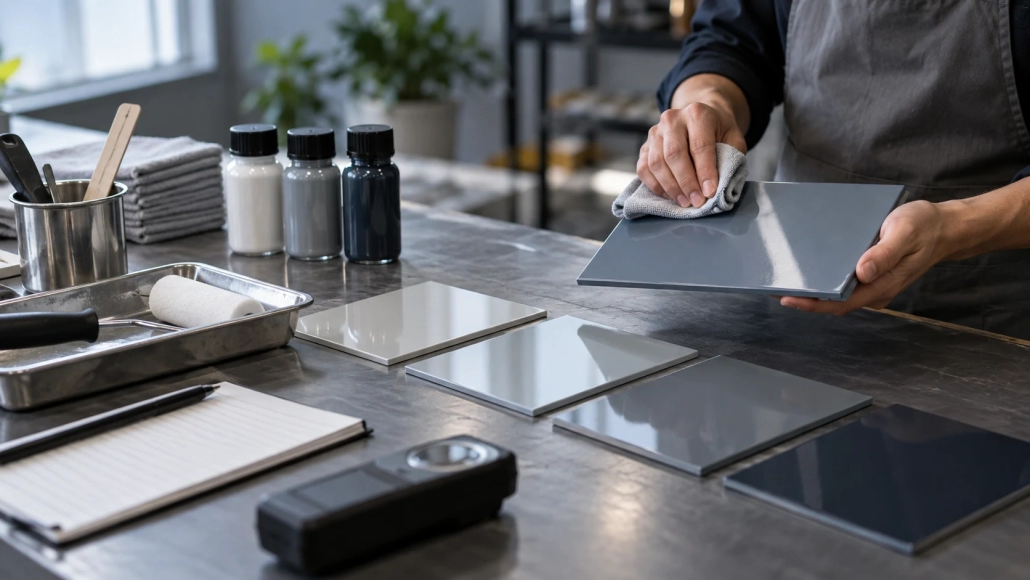
A laboratory report is most useful when the deliverables are defined before testing. A quotation that names only a test can leave uncertainty about raw data, photographs, deviations and how the results may be used.
Describe the coating, substrate, preparation and intended claim or engineering question. Ask the laboratory to confirm whether the proposed method addresses that question and which limitations should be expected.
| Deliverable | Purpose |
|---|---|
| Method and deviations | Shows what was actually done |
| Sample identities | Links results to supplied material |
| Individual observations | Reveals variation hidden by averages |
| Images and instrument files where agreed | Supports later technical review |
Agree access to data, retention, confidentiality and any restrictions on reproducing the report or using the laboratory’s name. Have the responsible commercial or legal reviewer assess contractual wording where necessary. Do not assume payment automatically grants every publicity right.
Ask who will explain unexpected results, invalid samples and uncertainty. Confirm how additional work will be authorised. A report should distinguish measured findings from interpretation and unsupported extrapolation. For example, passing one chemical spot test should not be rewritten as resistance to all cleaners. Clear commissioning makes the final evidence easier to use accurately and reduces expensive follow-up caused by missing data.
Discuss your private-label coating project. For application and care, use the current instructions for the exact product.
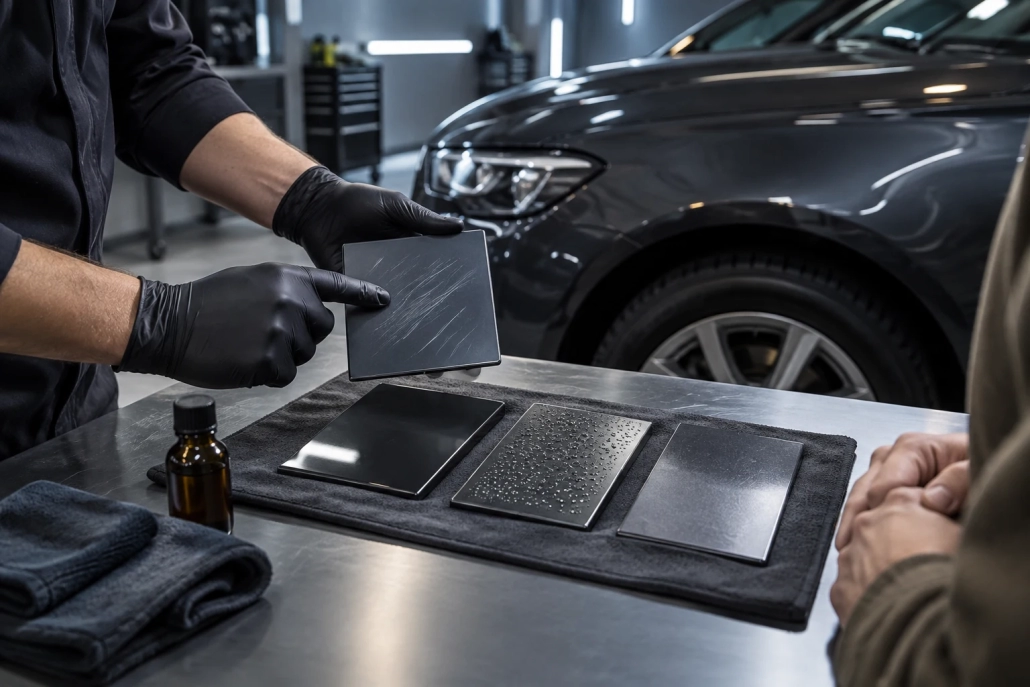
Keep coating performance statements connected to their product version, test method and limitations before using them in sales material.

Decide what happens to unused liquid and tested specimens when laboratory work ends. A clear agreement can preserve useful evidence without assuming that the laboratory will store every item indefinitely.
Compare coating manufacturers with explicit criteria and weights, while keeping mandatory requirements separate from scored preferences.
 Comparing Coating Manufacturers with a Weighted Decision Matrix