






A full polishing range.
From cutting and one-step correction to final finishing.
Specialist chemistry. Expert application.
 QUARTZ99 / CERAMIC BASE COAT
The foundation of your coating system.
A layerable quartz base coat designed for mechanical protection. Pair it with a suitable top coat to create the final finish.
For application by NANOLAB certified installers only.
Four formulas. Extended working time. Find the coating for your finish.
Explore the BEAST family of ceramic coatings.
Find the coating for each exterior surface.
 PPF & VINYLGLOSSProtection for glossy films and wraps.Discover
 MATTE & SATINMATTEProtection that respects the finish.Discover
 GLASSWINDOWSExplore dedicated glass protection.Discover
 WHEEL PROTECTIONWHEELSA dedicated coating for your wheels.Discover
 TRIM PROTECTIONPLASTICProtection for plastic surfaces.Discover
Dedicated care for the surfaces inside.
 LEATHER SURFACESLEATHERDiscover NANOLAB leather protection.Discover PLASTIC SURFACESPLASTICProtection for interior plastic surfaces.Discover TEXTILE SURFACESFABRICExplore the latest fabric formulation.Discover
Spray protection, maintenance and upcoming wash products.
 MAINTENANCEBEAST 365Explore the BEAST maintenance range.Discover
Next in washing, cleaning & care.
Ceramic protection for boats and yachts.
An easy-to-apply ceramic coating with an established track record on boats and yachts around the world.
Results vary with surface preparation, exposure and maintenance.
Read 50 MARINE guides →Explore MARINEProtection for the surfaces you live with.
A look at what we’re developing.
From cutting and one-step correction to final finishing.
A wider range for professional vehicle care.
Taking shape alongside BEAST & MATRIX.
Practical guidance for your next coating project.
Explore all guides →
Schedule coating jobs using inspection, waiting, equipment and rework capacity as well as application time, with a worked example of the limiting resource.
Updated · NANOLAB Knowledge

A coating workshop can have enough applicator time and still miss its delivery promises. Inspection, correction, bay occupancy and unexpected rework also consume capacity. A realistic schedule identifies the resource that limits the whole job, rather than multiplying a best-case application time by the number of staff.
List intake, washing, preparation, inspection, application, required waiting and final handover. Distinguish active labour from elapsed time and bay occupancy. A vehicle waiting under the product’s required conditions may use little labour while preventing the bay from accepting another job.
| Stage | Capacity question |
|---|---|
| Preparation | How variable is the condition of incoming vehicles? |
| Application | Which staff and environment are qualified and available? |
| Inspection | Who can review the work and under what lighting? |
| Required waiting | Which spaces remain occupied? |
| Rework | Where can an exception be resolved without displacing every booking? |
Consider an illustrative shift with 420 available productive minutes at an inspection station. If the planned average inspection task requires 30 minutes, the arithmetic ceiling is 14 inspections before allowing for variation, interruptions or repeated checks. If other stations can supply 18 jobs, their extra speed does not make the inspection limit disappear.
This example is not a NANOLAB productivity benchmark. Use your own recorded times and distinguish inspections from complete vehicle jobs; one job may require more than one inspection stage.
Review actual jobs by condition and service scope. Separate routine maintenance from correction-intensive work. Record why jobs exceeded the estimate, including missing information, unexpected repairs and product or environmental constraints. A single average can hide a small group of jobs that regularly disrupt the entire day.
Plan a realistic allowance for exceptions based on that evidence. An allowance is not permission to shorten preparation or curing when the day becomes busy.
Define who confirms completion and what evidence is required. Avoid letting the booked collection time become the only reason to declare a vehicle ready. If a defect is found, identify the recovery location, responsible person and communication plan.
A schedule should show which jobs can move to another suitable area and which must remain in the controlled bay. That prevents a last-minute attempt to create capacity by moving a freshly treated vehicle into unsuitable conditions.
A faster coating process may move the bottleneck to preparation or inspection. A new employee may increase application capacity without increasing the capacity for technical review. Recalculate the workflow after meaningful changes rather than retaining an old daily vehicle target.
The practical output is a schedule with credible delivery times, visible exception capacity and protected quality checks. More bookings are useful only when the workshop can complete the full agreed process.
Discuss your surface and intended use with NANOLAB. Follow the current instructions for the exact product when planning application and care.

Track the type and context of rework so training and process changes target the actual cause.
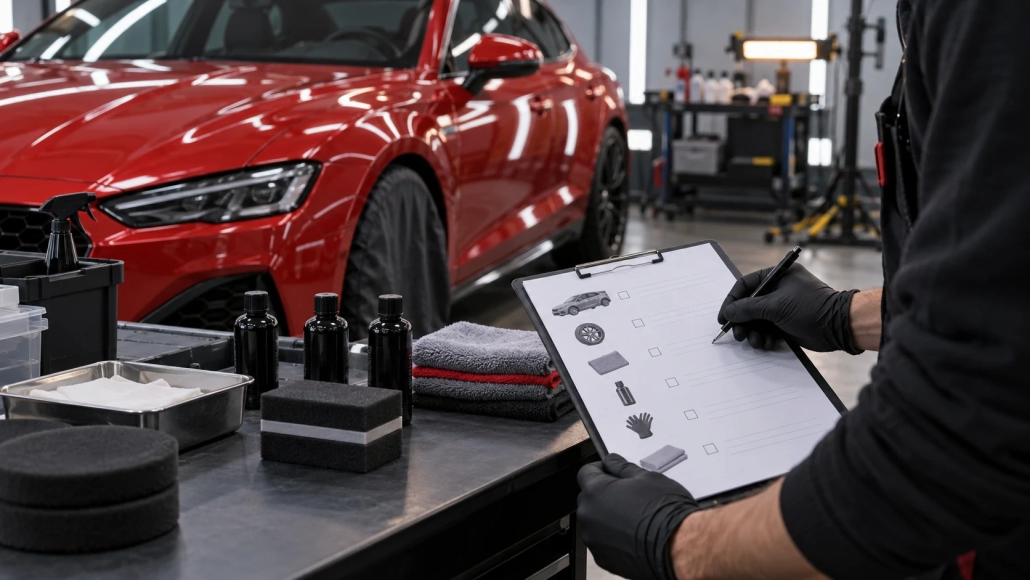
Account for preparation, application, protected curing and inspection when deciding how many coating jobs a workshop can accommodate.
 Silent Customers in a Coating Pilot: Separate No Complaint from Verified Su...