






A full polishing range.
From cutting and one-step correction to final finishing.
Specialist chemistry. Expert application.
 QUARTZ99 / CERAMIC BASE COAT
The foundation of your coating system.
A layerable quartz base coat designed for mechanical protection. Pair it with a suitable top coat to create the final finish.
For application by NANOLAB certified installers only.
Four formulas. Extended working time. Find the coating for your finish.
Explore the BEAST family of ceramic coatings.
Find the coating for each exterior surface.
 PPF & VINYLGLOSSProtection for glossy films and wraps.Discover
 MATTE & SATINMATTEProtection that respects the finish.Discover
 GLASSWINDOWSExplore dedicated glass protection.Discover
 WHEEL PROTECTIONWHEELSA dedicated coating for your wheels.Discover
 TRIM PROTECTIONPLASTICProtection for plastic surfaces.Discover
Dedicated care for the surfaces inside.
 LEATHER SURFACESLEATHERDiscover NANOLAB leather protection.Discover PLASTIC SURFACESPLASTICProtection for interior plastic surfaces.Discover TEXTILE SURFACESFABRICExplore the latest fabric formulation.Discover
Spray protection, maintenance and upcoming wash products.
 MAINTENANCEBEAST 365Explore the BEAST maintenance range.Discover
Next in washing, cleaning & care.
Ceramic protection for boats and yachts.
An easy-to-apply ceramic coating with an established track record on boats and yachts around the world.
Results vary with surface preparation, exposure and maintenance.
Read 50 MARINE guides →Explore MARINEProtection for the surfaces you live with.
A look at what we’re developing.
From cutting and one-step correction to final finishing.
A wider range for professional vehicle care.
Taking shape alongside BEAST & MATRIX.
Practical guidance for your next coating project.
Explore all guides →
The time needed to correct a coating issue is not always the same as the time until the customer can receive the vehicle. Separate active rework from scheduling and product-related waiting periods when communicating the plan.
Updated · NANOLAB Knowledge
First define the approved corrective route and the resources it needs. Then place that work into the actual workshop schedule. A short hands-on task may still require an appointment, preparation or a protected waiting period. Giving the customer only the active-work estimate can create an unrealistic collection expectation.
Illustrative example: a local correction is expected to take a limited amount of technician time, but the suitable bay is occupied and the approved process has a release condition. The customer needs the complete turnaround estimate, not just the time the technician expects to hold an applicator.
Do not promise a correction method before diagnosing the issue or shorten product requirements to meet a collection time. Keep the explanation factual and avoid assigning blame while the cause remains uncertain. A transparent schedule is part of the service response, not evidence of product failure.
Ask NANOLAB about the exact product and intended use. Use the current product documentation for formulation-specific instructions.
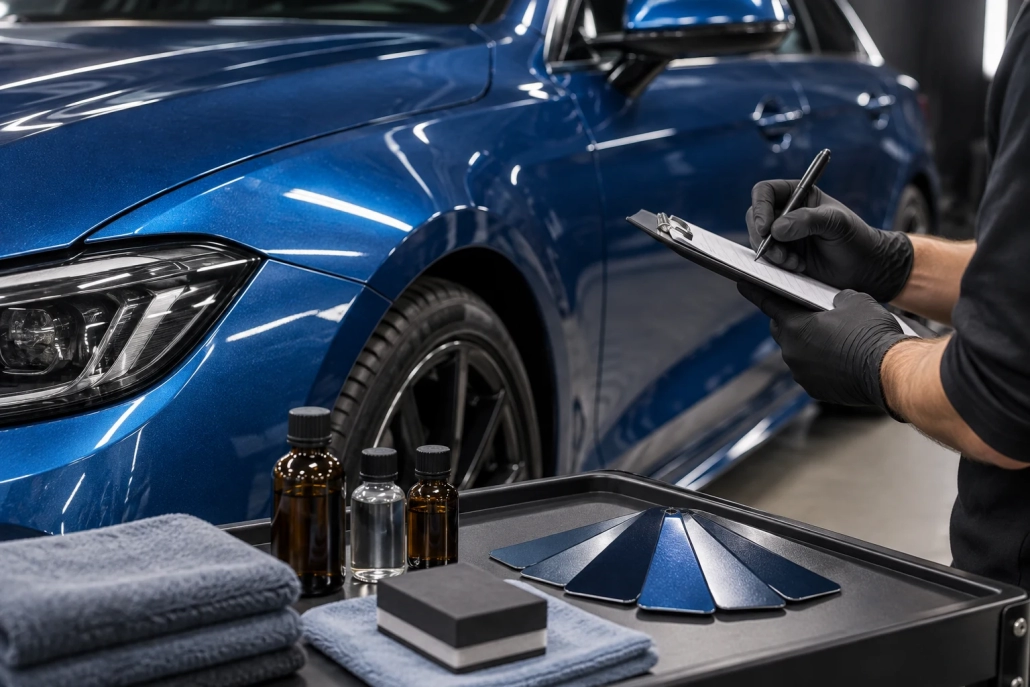
Build a clearer job estimate by separating active work, bay occupancy and the coating's required curing period.
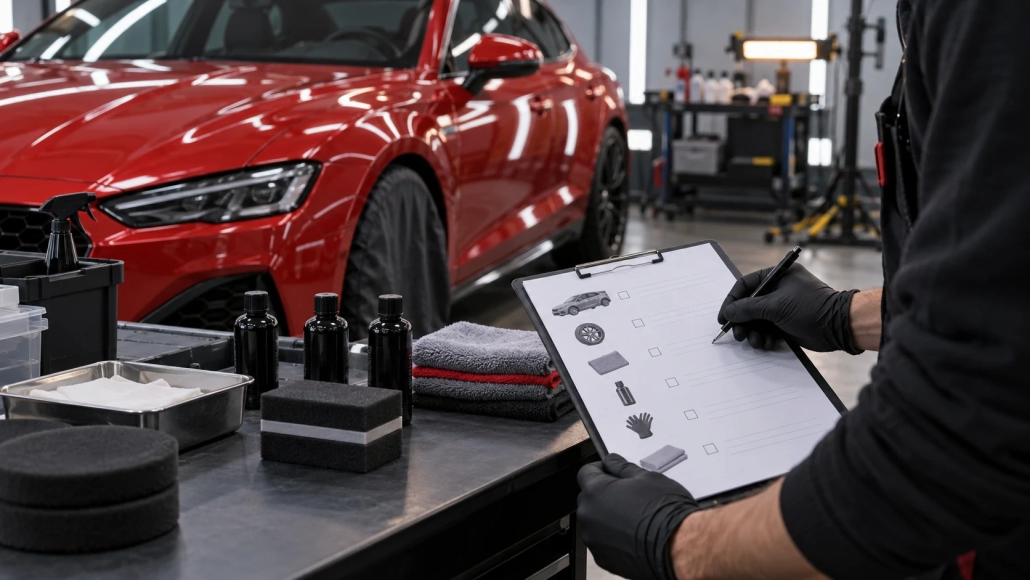
Build a workshop schedule that separates active work, waiting periods and protected curing space for the chosen product system.

Cleaning a weathered specimen before measurement can change what the evaluation reveals. Define whether the assessment concerns the exposed surface as received, the surface after an approved cleaning step, or both.