






A full polishing range.
From cutting and one-step correction to final finishing.
Specialist chemistry. Expert application.
 QUARTZ99 / CERAMIC BASE COAT
The foundation of your coating system.
A layerable quartz base coat designed for mechanical protection. Pair it with a suitable top coat to create the final finish.
For application by NANOLAB certified installers only.
Four formulas. Extended working time. Find the coating for your finish.
Explore the BEAST family of ceramic coatings.
Find the coating for each exterior surface.
 PPF & VINYLGLOSSProtection for glossy films and wraps.Discover
 MATTE & SATINMATTEProtection that respects the finish.Discover
 GLASSWINDOWSExplore dedicated glass protection.Discover
 WHEEL PROTECTIONWHEELSA dedicated coating for your wheels.Discover
 TRIM PROTECTIONPLASTICProtection for plastic surfaces.Discover
Dedicated care for the surfaces inside.
 LEATHER SURFACESLEATHERDiscover NANOLAB leather protection.Discover PLASTIC SURFACESPLASTICProtection for interior plastic surfaces.Discover TEXTILE SURFACESFABRICExplore the latest fabric formulation.Discover
Spray protection, maintenance and upcoming wash products.
 MAINTENANCEBEAST 365Explore the BEAST maintenance range.Discover
Next in washing, cleaning & care.
Ceramic protection for boats and yachts.
An easy-to-apply ceramic coating with an established track record on boats and yachts around the world.
Results vary with surface preparation, exposure and maintenance.
Read 50 MARINE guides →Explore MARINEProtection for the surfaces you live with.
A look at what we’re developing.
From cutting and one-step correction to final finishing.
A wider range for professional vehicle care.
Taking shape alongside BEAST & MATRIX.
Practical guidance for your next coating project.
Explore all guides →
Plan coating access around shower glass cut-outs and hardware interfaces before processing a batch, with a clear coverage and inspection map.
Updated · NANOLAB Knowledge
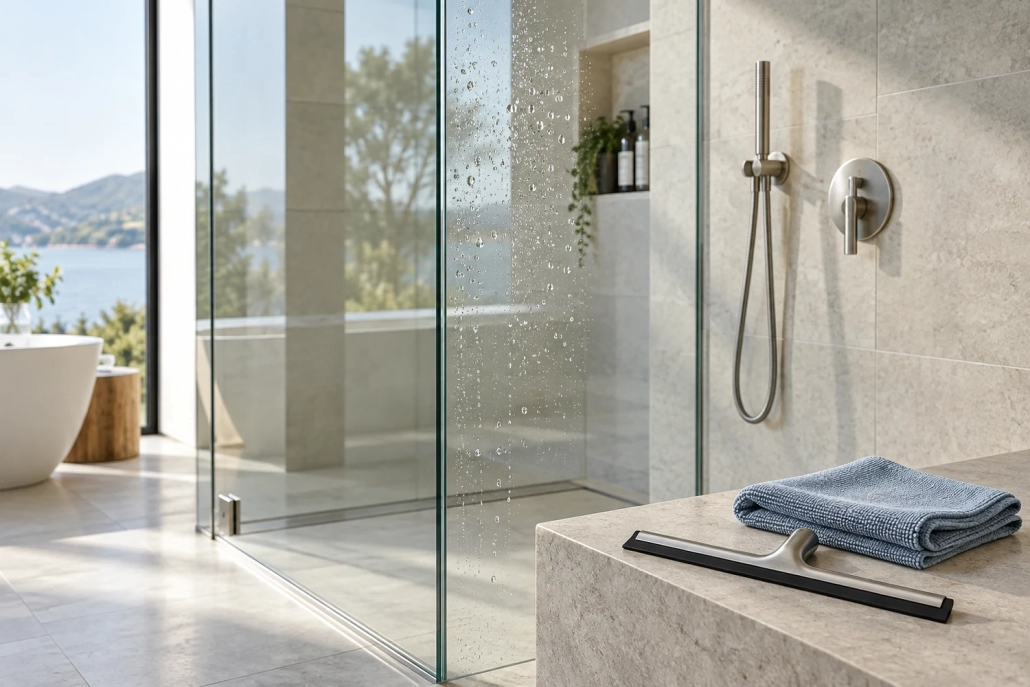
Cut-outs change the way an operator moves around a pane and the way its edges are inspected. A coverage map helps prevent missed areas, unnecessary product accumulation and treatment of interfaces that should remain outside the coating scope.
Identify holes, notches, hinge zones and any specified exclusion areas. Confirm whether the coating scope includes only the main face or other surfaces. Do not assume that a treatment suitable for the broad glass face is required or approved at every hardware interface.
Divide the face into manageable zones that fit the product’s application instructions. Establish how the operator will move around cut-outs without repeatedly contacting prepared glass. Choose suitable applicators and inspection access rather than compensating for poor access with extra liquid.
| Zone | Check |
|---|---|
| Main face | Uniform coverage and levelling |
| Cut-out boundary | Visible residue or missed adjacent area |
| Hardware interface | Correct inclusion or exclusion |
| Handling point | No contamination transferred after preparation |
Use a representative trial piece or first article. Inspect under oblique and transmitted views as appropriate. Check whether the planned tools reach the area without contacting sharp edges or creating unsafe handling positions. Safe glass handling takes priority over making the coating route convenient.
An illustrative door may have a narrow strip between two cut-outs. If that strip is difficult to level, the remedy may be a revised access plan or suitable tool, not a longer uncontrolled dwell time.
Record treated and excluded zones with the panel identity. The inspector should be able to verify the scope without asking the applicator to reconstruct it from memory. If a hardware change alters the required scope, review the map before processing the next pane.
A successful batch uses a demonstrated sequence for its geometry. It does not rely on every operator discovering the same awkward corner independently.
Discuss a shower-glass coating project. For application and care, use the current instructions for the exact product.
A short inspection helps determine whether shower glass needs ordinary cleaning, deposit removal or specialist restoration before coating.
A handle can conceal glass and collect residue at its boundary. Define the approved cleaning access instead of forcing tools into a narrow contact area.
Use staged glass inspection to distinguish washer residue from haze introduced during preparation, coating or later handling.
 Separating Glass Washer Residue from Nano Coating Haze