






A full polishing range.
From cutting and one-step correction to final finishing.
Specialist chemistry. Expert application.
 QUARTZ99 / CERAMIC BASE COAT
The foundation of your coating system.
A layerable quartz base coat designed for mechanical protection. Pair it with a suitable top coat to create the final finish.
For application by NANOLAB certified installers only.
Four formulas. Extended working time. Find the coating for your finish.
Explore the BEAST family of ceramic coatings.
Find the coating for each exterior surface.
 PPF & VINYLGLOSSProtection for glossy films and wraps.Discover
 MATTE & SATINMATTEProtection that respects the finish.Discover
 GLASSWINDOWSExplore dedicated glass protection.Discover
 WHEEL PROTECTIONWHEELSA dedicated coating for your wheels.Discover
 TRIM PROTECTIONPLASTICProtection for plastic surfaces.Discover
Dedicated care for the surfaces inside.
 LEATHER SURFACESLEATHERDiscover NANOLAB leather protection.Discover PLASTIC SURFACESPLASTICProtection for interior plastic surfaces.Discover TEXTILE SURFACESFABRICExplore the latest fabric formulation.Discover
Spray protection, maintenance and upcoming wash products.
 MAINTENANCEBEAST 365Explore the BEAST maintenance range.Discover
Next in washing, cleaning & care.
Ceramic protection for boats and yachts.
An easy-to-apply ceramic coating with an established track record on boats and yachts around the world.
Results vary with surface preparation, exposure and maintenance.
Read 50 MARINE guides →Explore MARINEProtection for the surfaces you live with.
A look at what we’re developing.
From cutting and one-step correction to final finishing.
A wider range for professional vehicle care.
Taking shape alongside BEAST & MATRIX.
Practical guidance for your next coating project.
Explore all guides →
Plan a ceramic coating job across two appointments with panel-specific preparation, contamination checks and separate application dates.
Updated · NANOLAB Knowledge

Coating a vehicle in two appointments can fit a customer’s schedule, but it creates different surface histories. Panels completed in the first visit must be protected during the second, while unfinished panels need a fresh readiness check.
Use a panel map identifying completed, deferred and excluded areas. Where possible, choose natural panel boundaries rather than an arbitrary line across a visible surface. Confirm that the proposed sequence fits the product’s instructions and the intended finish.
| Area at visit two | Required decision |
|---|---|
| Previously coated | How to protect and inspect it during nearby work |
| Previously prepared only | Whether preparation remains valid |
| Not yet prepared | Full preparation scope |
| Boundary or shared trim | How to avoid overlap and contamination |
A panel prepared during the first visit may accumulate dust, fingerprints or wash products before the second. Do not treat the earlier preparation date as proof of current readiness. Inspect and repeat appropriate preparation where needed.
Plan polishing residue, washing runoff and masking carefully around finished panels. Use methods compatible with the existing coating and its cure stage. Do not apply an unapproved tape or cleaner simply because the adjacent area is still being worked on.
A customer completes the rear half of the car first and returns after a week of driving. The front panels need renewed contamination assessment, while the rear panels retain their first application date. The final record should preserve both dates instead of describing the entire car as newly coated on visit two.
Explain the care requirements that remain relevant to each area, including any restrictions on newly treated panels. If the two visits produce a visible appearance difference, inspect the substrate and preparation history rather than assuming an extra layer will equalise it.
A split appointment is manageable when scope, dates and boundaries are explicit. The risk comes from treating two separate installations as if nothing happened between them.
Ask NANOLAB about your surface and intended use. For application and care, use the current instructions for the exact product.
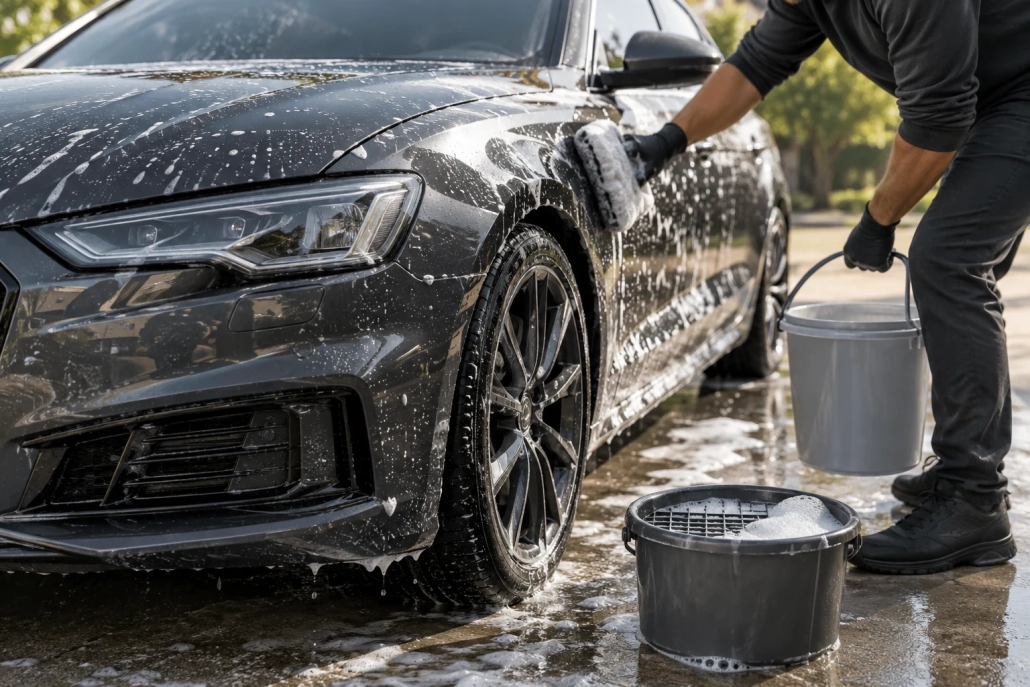
Build a gentle wash routine that removes loose grit before contact, keeps wheel tools separate and ends with careful rinsing and drying.
Use clear checkpoints before application, after levelling and at handover to make coating work consistent and traceable.
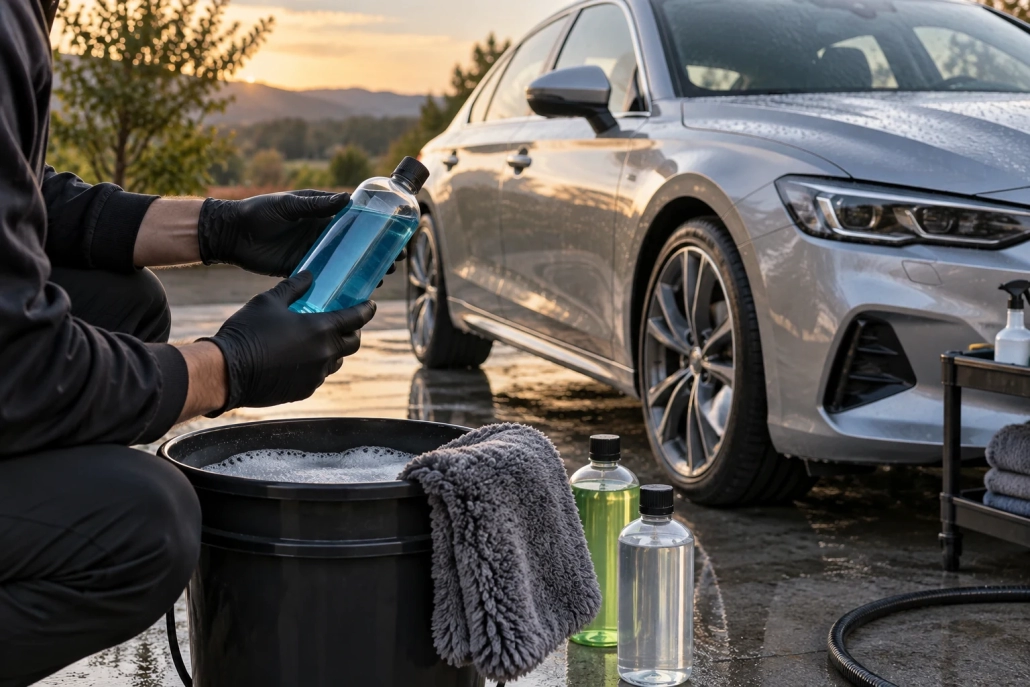
Reset maintenance on a coated car with an uncertain history through documentation, compatible cleaning and a staged baseline inspection.

 A Maintenance Reset for a Coated Car with an Unknown Product History