






A full polishing range.
From cutting and one-step correction to final finishing.
Specialist chemistry. Expert application.
 QUARTZ99 / CERAMIC BASE COAT
The foundation of your coating system.
A layerable quartz base coat designed for mechanical protection. Pair it with a suitable top coat to create the final finish.
For application by NANOLAB certified installers only.
Four formulas. Extended working time. Find the coating for your finish.
Explore the BEAST family of ceramic coatings.
Find the coating for each exterior surface.
 PPF & VINYLGLOSSProtection for glossy films and wraps.Discover
 MATTE & SATINMATTEProtection that respects the finish.Discover
 GLASSWINDOWSExplore dedicated glass protection.Discover
 WHEEL PROTECTIONWHEELSA dedicated coating for your wheels.Discover
 TRIM PROTECTIONPLASTICProtection for plastic surfaces.Discover
Dedicated care for the surfaces inside.
 LEATHER SURFACESLEATHERDiscover NANOLAB leather protection.Discover PLASTIC SURFACESPLASTICProtection for interior plastic surfaces.Discover TEXTILE SURFACESFABRICExplore the latest fabric formulation.Discover
Spray protection, maintenance and upcoming wash products.
 MAINTENANCEBEAST 365Explore the BEAST maintenance range.Discover
Next in washing, cleaning & care.
Ceramic protection for boats and yachts.
An easy-to-apply ceramic coating with an established track record on boats and yachts around the world.
Results vary with surface preparation, exposure and maintenance.
Read 50 MARINE guides →Explore MARINEProtection for the surfaces you live with.
A look at what we’re developing.
From cutting and one-step correction to final finishing.
A wider range for professional vehicle care.
Taking shape alongside BEAST & MATRIX.
Practical guidance for your next coating project.
Explore all guides →
Review a customer's report of new scratches using baseline photos, panel history and consistent inspection without assuming the cause.
Updated · NANOLAB Knowledge

A report of new scratches deserves a careful review. The workshop should neither accept an unsupported cause immediately nor dismiss the customer because the vehicle has a coating. Establish what changed and what the available evidence can show.
Ask where the marks are, when they were first noticed and under what lighting. Record recent washing, service visits, parking events and local treatments. Keep the customer’s description separate from a technical explanation.
Review intake and delivery photographs, noting whether they actually show the disputed area under comparable conditions. A wide photograph taken in diffuse light may not reveal fine marks visible under a point light. Absence from that photograph is not proof the marks were absent.
| Evidence | Useful limit |
|---|---|
| Intake photographs | Only the areas and defects they can reveal |
| Service record | The work documented, not every possible contact |
| Scratch pattern | A clue to investigate, not a unique cause |
| Current inspection | Present condition, not automatically the date of damage |
Use a suitable maintenance process if needed and view the same locations under consistent light. Separate removable residue, polishing haze and physical scratches. Avoid polishing before documenting the concern, because correction changes the evidence.
If the cause remains uncertain, say which facts are established and agree the next assessment. A local correction may be technically possible, but it should follow paint-condition review and an agreed scope. Do not promise that ceramic coating prevents every scratch.
For example, a customer may notice fine marks only after changing parking lighting. That does not prove the marks are old or new. The review must rely on the actual records and inspection.
Use the experience to improve intake photography, wash instructions or handover inspection. A fair review protects the customer relationship while keeping technical conclusions within the evidence.
Ask NANOLAB about your surface and intended use. For application and care, use the current instructions for the exact product.
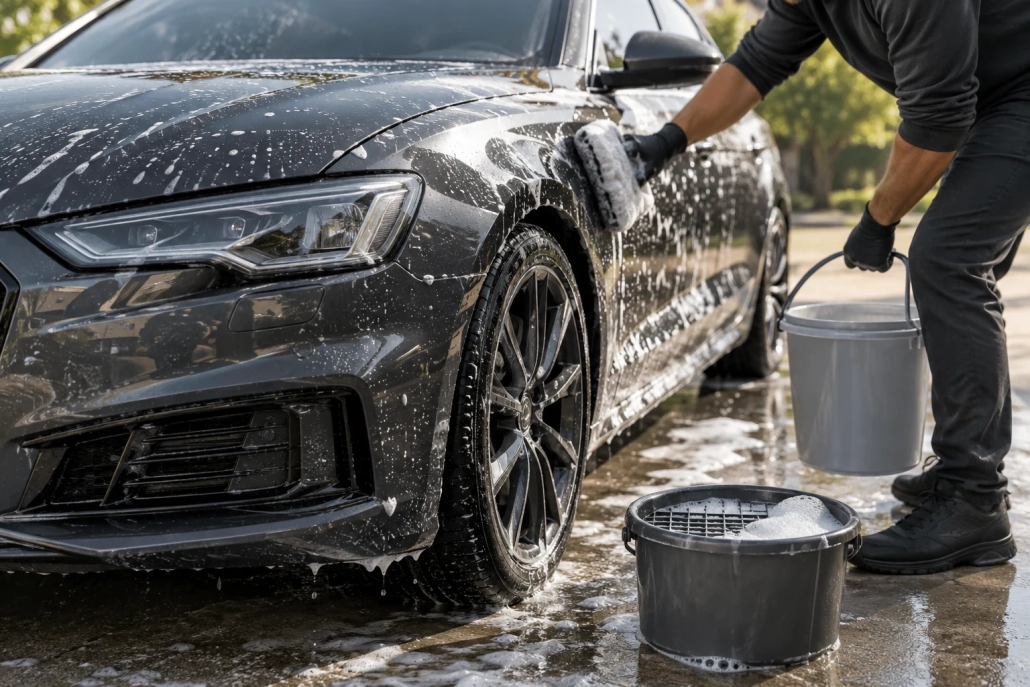
Build a gentle wash routine that removes loose grit before contact, keeps wheel tools separate and ends with careful rinsing and drying.

Assess documentation, finish, communication and support together without hiding technical defects.
Plan a ceramic coating job across two appointments with panel-specific preparation, contamination checks and separate application dates.
 Coating a Vehicle in Two Appointments: Control the Boundary Conditions