






A full polishing range.
From cutting and one-step correction to final finishing.
Specialist chemistry. Expert application.
 QUARTZ99 / CERAMIC BASE COAT
The foundation of your coating system.
A layerable quartz base coat designed for mechanical protection. Pair it with a suitable top coat to create the final finish.
For application by NANOLAB certified installers only.
Four formulas. Extended working time. Find the coating for your finish.
Explore the BEAST family of ceramic coatings.
Find the coating for each exterior surface.
 PPF & VINYLGLOSSProtection for glossy films and wraps.Discover
 MATTE & SATINMATTEProtection that respects the finish.Discover
 GLASSWINDOWSExplore dedicated glass protection.Discover
 WHEEL PROTECTIONWHEELSA dedicated coating for your wheels.Discover
 TRIM PROTECTIONPLASTICProtection for plastic surfaces.Discover
Dedicated care for the surfaces inside.
 LEATHER SURFACESLEATHERDiscover NANOLAB leather protection.Discover PLASTIC SURFACESPLASTICProtection for interior plastic surfaces.Discover TEXTILE SURFACESFABRICExplore the latest fabric formulation.Discover
Spray protection, maintenance and upcoming wash products.
 MAINTENANCEBEAST 365Explore the BEAST maintenance range.Discover
Next in washing, cleaning & care.
Ceramic protection for boats and yachts.
An easy-to-apply ceramic coating with an established track record on boats and yachts around the world.
Results vary with surface preparation, exposure and maintenance.
Read 50 MARINE guides →Explore MARINEProtection for the surfaces you live with.
A look at what we’re developing.
From cutting and one-step correction to final finishing.
A wider range for professional vehicle care.
Taking shape alongside BEAST & MATRIX.
Practical guidance for your next coating project.
Explore all guides →
Review local repairs, cleaning and possible contamination after a workshop visit so coating care can resume with an accurate surface record.
Updated · NANOLAB Knowledge
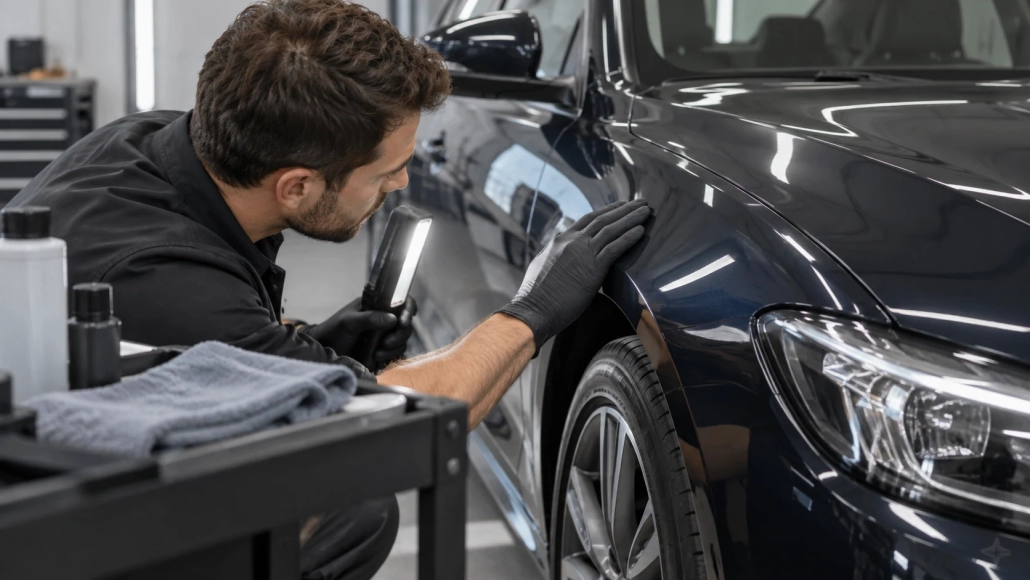
A vehicle can return from a workshop with a different surface history from when it arrived. Local paint repair, adhesive removal, polishing or a complimentary wash may affect how particular areas should be maintained.
Find out whether any panels were repainted, polished or treated with a cleaner or protection product. Record the location and date. Keep mechanical work separate from finish-related work so the relevant information remains easy to find.
If a repaired area is present, obtain the refinisher’s care instructions before washing or recoating it.
Look for fingerprints, oily residue, adhesive marks and differences in appearance. Do not immediately use a strong solvent to remove an unknown mark. Identify the surface and contamination, then choose a compatible cleaning method.
Check film edges and delicate trim around the work area. Photograph concerns and clarify them with the workshop before attempting a corrective process that could obscure their original condition.
Note areas where the original coating may have been removed or replaced. Arrange assessment when needed, and avoid assuming that the entire vehicle requires renewal because one panel was repaired.
Read repainted-panel coating and partial coating planning. Use the current NANOLAB instructions for the next treatment and keep the workshop information with the vehicle’s maintenance log.
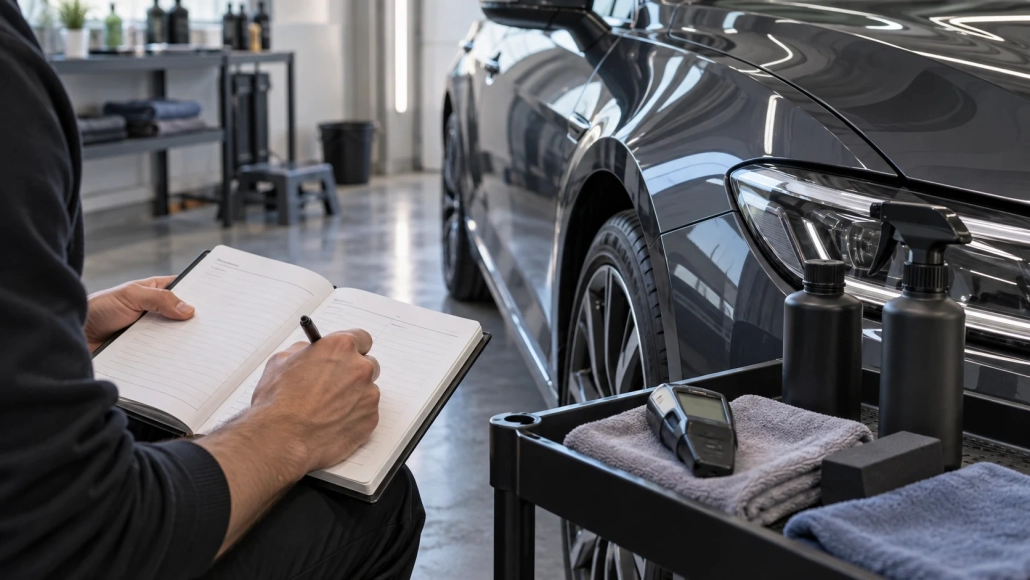
Record washes, contamination events and maintenance treatments so changes in a coated surface can be assessed with useful context.
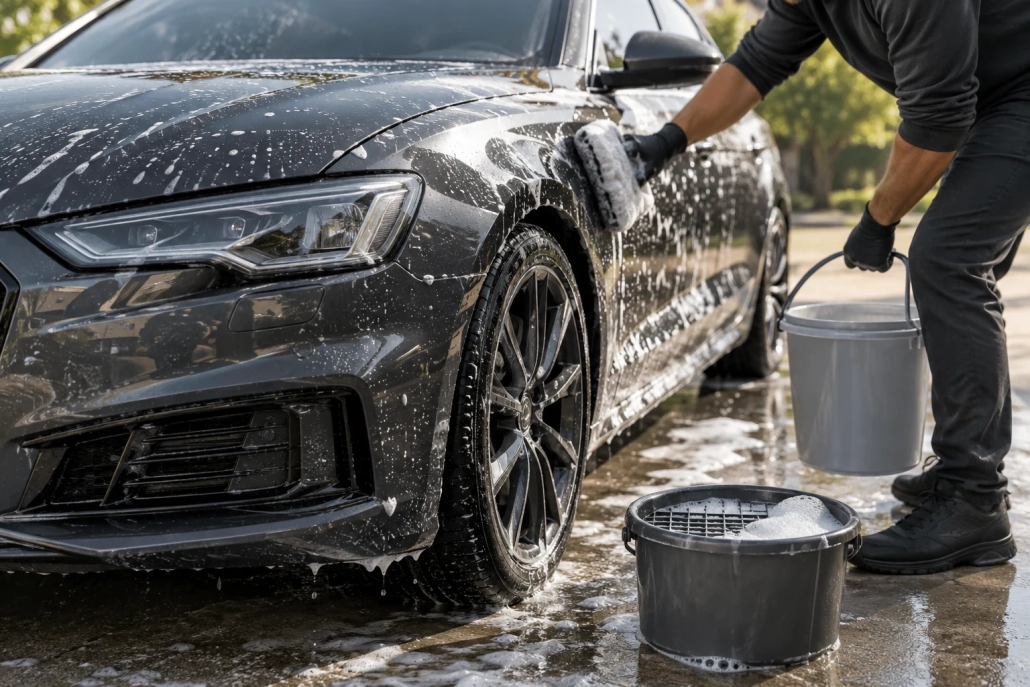
Build a gentle wash routine that removes loose grit before contact, keeps wheel tools separate and ends with careful rinsing and drying.
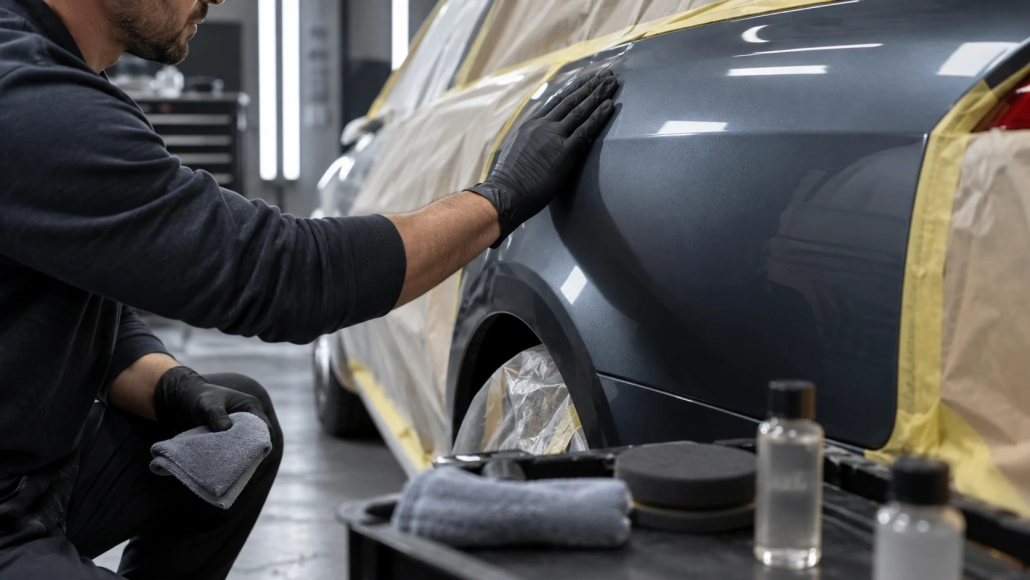
Confirm paint cure guidance, repair history and preparation requirements before applying ceramic coating to a refinished vehicle panel.

 How to Wash a Car Without Ceramic Coating