






A full polishing range.
From cutting and one-step correction to final finishing.
Specialist chemistry. Expert application.
 QUARTZ99 / CERAMIC BASE COAT
The foundation of your coating system.
A layerable quartz base coat designed for mechanical protection. Pair it with a suitable top coat to create the final finish.
For application by NANOLAB certified installers only.
Four formulas. Extended working time. Find the coating for your finish.
Explore the BEAST family of ceramic coatings.
Find the coating for each exterior surface.
 PPF & VINYLGLOSSProtection for glossy films and wraps.Discover
 MATTE & SATINMATTEProtection that respects the finish.Discover
 GLASSWINDOWSExplore dedicated glass protection.Discover
 WHEEL PROTECTIONWHEELSA dedicated coating for your wheels.Discover
 TRIM PROTECTIONPLASTICProtection for plastic surfaces.Discover
Dedicated care for the surfaces inside.
 LEATHER SURFACESLEATHERDiscover NANOLAB leather protection.Discover PLASTIC SURFACESPLASTICProtection for interior plastic surfaces.Discover TEXTILE SURFACESFABRICExplore the latest fabric formulation.Discover
Spray protection, maintenance and upcoming wash products.
 MAINTENANCEBEAST 365Explore the BEAST maintenance range.Discover
Next in washing, cleaning & care.
Ceramic protection for boats and yachts.
An easy-to-apply ceramic coating with an established track record on boats and yachts around the world.
Results vary with surface preparation, exposure and maintenance.
Read 50 MARINE guides →Explore MARINEProtection for the surfaces you live with.
A look at what we’re developing.
From cutting and one-step correction to final finishing.
A wider range for professional vehicle care.
Taking shape alongside BEAST & MATRIX.
Practical guidance for your next coating project.
Explore all guides →
Judge Alcantara after the permitted cleaning process has been completed and the material has dried. A wet or disturbed surface can make it difficult to decide whether a mark remains or whether the appearance needs further assessment.
Updated · NANOLAB Knowledge
The manufacturer's routine guidance emphasizes gentle cleaning and describes brushing after drying. That sequence matters when planning a later protection discussion: do not rush directly from a wet cleaning result into another treatment. Record what was used and follow the component maker's restrictions as well as the material care instructions. Additional protection requires its own suitability decision.
Illustrative example: an installer cleans a seat insert, sees uneven shading while it is damp and immediately considers a stronger product. Waiting until the approved cleaning and drying sequence is complete may provide a more reliable basis for deciding what the remaining issue actually is.
Alcantara's cleaning instructions do not constitute approval for a NANOLAB coating or another aftermarket treatment. Avoid aggressive rubbing, steam or an improvised escalation where the relevant guidance excludes it. If appearance remains uncertain, preserve the surface and seek a material-specific assessment.
Technical references: Alcantara cleaning instructions. These sources describe their stated methods or products; they do not certify NANOLAB products or establish compatibility with an unlisted surface.
Ask NANOLAB about the exact product and intended use. Use the current product documentation for formulation-specific instructions.
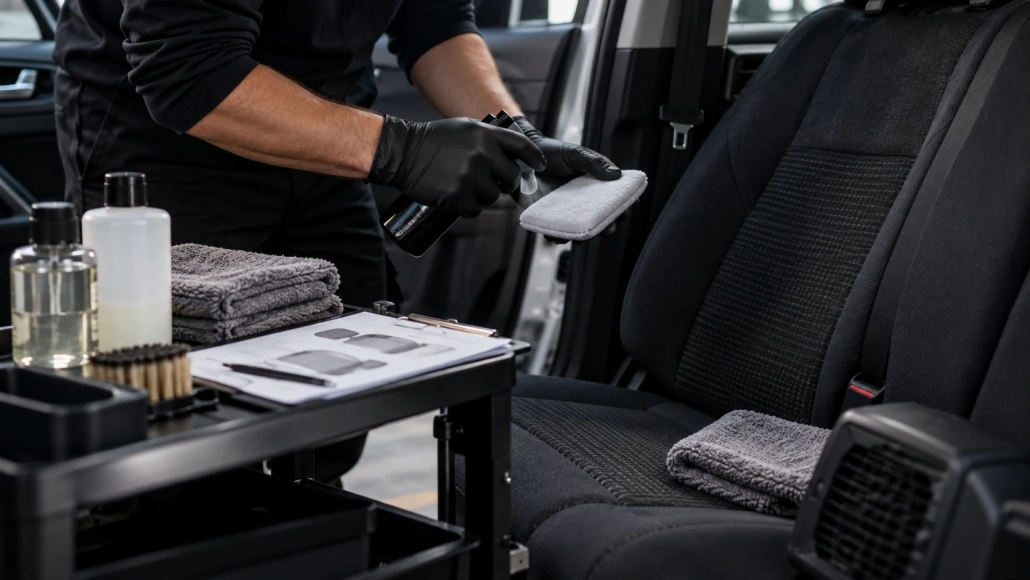
Identify the roof material, cleaning requirements and drying conditions before choosing a suitable fabric-protection treatment.
Patterned upholstery can hide local changes that become visible from another angle. Test colour and texture before treating the full seat.
A suede-like appearance does not identify a surface as leather or Alcantara. Establish the actual material before choosing a cleaner or protective treatment, because a familiar texture is not a reliable substitute for the manufacturer's care instructions.