






A full polishing range.
From cutting and one-step correction to final finishing.
Specialist chemistry. Expert application.
 QUARTZ99 / CERAMIC BASE COAT
The foundation of your coating system.
A layerable quartz base coat designed for mechanical protection. Pair it with a suitable top coat to create the final finish.
For application by NANOLAB certified installers only.
Four formulas. Extended working time. Find the coating for your finish.
Explore the BEAST family of ceramic coatings.
Find the coating for each exterior surface.
 PPF & VINYLGLOSSProtection for glossy films and wraps.Discover
 MATTE & SATINMATTEProtection that respects the finish.Discover
 GLASSWINDOWSExplore dedicated glass protection.Discover
 WHEEL PROTECTIONWHEELSA dedicated coating for your wheels.Discover
 TRIM PROTECTIONPLASTICProtection for plastic surfaces.Discover
Dedicated care for the surfaces inside.
 LEATHER SURFACESLEATHERDiscover NANOLAB leather protection.Discover PLASTIC SURFACESPLASTICProtection for interior plastic surfaces.Discover TEXTILE SURFACESFABRICExplore the latest fabric formulation.Discover
Spray protection, maintenance and upcoming wash products.
 MAINTENANCEBEAST 365Explore the BEAST maintenance range.Discover
Next in washing, cleaning & care.
Ceramic protection for boats and yachts.
An easy-to-apply ceramic coating with an established track record on boats and yachts around the world.
Results vary with surface preparation, exposure and maintenance.
Read 50 MARINE guides →Explore MARINEProtection for the surfaces you live with.
A look at what we’re developing.
From cutting and one-step correction to final finishing.
A wider range for professional vehicle care.
Taking shape alongside BEAST & MATRIX.
Practical guidance for your next coating project.
Explore all guides →
Design a split-panel comparison that records preparation, cross-contamination and edge effects before judging coating performance.
Updated · NANOLAB Knowledge
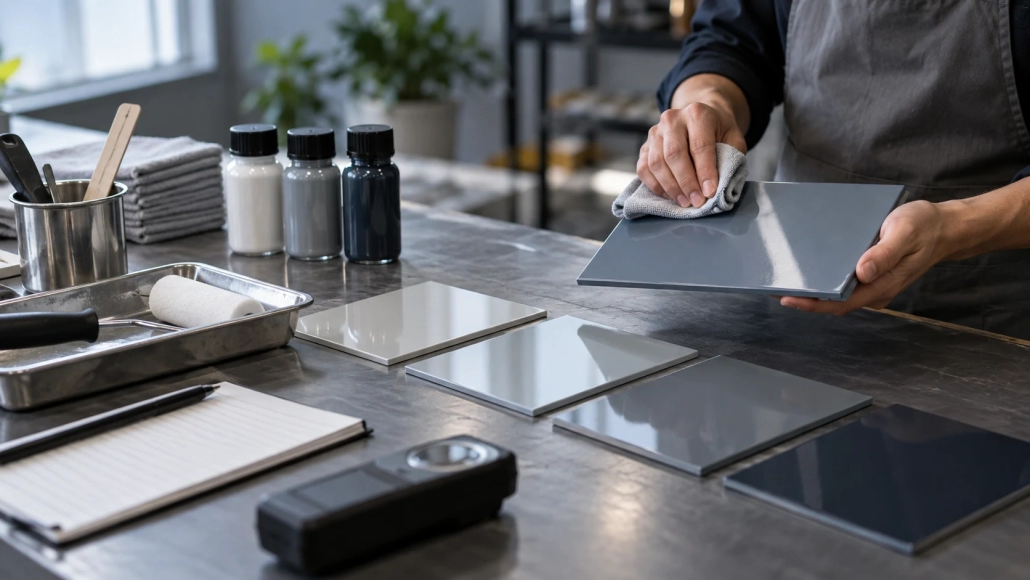
A split-panel test can place two coatings under similar exposure, but sharing one panel does not automatically make the comparison fair. Preparation, application order and contamination across the dividing line can still affect the result.
Map the sections and record the substrate condition before coating. Use the same agreed preparation where the systems permit it, while respecting any product-specific requirements. Keep an appropriate uncoated reference if the trial design calls for one.
Label samples with neutral codes when reducing brand expectation is useful. Keep the code key separate from the observation sheet until the recorded evaluation is complete. Do not conceal relevant application differences from the person interpreting the results.
Use separate clean applicators and suitable towels for each product. Prevent material from one section spreading into another. Follow the approved masking and removal process where needed, and document the dividing zone rather than measuring directly on an uncertain edge.
Record application order, conditions and curing time. A section coated much earlier may have a different effective curing period at the first comparison. Align the observation schedule appropriately.
Check several mapped points away from the boundary and report variation. Inspect appearance and maintenance behaviour as separate outcomes. Avoid choosing only the most photogenic part of each side.
For a brand-development project, discuss the evaluation plan through NANOLAB Private Label and OEM. A useful split-panel test produces a reproducible record of the comparison, including limitations, rather than a dramatic line in a demonstration video alone.
Reduce label bias in coating trials with coded samples, consistent preparation and separate records for application and finish.
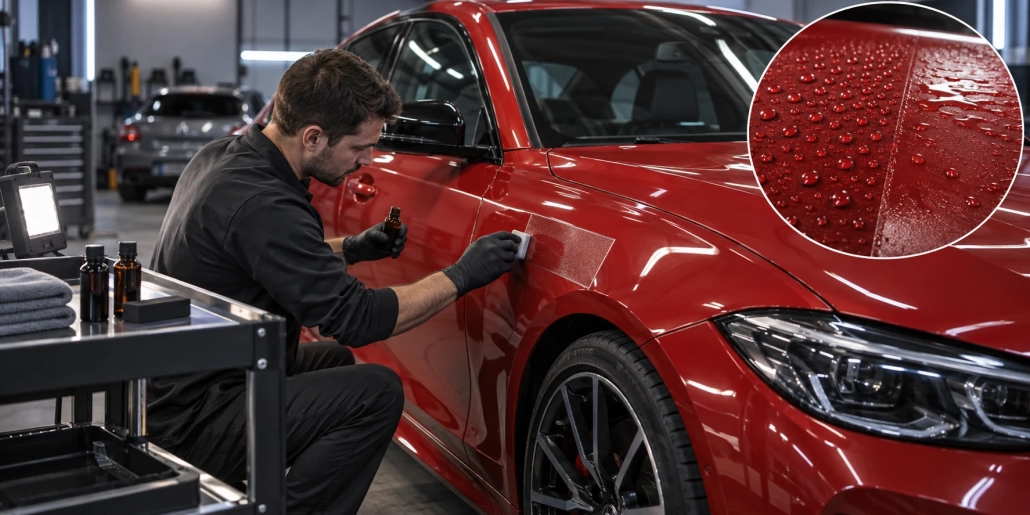
Plan repeat samples and a clear trial objective before drawing broad conclusions from ceramic coating tests.
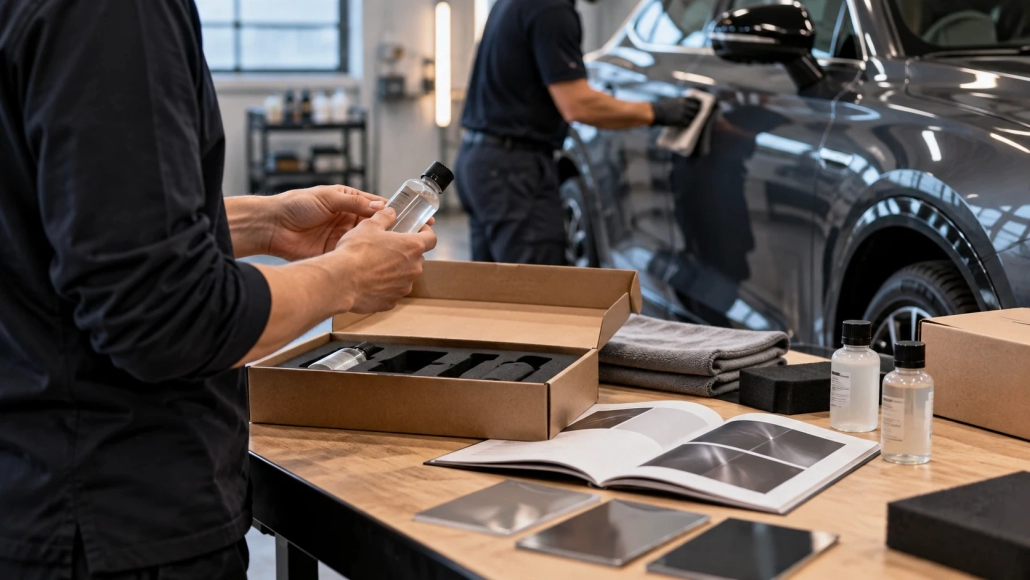
Set repeatable inspection intervals and record exposure changes during a ceramic coating field trial.

 Ceramic Coating Trials: How Many Samples Are Enough?